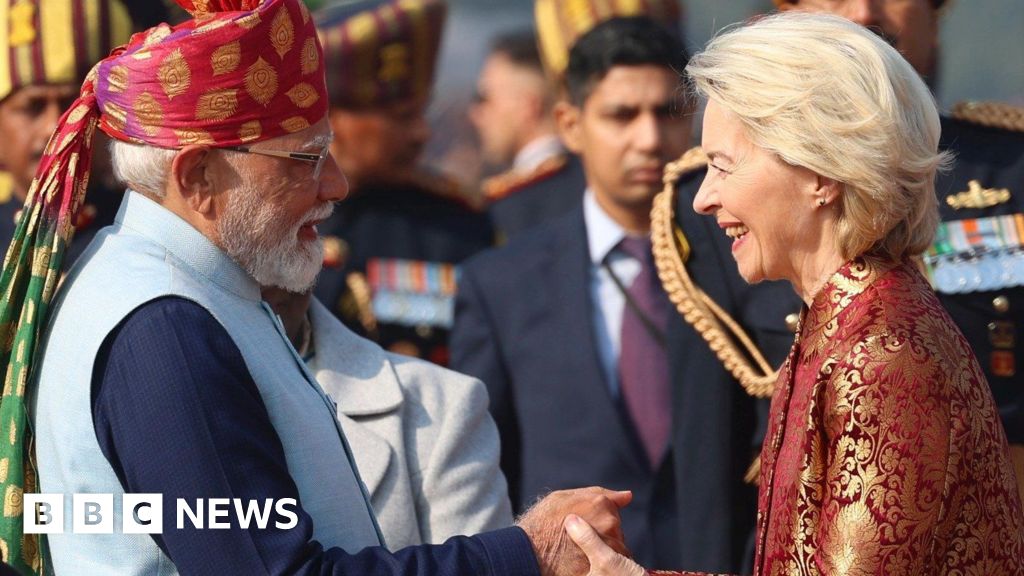
The EU and India have finalised a landmark trade agreement after nearly two decades of talks that, once ratified, is expected to expand market access for Indian exports and ease entry for European goods and investment; leaders say the pact covers roughly 25% of global GDP and one-third of global trade. Bilateral merchandise trade reached $136bn in 2024-25, and negotiators worked to resolve key sticking points on automobile market access, agricultural goods and carbon-linked tariffs; formal signing awaits approvals by the European Parliament and Council later this year. The deal is framed amid broader geopolitical tensions with the US and could re-shape supply-chain and sectoral exposures (notably autos, beverages and agribusiness) for investors with Asia–Europe trade exposure.
Market structure: The EU–India deal is a structural positive for export-facing Indian sectors (pharma, IT services, textiles, gems) and for European exporters (autos, premium beverages) seeking market access; expect bilateral trade to rise from $136bn to +15–25% over 3 years if tariff and RoO concessions are meaningful. Indian logistics, ports, and trade finance providers should see higher volumes and FDI inflows, creating durable revenue growth and potentially improving India’s current-account dynamics by 100–300bps over several years.
Risk assessment: Key tail risks are EU Parliament rejection, US trade retaliation, or narrow carve-outs on autos/agriculture; probability ~20% but impact high (trade flows delayed 1–3 years). Near-term (days/weeks) expect risk-on flows into India equities and INR; medium-term (3–9 months) outcomes hinge on legal text and ratification; long-term (2–5 years) will be driven by implementation (RoO, carbon tariffs, investment facilitation).
Trade implications: Tactical long exposure to Indian exporters and ports, and to European auto names with India growth optionality, is warranted; size positions modestly (1–3% each) and use 9–18 month expiries for options to capture implementation. Hedge with short exposures to incumbent Indian OEMs vulnerable to EU imports, and with FX plays (EUR/INR or INR forwards) to capture capital inflows; prefer staged scaling around formal ratification (50% now, 50% on approval).
Contrarian angles: Consensus likely understates conditionality — carbon clauses and strict RoO could blunt auto and agricultural gains, meaning valuation rerating may be partial and slow (think CETA-like 3–7 year roll-outs). Expect politically driven exceptions from India on sensitive sectors; therefore insure positions with collars or tail hedges and avoid full conviction until implementing regulations are published.
AI-powered research, real-time alerts, and portfolio analytics for institutional investors.
Request DemoOverall Sentiment
mildly positive
Sentiment Score
0.33
