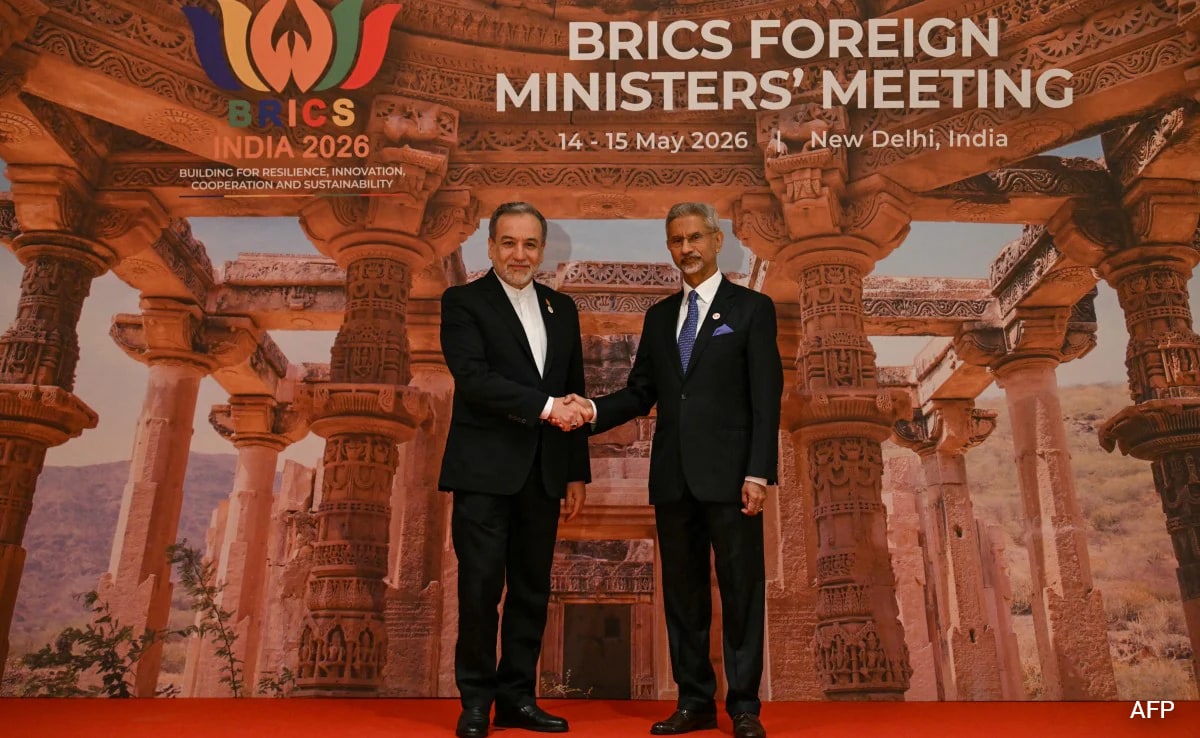
India warned that the Middle East crisis is threatening energy supplies and maritime stability, especially through the Strait of Hormuz and the Red Sea, while BRICS failed to reach consensus on West Asia due to sharp Iran-UAE tensions. Jaishankar emphasized sovereign respect, diplomacy, and unimpeded maritime flows, alongside concerns over unilateral sanctions and Gaza's humanitarian fallout. The article points to elevated geopolitical risk for energy and shipping markets, with potential spillovers across emerging markets.
The key market implication is not the headline tension itself, but the coordination problem it creates for Gulf energy flows at precisely the point where global spare capacity is thin and shipping insurance is already priced for elevated risk. Even without a direct supply shock, the combination of Hormuz/Red Sea anxiety and intra-BRICS disagreement raises the probability of episodic freight spikes, longer voyage times, and precautionary inventory builds by Asian importers. That tends to support energy complex volatility more than direction, with refined products and shipping rates likely to react faster than crude. Second-order beneficiaries are non-Gulf suppliers and logistics assets with substitute optionality: US LNG, Atlantic Basin crude, and operators with diversified routing or contractual pass-throughs. The real loser is not just import-dependent economies, but any EM sovereign with a large current-account deficit and little FX flexibility; they absorb higher fuel bills before commodity exporters can fully offset the hit. In markets, that usually shows up first as wider EM credit spreads, weaker local currencies, and underperformance in transport-intensive sectors in Asia and Europe. The consensus may be underestimating how much of the near-term risk is political theater rather than immediate kinetic disruption. That means the sharpest opportunities may be in volatility expressions rather than outright directional oil longs: if diplomacy stabilizes the narrative, crude can mean-revert quickly, but freight and product spreads often stay sticky for longer. A months-long risk remains that repeated incidents normalize a higher geopolitical risk premium, which would justify a regime shift in energy and shipping valuations. A key catalyst to watch is whether the Gulf states move from rhetorical balancing to concrete defensive coordination, because that would reduce tail risk and compress the volatility premium. Conversely, any incident near shipping lanes or infrastructure would likely trigger a fast repricing in the 1-2 week window, with the cleanest market reaction in tanker rates, marine insurers, and defense-adjacent names rather than broad equities.
AI-powered research, real-time alerts, and portfolio analytics for institutional investors.
Request DemoOverall Sentiment
mildly negative
Sentiment Score
-0.35
