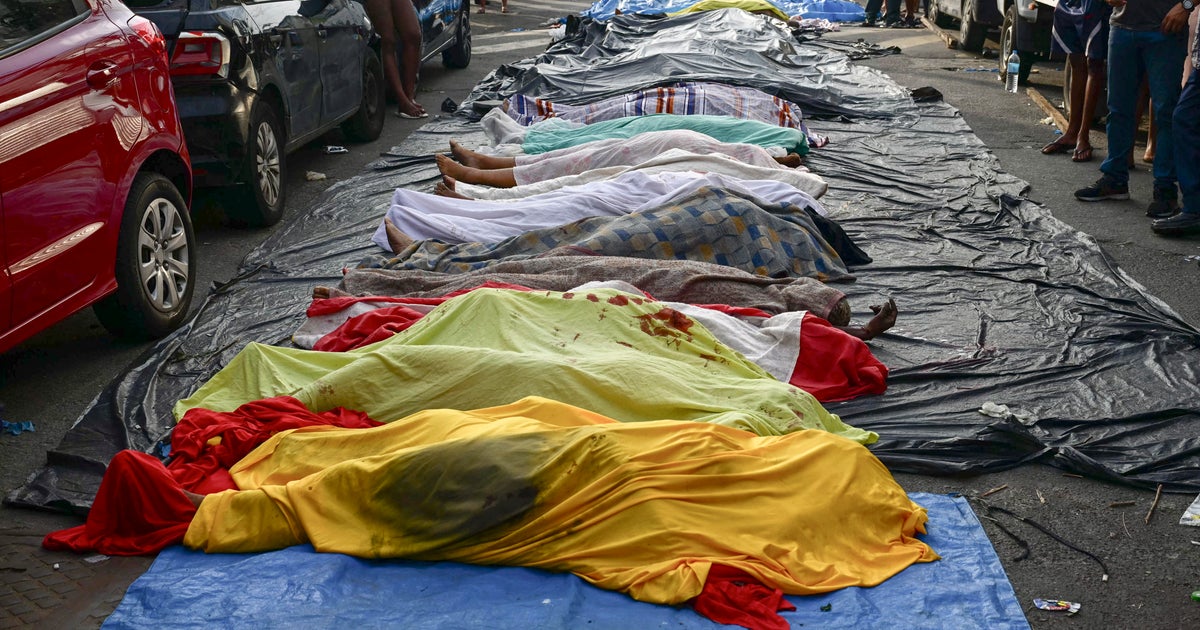
A large-scale police operation in Rio de Janeiro's favelas targeting the Red Command drug gang resulted in at least 119 deaths, including 115 suspects, sparking widespread protests and accusations of excessive force and executions. While Rio's governor lauded the raid as a success against "narco-terrorism," Brazil's Supreme Court, federal prosecutors, and the UN human rights body have demanded detailed investigations into the unprecedented lethality and alleged abuses. This event highlights significant governance and human rights challenges in Brazil, drawing national and international scrutiny.
A recent police operation in Rio de Janeiro's favelas resulted in an unprecedented 119 deaths, including 115 alleged suspects, sparking widespread protests and accusations of extrajudicial killings. While Rio's state government lauded the raid as a success against "narco-terrorism," the scale of fatalities has drawn immediate scrutiny from Brazil's Supreme Court, federal prosecutors, and the UN human rights body, demanding detailed investigations into alleged abuses. This event underscores significant governance and human rights challenges within the region.
The incident has ignited a political firestorm, with calls for Rio's governor to resign and a clear divergence in narrative between state and federal authorities regarding the operation's legitimacy and effectiveness. Supreme Court Justice Alexandre de Moraes has ordered detailed information from Governor Castro, while federal prosecutors are scrutinizing the methods used and demanding proof of less harmful alternatives. This intense regulatory and legal oversight suggests potential long-term implications for policing policy and accountability in Brazil.
Despite an immediate market impact score of 0.0, the "extremely negative" sentiment and thematic classification (Legal & Litigation, Elections & Domestic Politics, Regulation & Legislation, Management & Governance) highlight elevated country-specific risks. The event, characterized by critics as a "massacre," could erode investor confidence in Brazil's rule of law and political stability, particularly concerning human rights and state-sanctioned violence. Such incidents, while not directly impacting corporate earnings, contribute to a perception of increased operational and reputational risk for investments in the region.
AI-powered research, real-time alerts, and portfolio analytics for institutional investors.
Request DemoOverall Sentiment
extremely negative
Sentiment Score
-0.90
