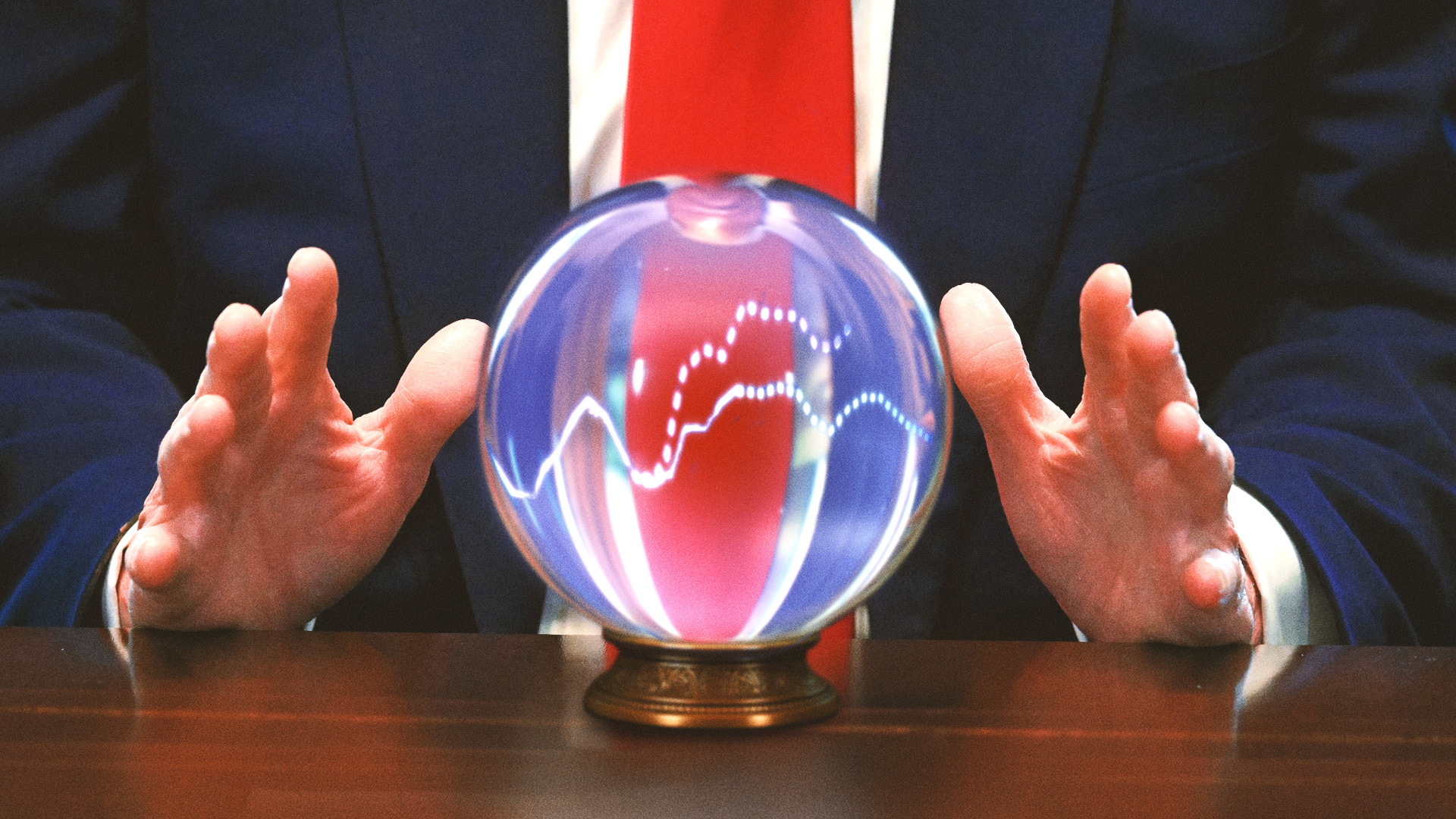
When President Trump imposed global tariffs in April, economists warned of severe economic disruption, but immediate outcomes have fallen short of doomsday scenarios—markets and key indicators have so far shown resilience. The piece questions whether forecasters overestimated short-term damage or whether durable impacts will emerge only over a longer horizon, underscoring ongoing uncertainty and the need for investors to monitor trade flows, price passes-through and policy escalation risks.
President Trump imposed global tariffs in April, and economists widely predicted severe economic disruption; the article notes that "the sky has yet to fall," signaling that immediate doomsday scenarios have not materialized. Since the rollout, markets and key indicators have shown resilience, prompting the central question of whether forecasters overstated short-term damage or whether negative effects will emerge only over a longer horizon. Sentiment metrics attached to the report are mixed and uncertain with a low market impact score (0.25), which indicates a muted immediate market reaction rather than definitive evidence that tariffs are benign. The piece emphasizes monitoring trade flows, price pass-through to consumers, and the risk of policy escalation—risks that would shift the story from short-term resilience to durable economic consequences, and no company-specific tickers were identified so implications remain macro and sectoral.
AI-powered research, real-time alerts, and portfolio analytics for institutional investors.
Request DemoOverall Sentiment
mixed
Sentiment Score
0.00
