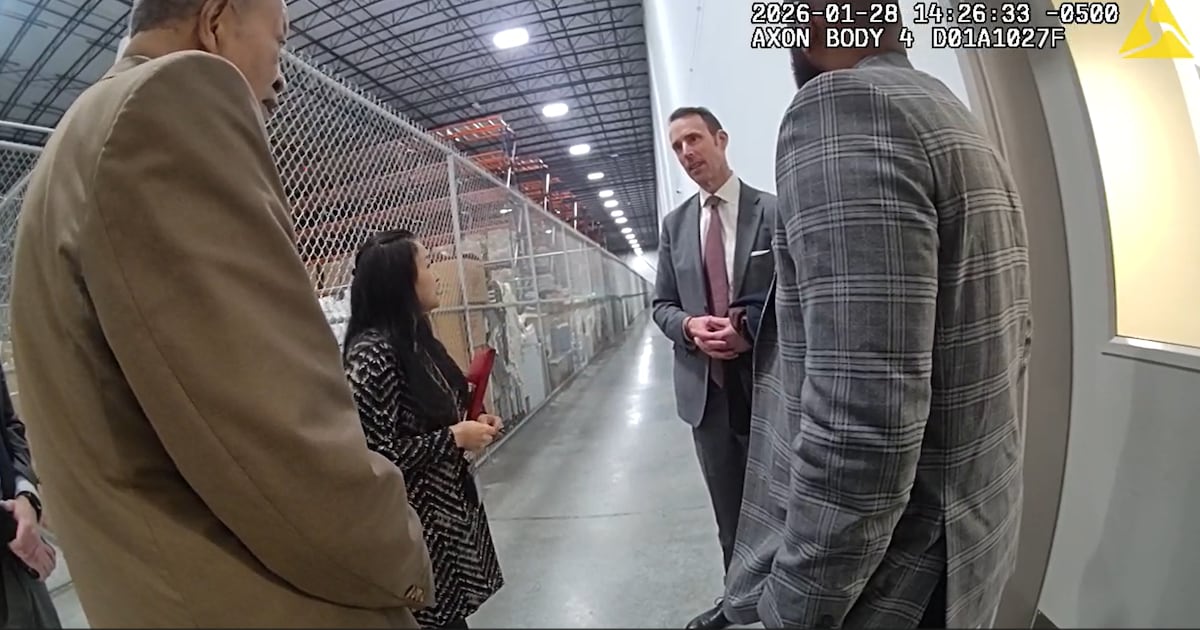
Federal agents executed search warrants at Fulton County’s elections office seeking 2020 ballots and records, an operation captured on police body cameras that showed confusion among county officials about the unannounced raid. The seizure escalates an already contentious legal and political battle over the 2020 presidential result in Georgia, raising short-term political and legal risk; however, the action is unlikely to produce significant direct market movements beyond localized investor concern and potential reputational effects.
Market structure: The FBI raid increases political/legal uncertainty but is a low-probability systemic market mover; direct beneficiaries are cybersecurity and legal-services vendors (CRWD, PANW, FTNT, ticker exposure) as counties and states re‑assess election security budgets — expect 3–7% incremental procurement uplift for vendors in the next 12–18 months if legislation/funding follows. Losers are narrow: regional broadcasters and local-government credit in Georgia (modest muni spread widening) and partisan media stocks that trade on headline sensitivity; expect 1–3% intra‑day swings and occasional 5–10% moves on amplified headlines. Cross‑asset: small safe‑haven bids for Treasuries and gold (moves of 5–15bp and $5–$15 respectively) on escalation; USD impact minimal unless unrest broadens.
Risk assessment: Tail risks include escalation to multi‑state probes or legislation that forces vendor audits (credit/event risk to vendors and local muni issuers) — low probability but could widen muni spreads by 20–75bp and add 5–15% downside to small-cap vendors. Immediate (days): headline volatility and media gyrations; short (weeks–months): legal filings, subpoenas and state budget reallocations; long (quarters–years): structural election‑security spending increases. Hidden dependencies: vendor revenue is concentrated in few state/local deals and litigation costs can compress margins; catalyst set: DOJ indictments, state subpoenas, or federal funding bills.
Trade implications: Direct plays — overweight large-cap cybersecurity (CRWD, PANW, FTNT) via equities or call spreads sized 1–3% AUM; hedges — buy 1% VIX exposure (VXX or 2s/10s put spreads) if S&P falls >2% intraday or VIX >20. Pair trade — long CRWD, short FOXA (or NWSA) to express defense‑tech upside vs headline‑driven ad revenue downside, equal dollar weights sized 1–2% net. Rotate 0.5–1% from regional media into national cloud/cyber names over next 30–90 days.
Contrarian angles: Consensus will overestimate ubiquity of impact — most national markets underreact because the event is localized; this underpricing creates opportunities in mid‑cap cyber names where forward bookings are underappreciated. Historical parallels (post‑investigative raids) show transient headline volatility for media and sustained re‑rating for vendors who win contracts; if no indictments within 60 days, expect a 5–10% mean reversion in headline beneficiaries. Unintended consequence: heavy shorting of regional muni risk could create buying opportunities if spreads overshoot by >30bp.
AI-powered research, real-time alerts, and portfolio analytics for institutional investors.
Request DemoOverall Sentiment
moderately negative
Sentiment Score
-0.30
