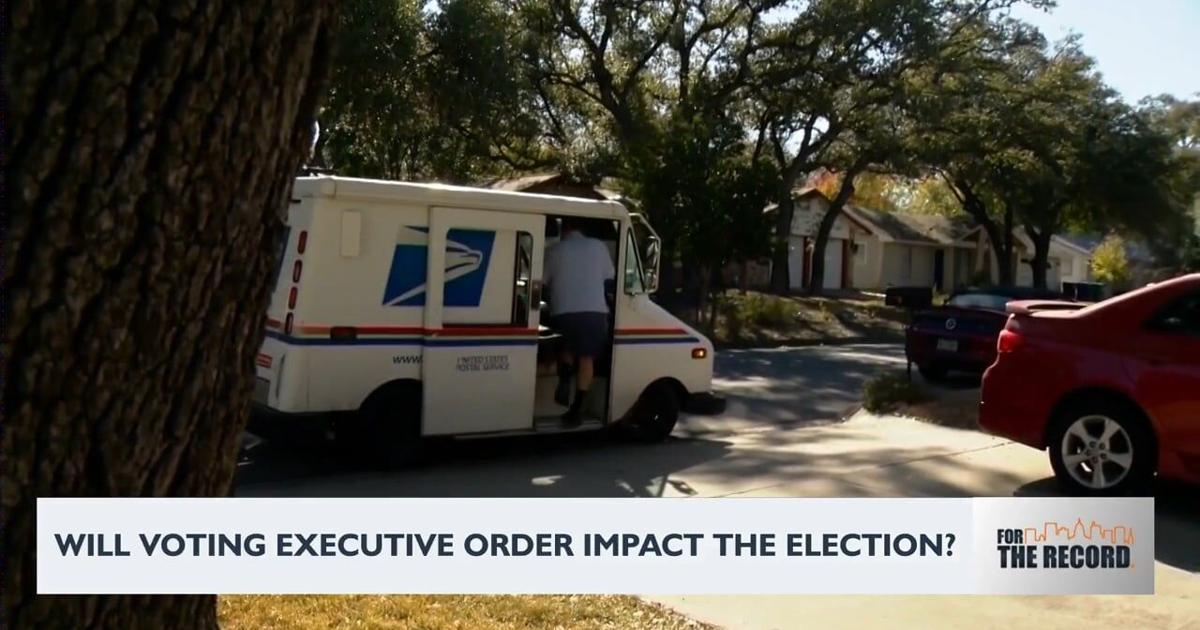
President Trump issued an executive order restricting mail voting and creating a nationwide list of verified eligible voters. Dane County Clerk Scott McDonell said the order will not affect the local election because there is nothing federal on the ballot; Congressional Democrats have sued the administration and Wisconsin Governor Tony Evers signaled the state may take legal action as well.
A federal push to standardize voter verification and limit mail-ballot channels creates a concentrated, near-term revenue opportunity for a small group of government IT, identity verification, and cybersecurity vendors rather than a broad market uplift. Expect incremental contract awards and pilot integrations to be measured in single- to low-double-digit millions per state; aggregated across early-adopting states this is a $100–500m annual TAM for incumbents with existing state relationships, and far smaller for new entrants.
Legal pushback is the dominant near-term volatility driver — expect multiple injunctions and state counteractions stretching 3–12 months, with procurement freezes and RFP re-writes creating a jagged cadence of revenue recognition. That timeline favors larger, diversified govtech players that can absorb delays and monetize adjacent services (identity-matching, audit trails, cyber hardening) while punishing niche vendors dependent on a hurried federal rollout.
Cybersecurity vendors and data/identity providers are second-order beneficiaries: standardized voter lists increase demand for integrity, monitoring, and deterministic identity-matching, which maps directly to existing product lines at Palantir (PLTR), Equifax (EFX), and CrowdStrike (CRWD). Conversely, firms whose exposure is primarily to mail-logistics volume (UPS, FDX) see immaterial top-line impact but increased reputational and regulatory scrutiny; politically driven operational changes pose execution risk rather than meaningful demand shifts.
The consensus error would be treating this as a binary market expansion; instead, the realistic path is a protracted, fragmented roll-out where winners are defined by state-level footholds and contract agility. A court ruling that enjoins federal action would compress expected upside into a short, sharp update (1–3 months), while a sustained legal loss for plaintiffs would open a 12–36 month procurement runway — monitor litigation dockets and state RFP calendars as primary catalysts.
AI-powered research, real-time alerts, and portfolio analytics for institutional investors.
Request DemoOverall Sentiment
neutral
Sentiment Score
0.00
