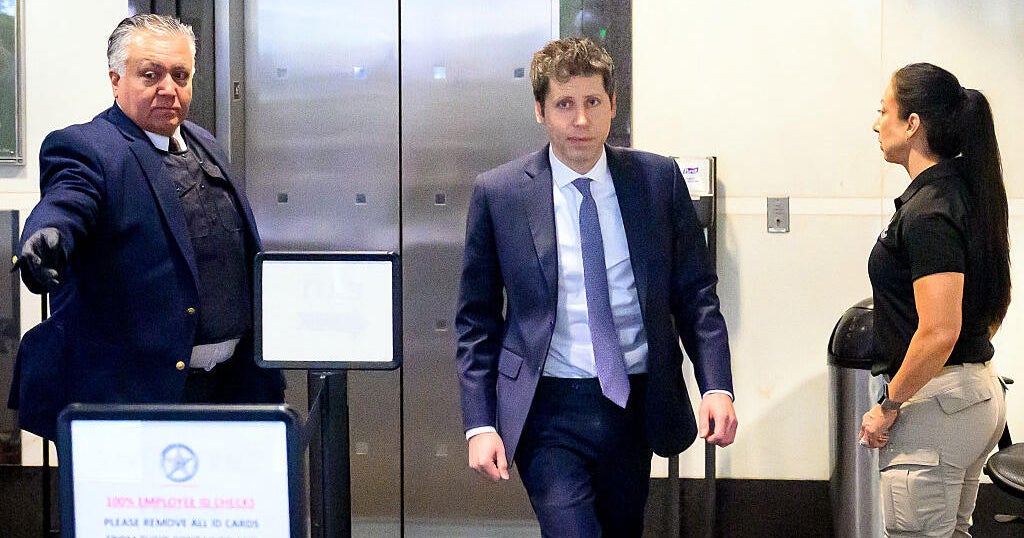
Sam Altman testified in a federal trial defending OpenAI’s leadership and business record in a dispute with Elon Musk over the company’s mission and governance. The case centers on allegations that Altman and Greg Brockman strayed from OpenAI’s nonprofit roots, with Musk seeking an unspecified sum and Altman contesting claims of dishonesty. The trial adds scrutiny to OpenAI, xAI, and Anthropic as all three pursue large IPOs, but it is more likely to affect sentiment and governance perceptions than near-term fundamentals.
The market takeaway is not the courtroom drama itself; it is the re-rating of governance risk across the AI private-unicorn complex. When the founder-control narrative becomes litigated in public, the discount rate on future equity raises rises for OpenAI-adjacent names because investors will price in slower decision-making, board entrenchment risk, and more expensive capital. That matters most for the firms closest to IPO because public-market buyers will not pay top-quartile growth multiples for companies with unresolved founder/board credibility overhangs.
TSLA’s direct exposure is limited, but the second-order channel is real: Musk is being forced to split attention across litigation, SpaceX IPO prep, and xAI competition, which increases execution slippage risk at the margin. The larger issue is not one headline but cumulative management bandwidth dilution—these events can compress multiple expansion for TSLA even if fundamentals are unchanged, because investors will demand a governance discount while Musk remains in a high-stakes legal and capital-raising cycle.
The contrarian angle is that the controversy may ultimately strengthen the case for independent AI governance structures and accelerate industry-wide separation between model development and founder control. If that happens, the relative beneficiary is not Musk-led platforms but professionally governed peers with cleaner boards and clearer monetization paths. In that scenario, the selloff in any AI governance-sensitive asset would be tactical rather than structural, and a better entry would be after the next legal headline fades or if the court narrows remedies materially.
Near term, the catalyst path is binary but slow-moving: trial headlines can pressure sentiment over days to weeks, while actual business impacts show up over months through fundraising and IPO pricing. The tail risk is not an adverse verdict alone; it is discovery of additional governance issues that spill into public-market due diligence and force concessions in valuation, board composition, or lock-up terms.
AI-powered research, real-time alerts, and portfolio analytics for institutional investors.
Request DemoOverall Sentiment
mildly negative
Sentiment Score
-0.15
Ticker Sentiment
