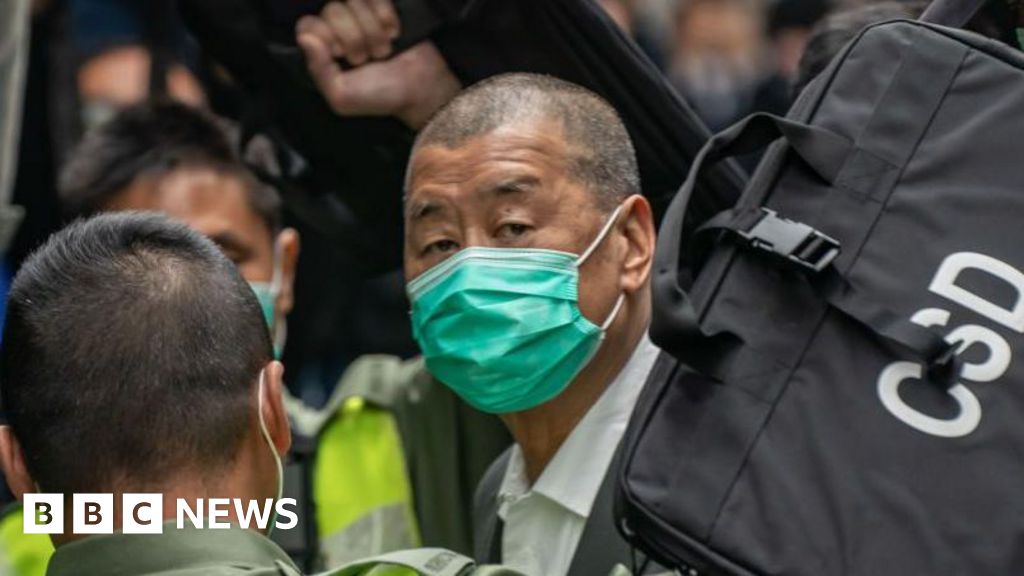
Jimmy Lai, a 78-year-old British citizen and Hong Kong media tycoon, was sentenced to 20 years under Hong Kong's national security law after convictions for foreign collusion and publishing seditious material; he has been held in solitary confinement for five years and his son and UK officials say his deteriorating health makes the sentence effectively a ‘death sentence’. The case highlights Beijing’s enforcement of the 2020 NSL, intensifies diplomatic friction with the UK — which has raised Lai’s case at senior levels even as it secures trade concessions such as reduced import duties on UK whisky and short-term visa-free travel — and represents a persistent political/legal risk for investors assessing Hong Kong’s rule of law and China-UK relations.
Market structure: The sentencing increases political risk premium for Hong Kong-listed media, civic institutions and broadly for HK/China equities tied to political exposure; direct losers include Hong Kong equity ETFs (EWH) and politically sensitive names (e.g., 0700.HK/Tencent as a proxy for regulatory spillovers), while UK exporters to China (Diageo/DEO) and Western defense contractors (BAESY, LMT) are relative winners. Liquidity dynamics likely shift toward safe-haven assets; expect incremental net sell supply in HK equities that can widen spreads by 10–30% in stressed sessions.
Risk assessment: Tail risks include sanctions or asset seizures that materially disrupt cross-border listings or force capital controls (low probability, high impact) — scenario stress could shave 200–300bp off valuations for targeted sectors. Immediate (days) risk = volatility spikes; short-term (weeks–months) = rerating of HK/China perceived-risk sectors; long-term (quarters–years) = persistent higher cost of capital (+100–300bp) for HK issuers. Monitor diplomatic calendar, sanction filings, and flows into EWH/ASHR ETFs as catalysts.
Trade implications: Tactical hedge — buy 1–2% portfolio protection via 3-month put spreads on EWH (strike ~5–10% OTM) or short 2–3% notional EWH outright if risk budget allows. Long 1–2% positions in GLD or GDX as political-risk insurance; establish 1–2% buys in BAESY or LMT to capture defense re-rating over 3–12 months. Pair trade: long DEO (2%) vs short EWH (2%) to play UK-China trade normalisation versus HK political risk.
Contrarian angles: The market may overprice perpetual deterioration — Beijing has economic incentives to avoid broad financial self-harm, so a 3–6 month mean reversion trade into select China consumer/tech (BABA or 0700.HK) sized 1–2% could yield asymmetric returns if diplomatic détente resumes. Watch for >5% intraday dislocations in EWH or 10-year UST moves >20bp as buying opportunities; avoid large directional positions until 30–90 day diplomatic outcomes are clearer.
AI-powered research, real-time alerts, and portfolio analytics for institutional investors.
Request DemoOverall Sentiment
strongly negative
Sentiment Score
-0.60
