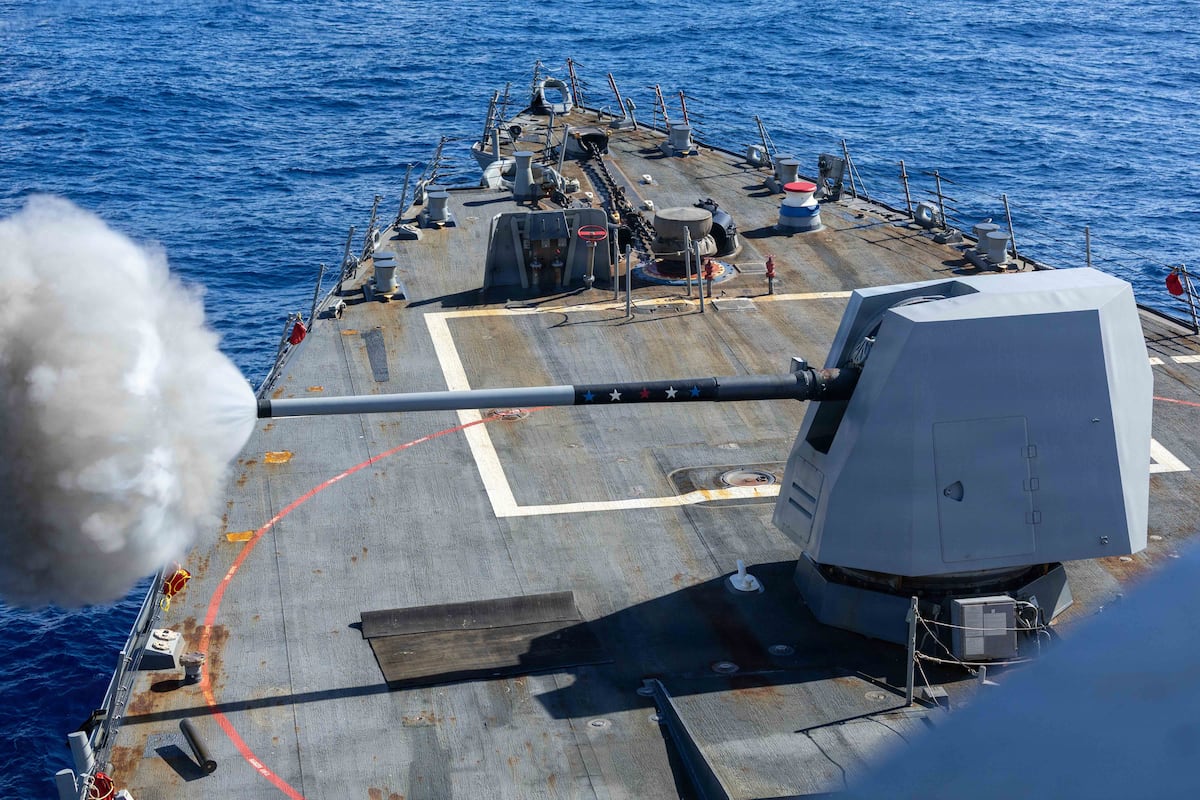
The U.S. launched strikes on Iranian military facilities after Iran attacked three U.S. Navy vessels transiting the Strait of Hormuz, escalating tensions in a critical global shipping chokepoint. No U.S. vessels were hit, but the exchange follows prior destruction of six Iranian small boats and missiles/drones earlier in the week, heightening geopolitical and oil-supply risk. Trump said the strikes were a "love tap" and that the ceasefire remains in effect, while U.S. and Iran reportedly discuss a peace memorandum.
The immediate market read is not just higher headline risk, but a widening probability distribution for oil, freight, and defense-budget outcomes. The first-order move is a risk premium in Gulf-transiting barrels and insurance costs, but the second-order effect is operational: even without a sustained closure, repeated harassment can force shippers into longer routes, lower vessel utilization, and higher working capital needs, which tends to hit transport-sensitive importers before it shows up in spot commodity prices.
The most attractive winners are not the obvious integrated energy names alone, but the entire security-of-supply stack: naval contractors, missile-defense vendors, maritime surveillance, and select midstream/logistics firms with alternative routing optionality. A sustained standoff also raises the odds of expedited replenishment spending, which can re-rate defense primes on backlog durability rather than quarterly headlines. Conversely, airlines, consumer discretionary, and chemicals are the cleanest losers if crude and jet fuel stay bid for multiple weeks, because margin compression tends to arrive faster than earnings revisions.
The key contrarian point is that this may be a fadeable spike if diplomacy is truly advancing and the rhetoric is being used to create negotiating leverage. If the market assumes a full escalation path too quickly, implied vol in oil and defense may overshoot realized event risk; that usually creates a better setup in options than in outright directional equity bets. The main tail risk is a miscalculation in the Strait that produces an injury or sunk vessel, which would shift this from a short-lived premium to a months-long supply shock with broader inflation spillover.
From a portfolio construction standpoint, this is a regime where relative-value matters more than beta. You want exposure to assets with convex benefit from higher defense spending or higher realized energy prices, while avoiding direct consumers of transport fuel and companies with thin pass-through. If diplomatic progress breaks down, the trade becomes self-reinforcing through insurance, shipping, and inventory channels long before physical supply is materially impaired.
AI-powered research, real-time alerts, and portfolio analytics for institutional investors.
Request DemoOverall Sentiment
strongly negative
Sentiment Score
-0.72
