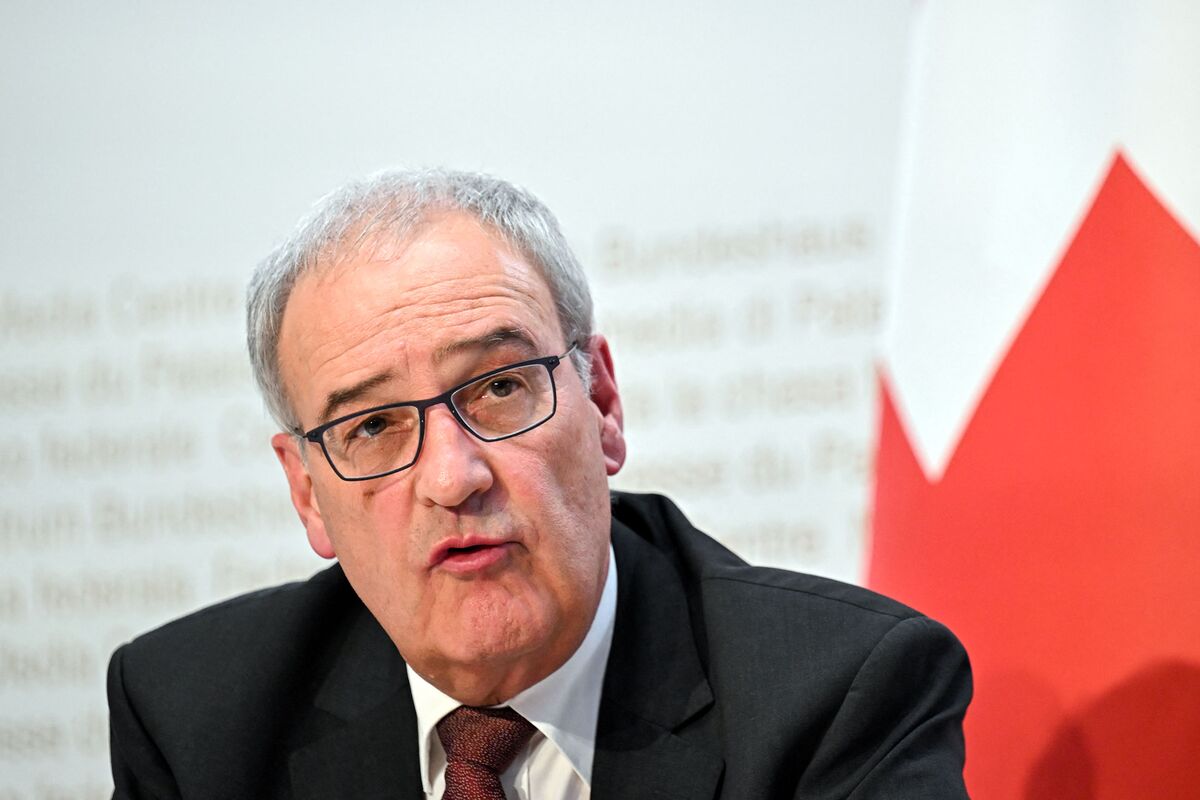
Swiss President Guy Parmelin will meet U.S. Trade Representative Jamieson Greer later this month as Switzerland and the U.S. work toward a broader trade deal amid renewed tariff pressure from Washington. Parmelin will travel to the U.S., Canada and Mexico from June 29 to July 9, with the Greer meeting planned but not yet dated. The article signals ongoing trade negotiations and tariff risk, but provides no finalized policy change or immediate market catalyst.
This is less about a single bilateral deal and more about whether the US is willing to use tariff threats as leverage into a wider regional reset. The immediate market effect is limited, but the signaling matters: if Switzerland gets a softer landing, it reinforces the view that smaller, high-value economies can negotiate exemptions or carve-outs through concessions in areas like procurement, agriculture, digital rules, or financial access. That would be a modest positive for European exporters with high Swiss exposure, but a negative for firms that have been betting on broad tariff normalization staying sticky. The second-order risk is supply-chain rerouting. Swiss firms are deeply embedded in pharma, precision instruments, med-tech, and specialty chemicals; even a temporary tariff cloud can push inventory buffering, dual-sourcing, and margin hedging across the EU supply chain. The losers are not necessarily Swiss end-markets themselves, but upstream contract manufacturers and logistics names that depend on stable cross-border timing; the winners are firms with pricing power and localized production footprints in the US. The key catalyst is the negotiation window through early July: any sign of progress before the travel concludes likely compresses tariff-premium hedges, while a public breakdown would matter more than the economics because it would raise the probability of broader sectoral measures. The market is probably underpricing the asymmetry here: a benign outcome may remove a small overhang, but a failed meeting could quickly metastasize into a wider tariff narrative at a time when global PMIs are still fragile. Contrarian view: consensus may be treating this as background noise because no listed Swiss large-cap direct beta is obvious. But the real opportunity is in relative positioning around trade-sensitive industrials and med-tech where supply-chain friction can hit margins before top-line data shows it. If negotiations look constructive, the unwind of precautionary inventory and hedges could create a sharper-than-expected relief rally than the headline suggests.
AI-powered research, real-time alerts, and portfolio analytics for institutional investors.
Request DemoOverall Sentiment
neutral
Sentiment Score
-0.10
