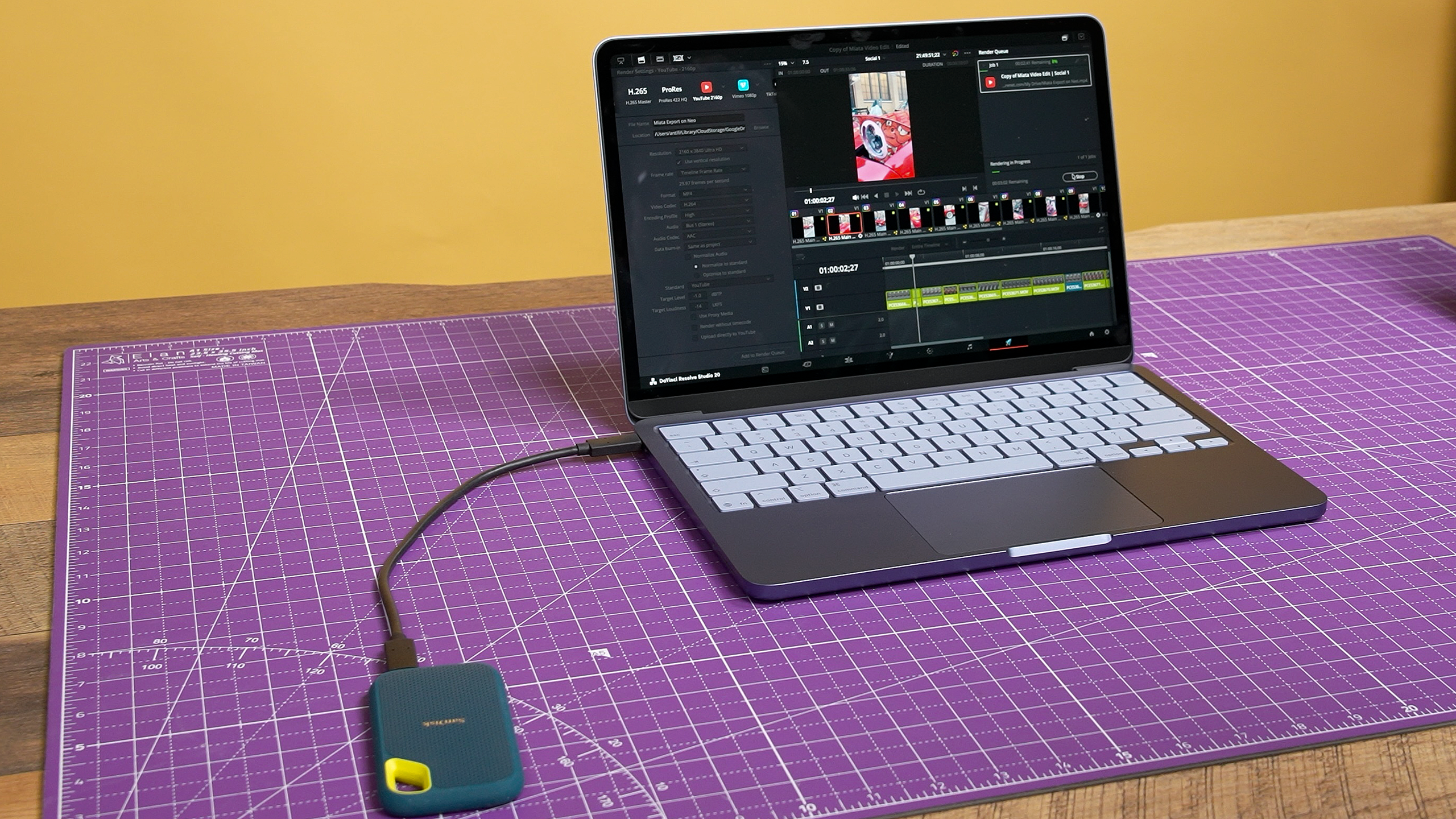
Key result: the MacBook Neo exported a 2-minute DCI 4K (120fps LOG) timeline in 1:48 versus the 11-inch iPad Air (M3) at 1:36 (≈12.5% faster). Simpler 1:23 4K iPhone timeline exported in 52 seconds on the Neo, with Resolve RAM usage around 4–5.5GB during normal edits, but spike to ~10GB on Fusion object tracking caused SSD paging and ~3.5s/frame processing (estimated 28-minute render). Conclusion: the Neo’s A18 Pro is capable for light/moderate mobile video work, but the fixed 8GB RAM is the clear bottleneck limiting complex effects and could materially constrain broader adoption for prosumer editing workflows.
Apple’s decision vector on Neo-class devices is revealing a structural lever: compute architecture (SoC vs x86) is now good enough for many creator workflows, but unified memory economics are the gating factor. When memory capacity forces frequent SSD spillover, the user experience degrades non-linearly because IO latency multiplies CPU/GPU cycles wasted on swapping; that converts a modest spec delta into an outsized product-class differentiation between price tiers.
Two second-order effects matter for the supply chain and competitive set. First, if Apple wants to preserve UX at low price points it can either subsidize faster NAND/SSD controllers or offer larger LPDDR pools — both increase BOM and selectively boost suppliers of premium NAND controllers and LPDDR (benefit to MU/TSM/SSNLF/000660.KS). Second, the narrow RAM envelope makes Apple’s iPad and low-end Mac segmentation fragile: small SKU changes or a promotional 16GB SKU could materially shift attach-rates and services revenue, while competitors in Windows thin-and-light segments face a higher risk of share loss because they can’t match Apple’s SoC efficiency plus OS-level optimizations.
The near-term catalyst set is binary and quick: (a) a SKU tweak (16GB option) or (b) an internal SSD/firmware update that reduces swap penalties. Either would compress upside to PC OEMs and widen Apple’s margin/ASP profile within 3–9 months; conversely, persistent RAM-driven UX complaints that trigger negative social proofs could slow upgrades over the same horizon. Monitor NAND spot spreads, LPDDR contract pricing signals, and Apple inventory/ASP commentary as the 1–2 quarter lead indicators that will validate which path management takes.
AI-powered research, real-time alerts, and portfolio analytics for institutional investors.
Request DemoOverall Sentiment
mildly positive
Sentiment Score
0.20
Ticker Sentiment
