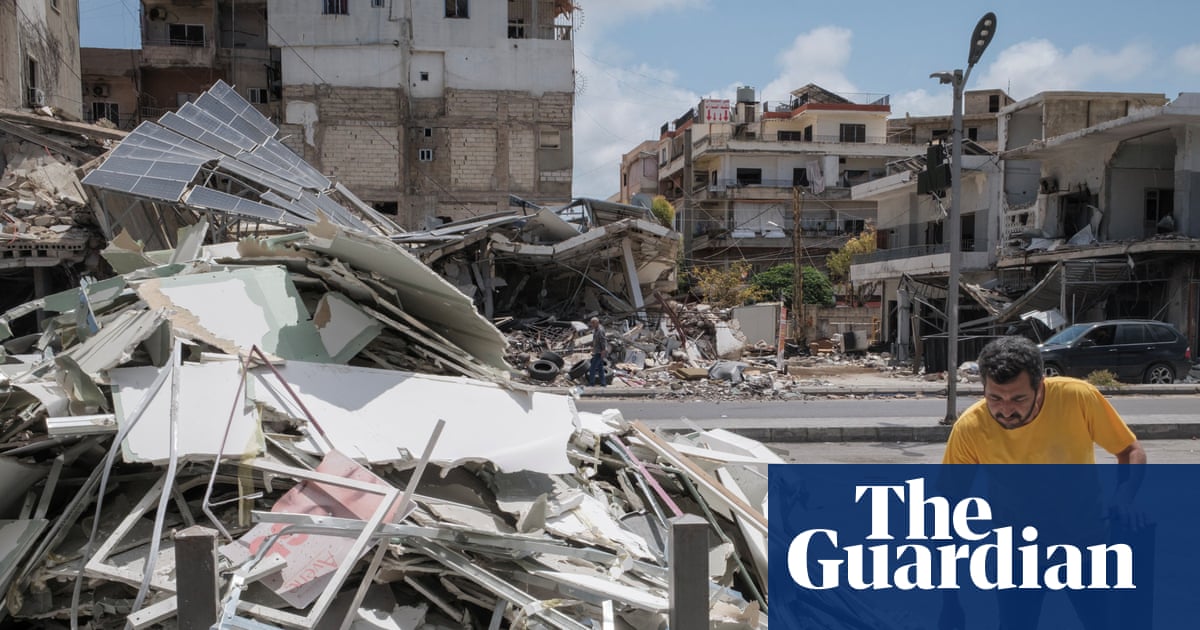
Hezbollah launched drones at Israeli soldiers in south Lebanon while Israel ordered residents of 16 villages to evacuate and continued airstrikes, underscoring that the ceasefire is failing to hold. The weekend fighting killed 18 people and wounded 88 in Lebanon, bringing the reported toll since 2 March to 2,534 killed and 7,863 wounded, while Hezbollah rocket fire has killed two civilians in Israel. The escalation comes alongside stalled US-Iran talks and renewed pressure on Lebanon’s government, keeping regional security and energy-risk premiums elevated.
The market is mispricing the duration risk: this is no longer a binary ceasefire/no-ceasefire story, it is an attritional campaign with a low-cost, high-frequency strike vector. Fibre-optic drones are a meaningful tactical adaptation because they compress Israel’s defensive advantage and force a larger share of the burden onto expensive interceptors and persistent ISR, which is structurally favorable for the attacker even if battlefield damage is modest. That creates a slow-burn escalation path where the marginal response is more airpower, more displacement, and higher probability of a broader northern-front mobilization rather than a clean diplomatic off-ramp. The second-order winner is the defense supply chain, but not evenly: layered air defense, counter-UAS, EW, loitering-munition detection, and precision strike munitions should all see longer budget visibility. The biggest underappreciated beneficiary is the class of firms exposed to low-cost drone defeat and missile inventory replenishment, because every successful cheap attack depletes an interceptor stock that is costlier and slower to replace. Over months, that can pull forward procurement cycles and support higher-than-expected order backlogs even if the conflict itself remains geographically contained. Energy remains a latent option on escalation rather than the base case, but the real risk is not a Hormuz shock; it is a persistent premium from repeated regional flare-ups that keep a bid under crude volatility and shipping insurance. If the US-Iran channel stays stalled, the market should assign a higher probability to episodic supply risk in the Eastern Med and Red Sea complex, which supports energy names with strong balance sheets and midstream assets more than pure upstream beta. The more important catalyst is whether Washington forces Israel into a 'calculated and limited' response; if restraint holds, the trade fades quickly, but if Israeli retaliation expands beyond Lebanon, defense and oil-linked vol can re-rate within days. Consensus is too focused on the ceasefire label and not enough on the fact that the operational equilibrium is still unstable. The downside case for risk assets is not immediate war contagion; it is a grinding normalization of cross-border fire that steadily raises defense spending, hardens political positions, and reduces the odds of diplomatic de-escalation over the next 3-6 months. That makes this a better medium-duration defense/energy volatility trade than a front-page geopolitical panic trade.
AI-powered research, real-time alerts, and portfolio analytics for institutional investors.
Request DemoOverall Sentiment
strongly negative
Sentiment Score
-0.72
