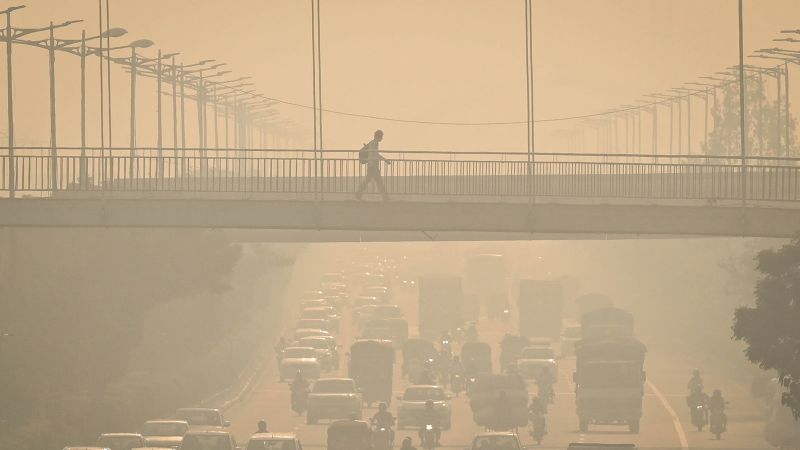
New Delhi recently recorded extreme air pollution levels, with PM 2.5 concentrations exceeding World Health Organization guidelines by over 40 times, making it the world's most polluted major city following Diwali celebrations. This annual crisis, driven by firecrackers and agricultural stubble burning, underscores the persistent failure of regulatory efforts and enforcement to mitigate severe environmental and public health challenges in India's capital. The situation highlights a critical trade-off between India's rapid economic growth and its environmental costs, potentially impacting long-term productivity and raising significant ESG concerns for institutional investors in a key emerging market.
New Delhi recently experienced extreme air pollution, with PM 2.5 concentrations exceeding the World Health Organization's annualized guideline by over 40 times, making it the world's most polluted major city post-Diwali. This severe deterioration was primarily driven by the widespread use of firecrackers, which release harmful pollutants, despite regulatory attempts to permit only "green" firecrackers within a limited timeframe; enforcement was notably poor, and non-compliant products remained accessible. This annual crisis, exacerbated by winter stubble burning, underscores a persistent failure in environmental governance and regulatory enforcement within India's capital.
Previous initiatives, including a 2018 investment of 200 million rupees ($2.4 million) in smog towers, traffic restrictions, and water sprinkling, have proven largely ineffective due to a lack of strict implementation and coordination. The article highlights India's broader challenge of balancing its booming economy and the energy needs of its 1.4 billion people with critical environmental protection. This systemic issue extends beyond New Delhi, with Kolkata and Mumbai also ranking among the world's most polluted cities.
The recurring severe pollution in major Indian urban centers poses significant public health risks and raises substantial Environmental, Social, and Governance (ESG) concerns for institutional investors. This situation reflects deep-seated regulatory shortcomings and the potential for long-term productivity impacts due to health burdens on the workforce. It underscores the complex trade-offs inherent in emerging market development and the challenges of effective policy implementation.
AI-powered research, real-time alerts, and portfolio analytics for institutional investors.
Request DemoOverall Sentiment
moderately negative
Sentiment Score
-0.50
