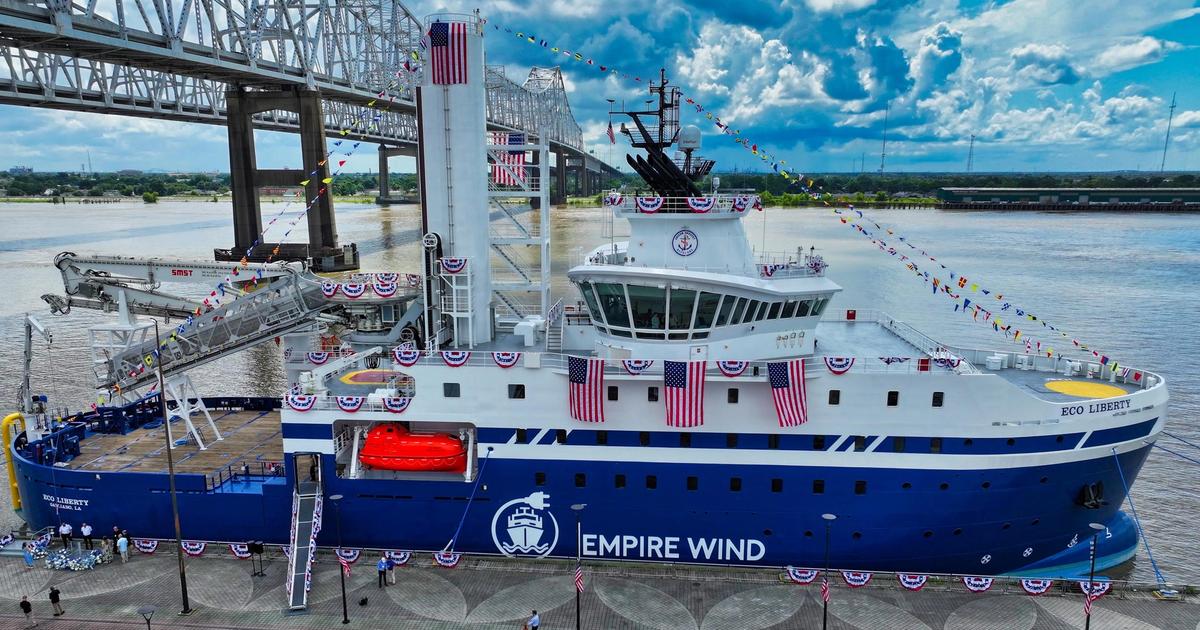
Equinor’s Empire Offshore Wind LLC filed suit in U.S. District Court (D.C.) on 2 January 2026 seeking a preliminary injunction to block the Department of the Interior/BOEM suspension of activity on the Empire Wind lease, an order issued 22 December citing national security concerns. The project is reportedly more than 60% complete, has employed nearly 4,000 people in construction, and has seen Equinor invest over USD 4 billion (USD 2.7 billion drawn under project financing), with a gross book value of about USD 3.1 billion as of 30 Sept 2025; Empire argues the suspension would cause significant commercial and financing impacts if allowed to remain effective.
Market structure: The BOEM suspension is an idiosyncratic shock concentrated on Empire/Equinor (EQNR) but with asymmetric spillovers — near-term winners include New York thermal/gas generators and capacity-market suppliers who can capture elevated LMPs and capacity prices; losers are project equity holders, project financers and concentrated offshore-supply contractors. Expect localized NYISO energy and capacity price pressure of roughly +3–8% in peak months over the next 6–12 months if Empire delays exceed 60 days, tightening near-term supply of ~1–2 GW equivalent.
Risk assessment: Tail risks include full lease cancellation or multi-quarter construction stoppage (low probability, 5–15%) that could trigger >$2.7bn effective write-down and covenant stress for lenders; immediate volatility is binary around the next 30–90 day court ruling. Hidden dependencies: project insurance, turbine contracts, NYSERDA offtake/penalty clauses and DoD/national-security reviews — any adverse finding can cascade into other US offshore projects and raise financing costs across the sector.
Trade implications: Binary event trading is optimal — volatility ahead of a preliminary injunction (expected decision window 30–90 days) favors buying short-dated volatility on EQNR and selective longs in short-term power beneficiaries (NRG). If injunction granted, EQNR downside risk falls quickly; if denied or extended beyond 90 days, expect >10% downside for EQNR and multi-month upside for US gas generators.
Contrarian angles: The market may over-penalize broad offshore supply chains; firms with diversified global backlog (GE, VWS) are likely to reassign capacity and avoid large revenue loss — downside is therefore concentrated in project-level equity not in turbine OEMs. Historical parallels (Cape Wind litigation) show >50% recovery odds post-litigation if legal remedies allow construction to resume; a fast injunction win would produce a >15–25% snap-back in EQNR-related equity.
AI-powered research, real-time alerts, and portfolio analytics for institutional investors.
Request DemoOverall Sentiment
moderately negative
Sentiment Score
-0.45
