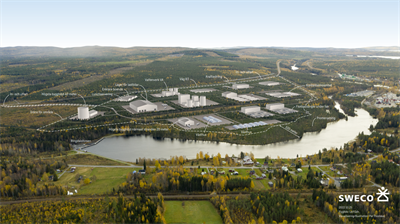
Big Akwa AB (publ.) has been awarded SEK 11 million (~€1m) in regional support — covering 50% of a SEK 22 million detailed engineering and planning phase — for a 6,000-ton annual land-based rainbow trout facility at Alby Industrial Park in Ånge. The project, backed by Region Västernorrland under the HAV programme, has secured 25-year operational and water permits (production basis as of 2025) and aims to begin production in 2028 with full capacity by 2029; the farm will be co-located with a hydrogen plant and emphasizes circular, resource-efficient aquaculture. The grant de-risks the near-term development milestone and validates regional commitment to sustainable food production, though the news is unlikely to materially move broader markets.
Winners are land-based RAS technology and water-treatment suppliers, regional construction contractors, and green-hydrogen equipment vendors that enable co-located industrial symbiosis; losers are incremental suppliers of open-net pen freshwater/marine aquaculture and commodity seafood traders exposed to regional trout oversupply. The SEK11m grant (50% of a SEK22m planning phase) is catalytic rather than material to EU supply — a 6,000-ton facility reaches full output by 2029 but is likely <2% of EU farmed-trout supply, so effects are regional and signalable rather than market-disruptive in the near term.
Competitive dynamics favor firms that can standardize RAS modules and tie into industrial heat/waste streams; that increases pricing power for proven integrators and engineering firms and compresses margins for commodity fish processors if scale follows (3–5 projects within 24–36 months would start to move wholesale trout pricing regionally by mid-decade). Cross-asset effects are second-order: modest downward pressure on local seafood spot prices (2028–2030), incremental green-bond issuance for similar projects, slightly higher demand for electrolyzer/hydrogen capex (supporting NEL/ITM style equities), and negligible FX/bond-market impact until scale-up financing is sought.
Key tail risks: permit reversals, biosecurity/disease events forcing cull (single-event loss >50% of project value), hydrogen plant underperformance creating stranded assets, or capex overruns >30% that dilute returns. Near-term (days–months): minimal market reaction; short-term (6–24 months): news flow on financing, offtake and construction contracts; long-term (2026–2029): revenue realization and regional price effects. Catalysts include additional regional grants, signed offtake agreements, or pilot production data; hidden dependency is the hydrogen plant and waste-stream availability — if either fails, economics weaken materially.
AI-powered research, real-time alerts, and portfolio analytics for institutional investors.
Request DemoOverall Sentiment
mildly positive
Sentiment Score
0.35
