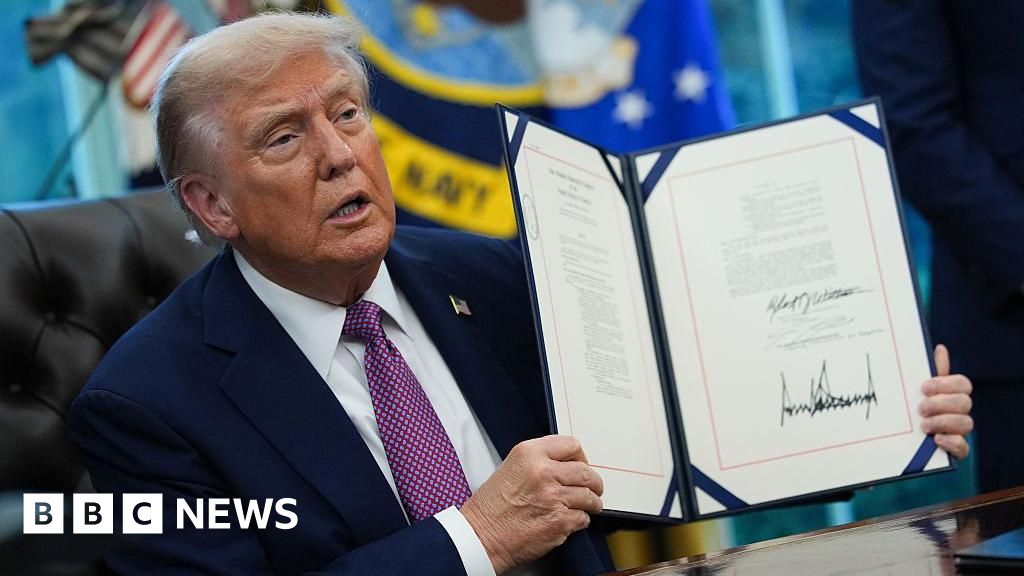
President Trump signed an executive order empowering the State Department to designate countries as 'state sponsors of wrongful detention,' enabling the imposition of economic sanctions, visa restrictions, and limitations on foreign assistance. Modeled after the state sponsor of terrorism classification, this order aims to deter foreign governments and non-state actors from unjustly detaining U.S. citizens, a practice affecting at least 54 Americans across 17 countries in 2024. This new framework introduces a significant geopolitical risk factor for nations engaging in such detentions, potentially influencing investment and trade considerations.
The Trump administration has formalized a new geopolitical risk factor with an executive order creating a 'state sponsor of wrongful detention' designation. This policy empowers the State Department to impose significant punitive measures, including economic sanctions, visa restrictions, and cuts to foreign assistance, against offending nations. The framework is explicitly modeled on the severe 'state sponsor of terrorism' classification, indicating a high-impact tool intended as a strong deterrent. The issue's scale is highlighted by the Foley Foundation, which reports at least 54 Americans were wrongfully detained across 17 countries in 2024. The order's scope is broad, applying not only to sovereign governments but also to non-state actors controlling territory, as seen in the case of a detainee held by the Taliban in Afghanistan. While the administration cites the release of 72 detainees, including one from Russia, the unspecified timeline for implementing these new sanctions introduces a new layer of event-driven risk for assets tied to countries with strained U.S. relations.
AI-powered research, real-time alerts, and portfolio analytics for institutional investors.
Request DemoOverall Sentiment
neutral
Sentiment Score
0.00
