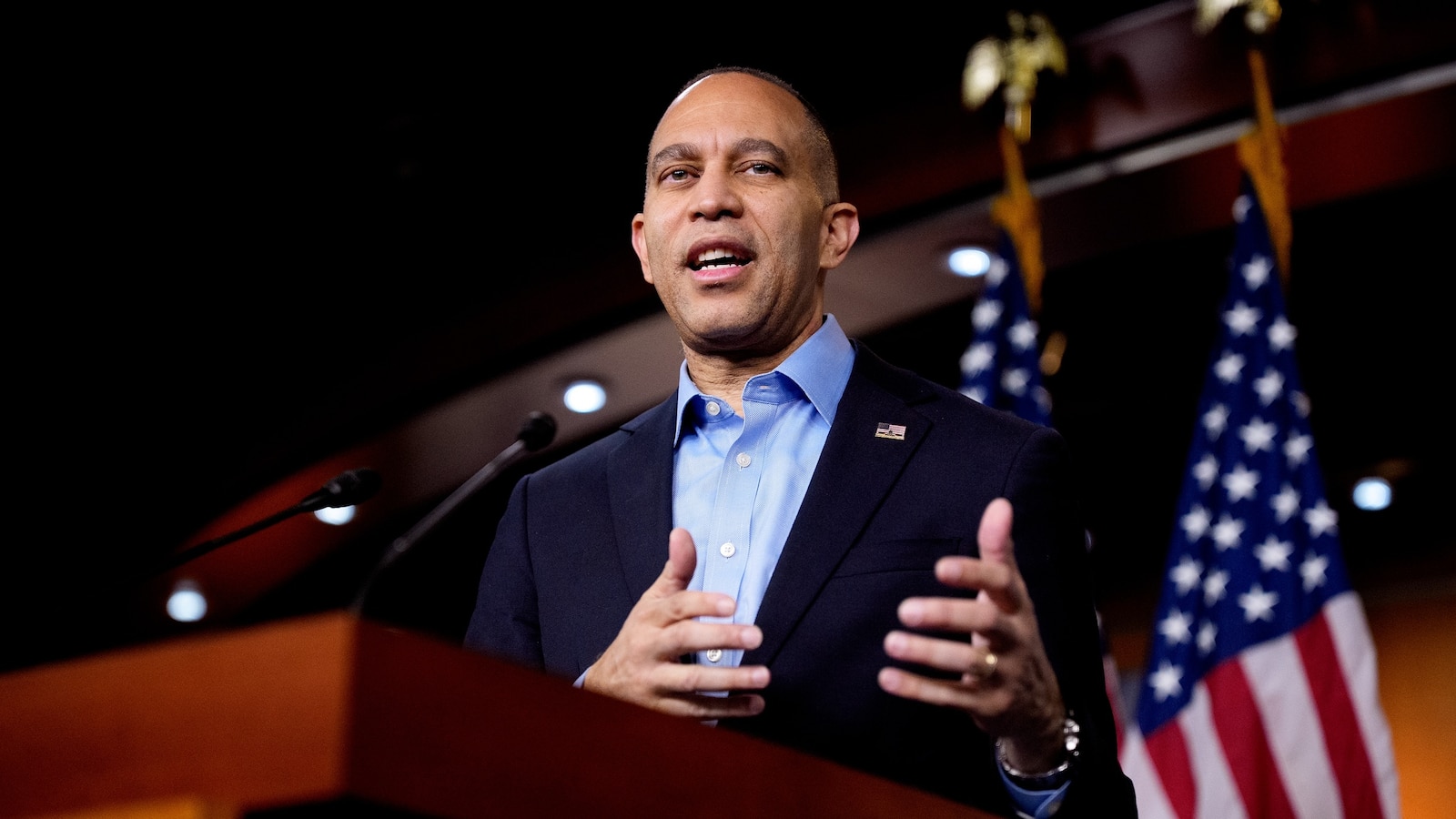
House Minority Leader Hakeem Jeffries sharply criticized the Justice Department’s partial, heavily redacted release of Jeffrey Epstein-related files as inadequate and urged a full explanation and investigation, while Reps. Ro Khanna and Thomas Massie have discussed possible impeachment articles against Attorney General Pam Bondi. Republican Sen. Rand Paul also called the partial release a mistake, and the dispute amplifies congressional oversight and legal risk around the DOJ’s compliance with the Epstein Files Transparency Act. Separately, Jeffries says House Democrats will force a January vote on a three-year extension of ACA tax credits (after a Quinnipiac poll showed 18% approval of Congressional Democrats), setting up a likely legislative fight with Senate Republicans that increases near-term political and policy uncertainty.
Market structure: The immediate market winners are politically aligned defensive sectors (health insurers, managed care, select consumer staples) if Congress signals a bipartisan ACA-subsidy extension; losers are reputationally exposed institutions (universities, nonprofits, privately held trusts) and any publicly-traded firm directly named in future DOJ disclosures. The House vote is scheduled for January 2025; if subsidies are extended through 2026, expect a 1–3% revenue tailwind for large insurers in FY2026 consensus estimates and a short-term re-rating of enrollment-sensitive names.
Risk assessment: Tail risks include a protracted DOJ credibility crisis or an impeachment attempt (low probability, high impact) that could widen political risk premia and push 2–5% flows into US Treasuries and gold over weeks. Timeline: immediate (days) = headline-driven intraday swings; short-term (weeks–months) = Jan House vote and Senate reaction; long-term (quarters) = sustained legal/regulatory exposure if additional names surface. Hidden dependencies include donor networks and university endowment exposures that can force corporate governance actions with second-order financial costs.
Trade implications: Directional play favors longs in large insurers (UNH, CI) sized 1–3% of portfolio ahead of the Jan vote, hedged by short-dated puts if Senate resistance hardens; pair trades (long UNH, short HCA) capture relative upside if subsidies favor covered lives over uncompensated hospital care. Cross-asset: small tactical long GLD (0.5–1%) and 3-month SPY 5% OTM puts (0.5–1% notional) as event hedges; monitor implied vols—buy if 30-day IV gap >25% vs 90-day.
Contrarian angles: Consensus treats this as a political headline with negligible market effect; that understates the asymmetric risk that a detailed release names corporate actors and triggers litigation/SEC probes, causing >15% selloffs in affected tickers. Historical parallels (high-profile DOJ document dumps) show initial muted reactions followed by targeted drawdowns; therefore prepare targeted liquidity lines and conditional shorts if a named company's share price drops >15% on publication within 72 hours.
AI-powered research, real-time alerts, and portfolio analytics for institutional investors.
Request DemoOverall Sentiment
moderately negative
Sentiment Score
-0.35
