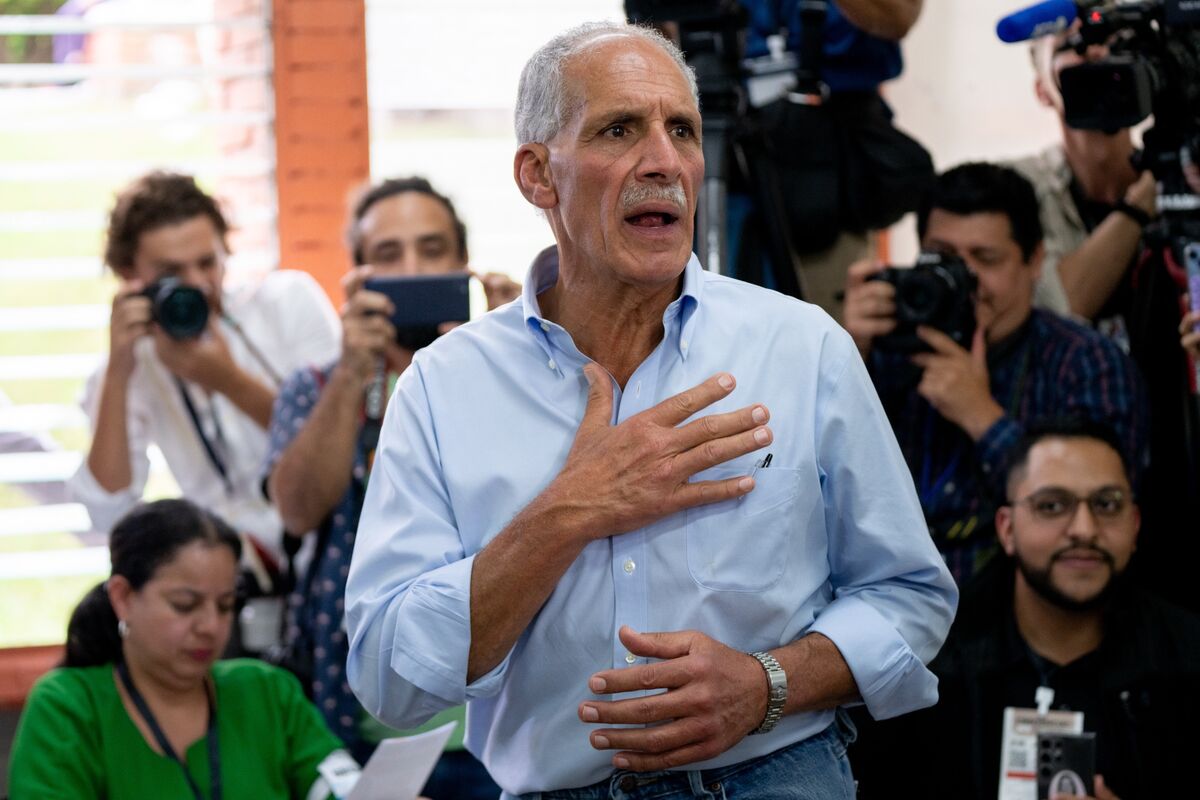
In the Honduran presidential count the Trump‑backed candidate is holding a wafer‑thin lead as votes are tallied against an opponent President Trump labeled a "borderline communist." The narrowing margin increases political uncertainty in Honduras — a small emerging market where the final outcome could affect investor sentiment and bilateral relations with the U.S. but the article provides no quantitative policy or market implications.
Market structure: A narrow, contested Honduran result raises political-risk premia across Central American sovereigns and service providers tied to migration and remittances. Winners in a clear pro-US outcome would be US-aligned security contractors and remittance processors (Western Union WU, MoneyGram MGI) via steadier aid/migration policy; losers in a contested/left outcome are Honduras sovereign creditors and local FX liquidity providers, lifting spreads by an incremental 150–300bp in stressed scenarios.
Risk assessment: Tail risks include a contested-count shock that triggers multi-week capital flight, temporary shutdowns of mines/ports, or US sanctions—each could push Honduran sovereign CDS wider by >400bp; probability low (<15%) but high impact. Time horizons: immediate (0–14 days) = FX/vol spikes; short (1–3 months) = sovereign spread repricing; long (3–24 months) = policy shift changing foreign-investment flows. Hidden dependencies: US recognition/aide flows, cartel-related disruption, and remittance inflows (20–40% of GDP in Honduras) that can quickly amplify FX stress.
Trade implications: Tactical hedges are favored: buy short-dated EM downside protection and gold exposure if protests escalate; opportunistic longs on remittance processors and construction/materials if a pro-US win is certified within 30 days. Cross-asset: expect Honduran risk to lift EMB/EM sovereign spreads and MXN/BRL volatility; safe-haven bid into gold (GDX) and US 10y Treasuries in acute stress.
Contrarian angles: Consensus will oscillate between “risk-off” and “risk-on” headlines; the call is underpriced for a prolonged certification dispute—market currently prices only a 1–2 week disruption but not a 1–3 month stalemate. Historical parallels (2017 Guatemala, 2019 Bolivia) show multi-week political uncertainty often produces >15% drawdowns in local equities and persistent FX depreciation; therefore volatility and sovereign credit are likely under-hedged.
AI-powered research, real-time alerts, and portfolio analytics for institutional investors.
Request DemoOverall Sentiment
neutral
Sentiment Score
-0.05
