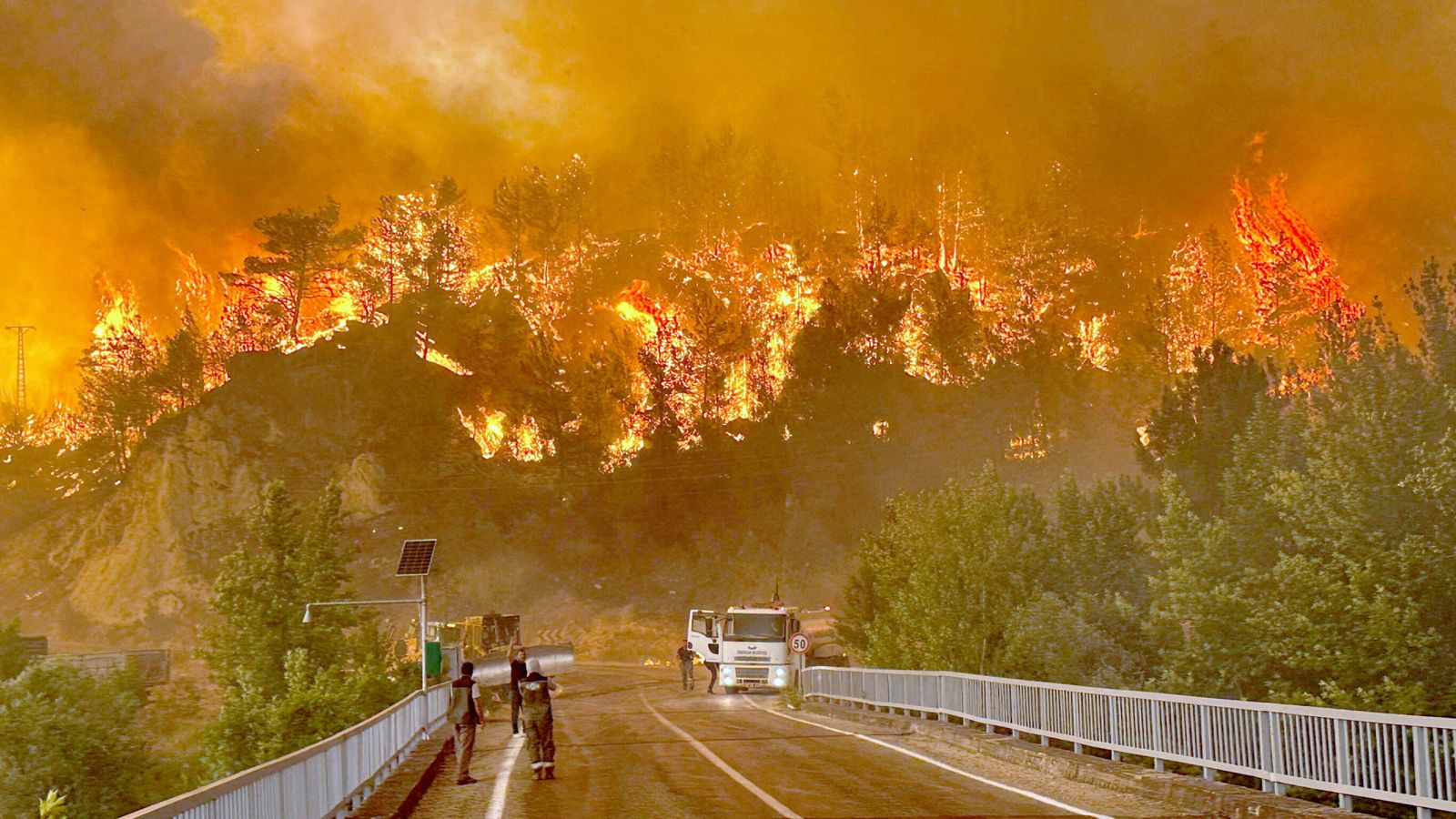
Turkey is grappling with a 'truly great disaster' as widespread wildfires, exacerbated by sweltering temperatures, have claimed 13 lives and led to disaster declarations in multiple provinces, engaging 25,000 emergency personnel. Concurrently, Cyprus is experiencing its worst wildfires on record, resulting in two fatalities and extensive property destruction. These severe blazes, affecting Southern Europe broadly, are increasingly linked by experts to human-caused climate change, signaling a growing risk of such destructive events for regional economies and infrastructure.
Severe wildfires across Turkey have resulted in 13 fatalities and the declaration of disaster zones in the Izmir and Bilecik provinces, prompting a massive emergency response involving 25,000 personnel. The economic impact is concentrated in key regions, including the popular tourist resort of Antalya, where evacuations have occurred. This is not an isolated event but part of a broader pattern of extreme weather affecting Southern Europe, with Cyprus experiencing its worst wildfires in memory and Greece's tourism sector impacted by forced closures of attractions like the Acropolis due to extreme heat. Experts cited in the report directly attribute the increasing frequency of these events to human-caused climate change, underscored by 2024 being the warmest year on record. The situation highlights a tangible and escalating physical risk to regional economies, particularly those reliant on tourism and agriculture, and signals significant fiscal strain for affected governments facing substantial disaster relief and reconstruction costs.
AI-powered research, real-time alerts, and portfolio analytics for institutional investors.
Request DemoOverall Sentiment
strongly negative
Sentiment Score
-0.70
