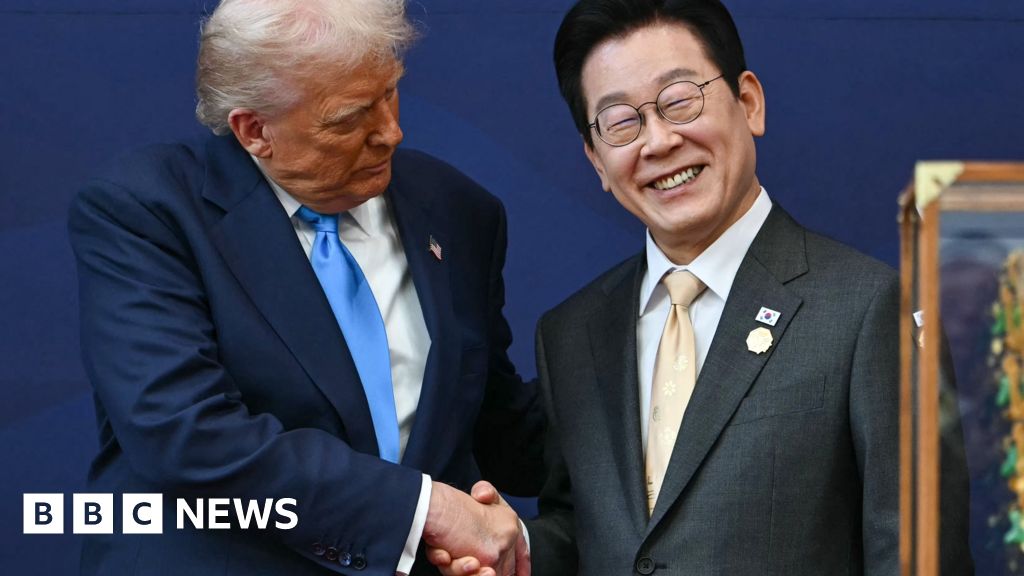
President Trump announced an increase in US tariffs on South Korean imports from 15% to 25% across a range of goods including automobiles, lumber and pharmaceuticals, meaning US importers will pay a 25% tax on affected Korean products. The move came after Trump accused Seoul of delaying ratification of a bilateral deal—submitted to South Korea's National Assembly on 26 November and tied to a $350bn Korean investment pledge in the US—and has prompted Seoul to seek urgent talks and dispatch Industry Minister Kim Jung-kwan to meet US Commerce Secretary Howard Lutnick, raising near-term trade-policy uncertainty for exporters, automakers and supply chains.
Market structure: a +10 percentage-point tariff shock (15%→25%) is a discrete cost shock for US importers of Korean autos, parts, lumber and pharmaceuticals. Short-term winners are US import-competing manufacturers and domestic materials/steel producers (pricing power improves as Korean supply becomes ~10% more expensive at the border); losers are Korean exporters and US firms with concentrated Korean input exposure, pressuring margins by low-single-digit percentage points initially.
Risk assessment: immediate reaction (0–7 days) will be FX volatility (KRW down, USD up) and equity gaps in Korean exporters; short-term (1–3 months) manifests in margin pressure in auto/parts supply chains and shipping demand shifts; long-term (3–36 months) could re-shape sourcing and spur CapEx in US shipbuilding/plant relocation if tariffs persist. Tail risks include tit-for-tat escalation to other trading partners, a formal Korean retaliatory package, or rapid rollback if Seoul accelerates the $350bn investment pledge — each changes payoff materially.
Trade implications: favor short Korean equity exposure and long USD/KRW FX; overweight US domestic materials and automakers with low Korean import share. Volatility should increase — use put protection on Korea (EWY) and call spreads for US steel (NUE). Entry: act fast on FX/options (24–72h), stagger equity positions over 2–8 weeks to avoid headline noise.
Contrarian angles: consensus assumes permanence; probability of negotiation/rollback is nontrivial — if South Korea’s National Assembly ratifies the deal within 30–60 days the tariff threat can be neutralized and Korean assets will rebound. Historical parallel: 2018 tariff shocks caused 10–20% near-term dislocations but supply chains adjusted within 12–24 months, creating mean-reversion opportunities on oversold Korean exporters.
AI-powered research, real-time alerts, and portfolio analytics for institutional investors.
Request DemoOverall Sentiment
moderately negative
Sentiment Score
-0.50
