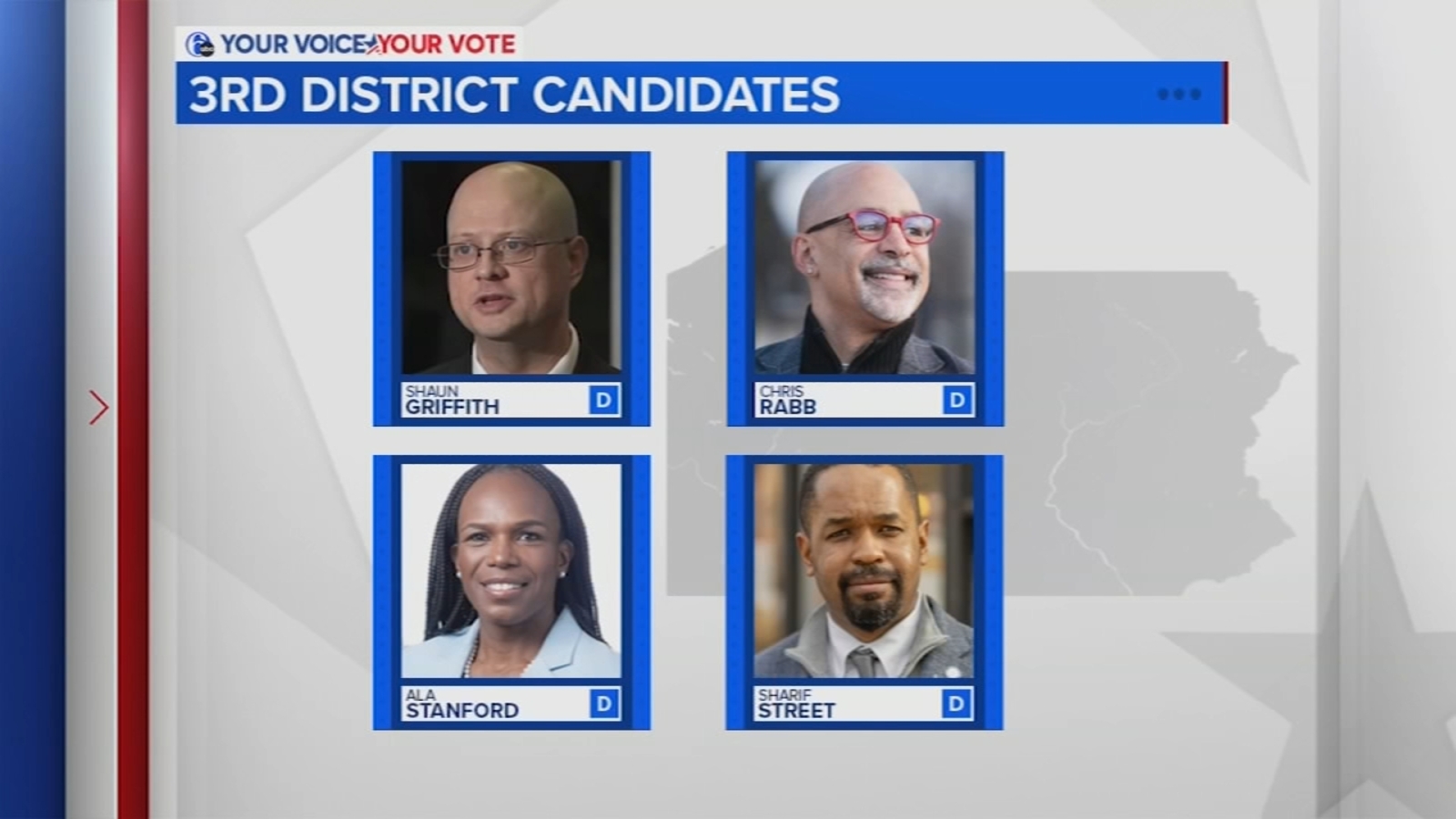
Chris Rabb is projected to win the Democratic primary in Pennsylvania's 3rd Congressional District, a heavily Democratic seat with no Republican candidate in the primary. The article focuses on turnout, mail-in ballot handling, and voter comments rather than policy or market implications. Overall impact on financial markets is minimal.
This is a pure low-volatility political event for markets, but it matters at the margin because it reduces near-term uncertainty around a safe Democratic seat. The real second-order effect is not policy drift in this district itself, but how a larger-than-usual primary turnout signals activist energy into the broader Pennsylvania cycle, where local organizing quality can meaningfully change down-ballot margins and the composition of the House margin math. The biggest market implication is that this kind of race typically does not move index-level risk, but it can affect individual names tied to state and local government exposure, nonprofit funding, and defense-adjacent procurement sentiment if the eventual nominee is viewed as materially more progressive. A candidate perceived as more ideologically left could modestly increase headline risk for municipal issuers and regulated utilities in the state over a 6-18 month horizon, though the effect is usually sentiment-driven rather than fundamental. The contrarian read is that investors often overestimate the practical policy gap between primary contenders in deeply blue districts. In a district this one-sided, the general election outcome is essentially pre-committed, so the tradable event is really the nomination margin: a surprise win or unexpectedly narrow result can be a signal about turnout coalitions and whether progressive enthusiasm is broad-based or concentrated. If the victor underperforms expectations, it can temper the market’s tendency to extrapolate a leftward policy swing across Pennsylvania. Risk to the thesis comes from misreading local energy as national momentum. If turnout enthusiasm is unusually high, it could be a leading indicator for broader Democratic mobilization in November, which would matter more for House control probabilities than for any single district. That would have a delayed timeline of weeks to months and would show up first in polling and special-election performance rather than in any immediate asset-price move.
AI-powered research, real-time alerts, and portfolio analytics for institutional investors.
Request DemoOverall Sentiment
neutral
Sentiment Score
0.02
