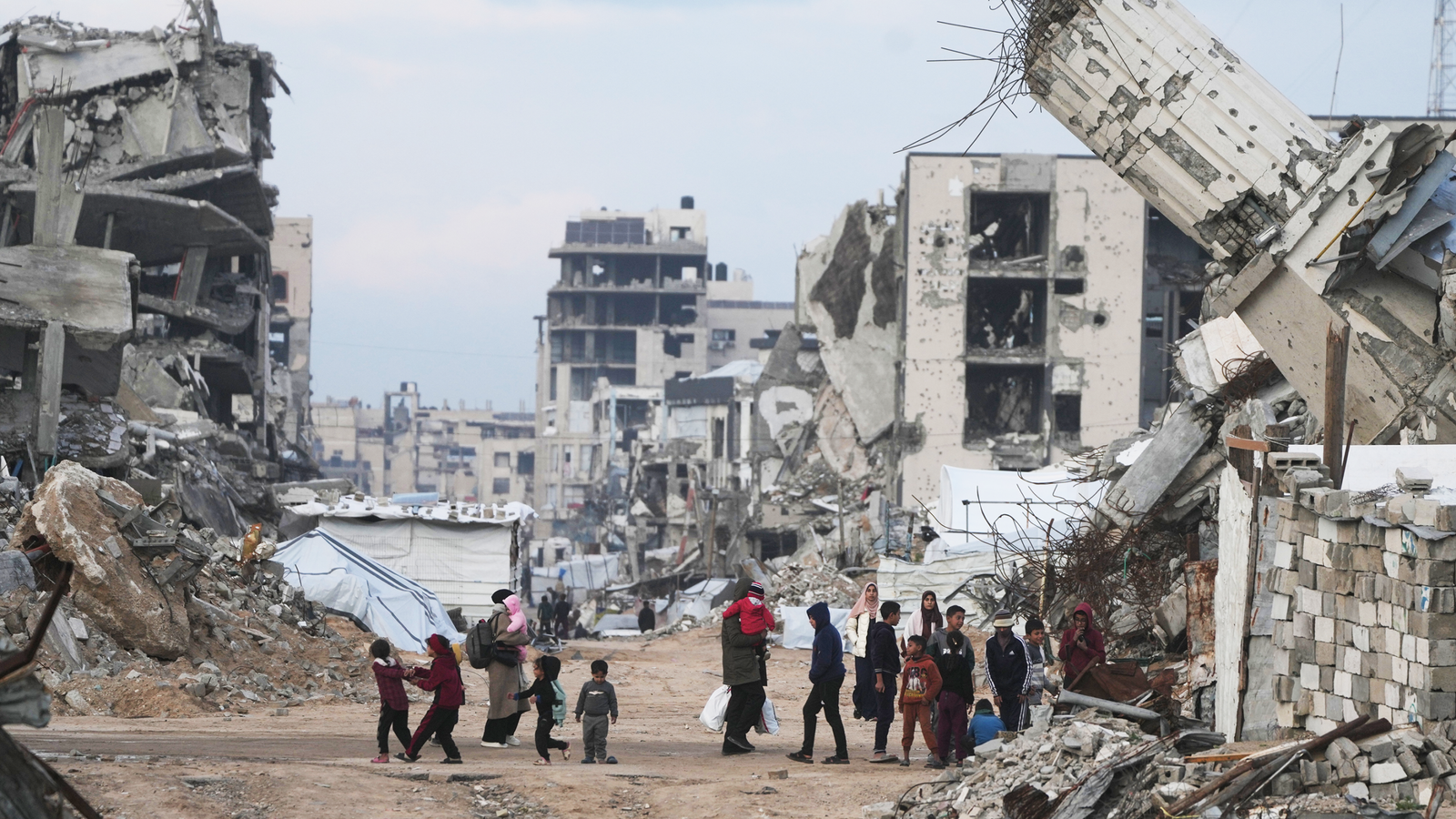
The US has launched phase two of a 20-point ceasefire plan to end the Gaza conflict, creating a transitional technocratic authority (NCAG) to run daily affairs under an international "Board of Peace" led by Donald Trump; NCAG will be headed by Ali Shaath and the Board's director-general named as Nickolay Mladenov. Phase two hinges on disarming Hamas, Israeli withdrawal and return of the final hostage, all unresolved and described as major obstacles, while the UN estimates reconstruction will exceed $50bn with little funding pledged to date. The plan's implementation risks prolonged uncertainty for regional stability and reconstruction financing, creating downside risks for regional markets and defense/infrastructure exposure.
Market structure: Phase Two creates a bifurcated opportunity set — a large, multi-year reconstruction demand pool (UN estimate >$50bn) that benefits heavy construction, engineering and materials providers, versus continued security upside for defense/intelligence vendors if disarmament fails. Supply/demand: immediate uplift in demand for cement, steel, heavy equipment and logistics in a 1-3 year window if donor pledges exceed $10bn; conversely crude/gas risk remains asymmetric to the upside on a conflict relapse. Cross-asset: expect near-term safe-haven flows (gold, USD, USTs) on headline risk; sustained reconstruction bidding would be positive for cyclicals and EM risk premia over 6–36 months.
Risk assessment: Tail risk includes a regional escalation that could push Brent >$90–$110 within days if Red Sea/Suez chokepoints or Gulf states are drawn in, and sovereign-credit stress in local banks if funding is delayed. Time horizons: immediate (days) — volatility spikes in FX/commodities; short (weeks–months) — donor conferences and pledge signals; long (quarters–years) — actual contract awards and capital flows. Hidden dependencies: reconstruction requires explicit donor guarantees, political-risk insurance and contractor access; lack of GCC underwriting is a single-point failure. Key catalysts: hostage return, Israeli withdrawal timetable, donor conference(s) and named peacekeeping contributors within 30–90 days.
Trade implications: Tactical protection (1–3 months) should bias into safe-havens and volatility instruments while selectively buying reconstruction-exposed names on confirmed funding. Medium-term (3–18 months) overweight construction/materials/engineering if a first $10–15bn in pledges is announced; underweight regional sovereign debt until peacekeepers/compliance are verifiable. Options: use short-dated directional structures to express asymmetric risk (calls on commodity/defense only as hedge; puts on Israel risk exposure).
Contrarian angles: Consensus underprices the upside from reconstruction contracting — if donors commit ≥$10bn within 90 days, select listed contractors could see 10–25% revenue re-rating over 12–36 months. Conversely the market may under-hedge for the low-probability high-impact escalation that would trigger oil and insurance spikes; insurance/LC markets tightening would slow rebuilding and re-rate cyclicals. Historical parallels (post-conflict rebuilds) show winner-takes-most dynamics to early bidders with political access; governance failure would create multi-year stranded-assets risk.
AI-powered research, real-time alerts, and portfolio analytics for institutional investors.
Request DemoOverall Sentiment
moderately negative
Sentiment Score
-0.35
