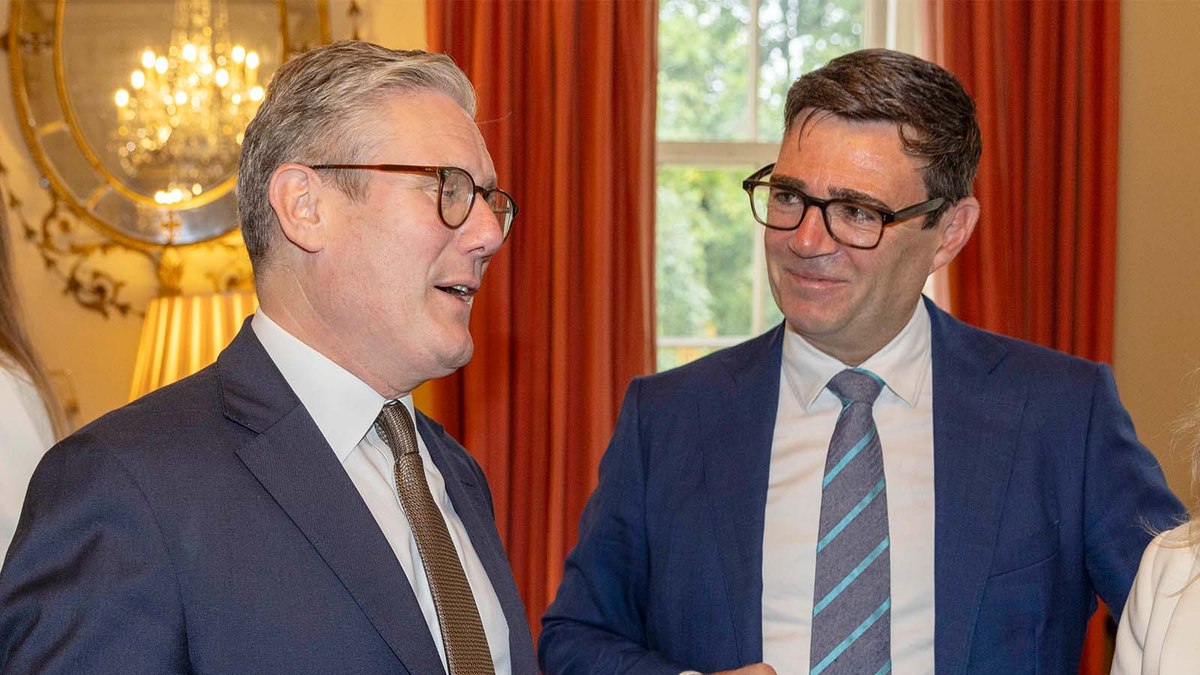
A YouGov survey of 706 Labour members shows Andy Burnham as the top leadership choice, with 47% ranking him first versus 31% for Keir Starmer. While 66% say Starmer is doing a good job as prime minister and 80% say Labour is doing well in government, only 28% think Labour is likely to win in 2029 if he remains leader, and 61% want him to stand down before the next general election. In head-to-heads, members would back Burnham over Starmer 59% to 37% and would overwhelmingly reject Wes Streeting in a leadership contest.
This is less a policy verdict than a signal that the market is underpricing leadership risk premia inside the governing party. The key second-order effect is not an immediate policy shift, but a lengthening of decision latency: a leader who is technically supported by members yet viewed as non-viable for the next election creates a prolonged period of factional manoeuvring, which usually bleeds into fiscal credibility and weakens cabinet cohesion. That matters for UK domestically focused assets because the next 6–12 months are likely to be driven by whether this becomes a contained noise event or a rolling internal reset.
The likely winners are not the obvious leadership hopefuls, but the parts of the market that benefit from a higher probability of pre-election fiscal loosening and more aggressive industrial/health spending signaling. UK small- and mid-cap domestic cyclicals, housebuilders, and healthcare-adjacent contractors can all trade on the expectation that leadership uncertainty forces more coalition-management spending. The losers are sectors that rely on a stable medium-term policy path: regulated utilities, long-duration defensives sensitive to tax/rhetoric risk, and sterling assets if the leadership question migrates into a wider confidence story.
The biggest tail risk is a by-election or ministerial resignation that turns an internal preference gap into an actual parliamentary contest. If Burnham-associated momentum keeps building, the market may begin discounting a pro-spend, higher-deficit leadership tilt before it is formally visible; if Starmer stabilizes the party and frontbench delivery improves, the current anti-incumbent pricing could reverse quickly. The time horizon is short for sentiment trades, but the policy implications are medium-term: 3–9 months for event risk, 12–24 months for fiscal regime expectations.
The contrarian read is that members may be expressing optimism about an alternative leader rather than a true desire for immediate replacement, meaning the headline looks more destabilizing than the actual decision tree. That creates an opportunity to fade knee-jerk moves in UK domestic beta if the leadership challenge never reaches a formal threshold. The asymmetry favors trading volatility around events rather than taking a large directional macro bet today.
AI-powered research, real-time alerts, and portfolio analytics for institutional investors.
Request DemoOverall Sentiment
neutral
Sentiment Score
0.00
