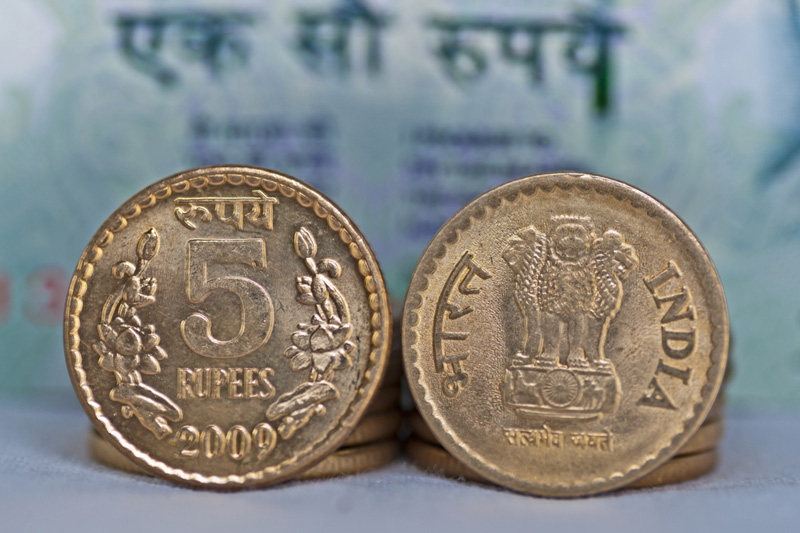
Barclays raised its year-end USD/INR target to 96.80, citing the rupee's vulnerability to oil supply shocks and a deteriorating balance of payments. The bank expects rising oil prices to boost dollar buying by importers and notes FDI/FPI outflows are straining the financial account, reducing odds of a sustained equity capital inflow rebound. Barclays sees asymmetric risks—dollar rallies have a larger impact than declines—and says the RBI is comfortable with gradual depreciation and unlikely to aggressively defend the rupee. The outlook implies downside pressure on the rupee versus the dollar and relative weakness versus the yuan amid a widening trade deficit with China.
The combination of energy-price volatility and fragile cross-border flows creates convexity in INR exposures: short-dated forwards and option skews will reprice ahead of spot moves as corporates and banks pre-hedge. Expect realized volatility to spike first in the 1–3 month tenor where hedging activity and funding stresses concentrate, while longer-dated forwards price in a slower drift rather than a clean mean-reversion.
Second-order winners are exporters with USD revenues and low import intensity (IT services, contract pharma) because currency moves mechanically boost local-reported margins; losers are import-heavy domestic industrials and transport operators that see margin compression and working-capital strain. A sustained bias in the currency will also accelerate invoicing, sourcing and receivables settlement shifts toward cheaper trade partners, pressuring domestic suppliers that sit mid‑stream in value chains.
Key catalysts and timeframes: near-term (days–weeks) — oil swings and portfolio flows that move liquidity; medium-term (3–12 months) — rate differentials and reserve dynamics that change optionality for intervention. Tail risks include a rapid FPI stop or commodity shock producing >5% INR moves in under a week; conversely, a large remittance/capital inflow or sharp oil decline could compress volatility and leave option premia overstated. Contrarian: the market may be over-discounting a structural, permanent depreciation — a growth slowdown could force a policy pivot to defend inflation expectations, which would quickly compress skews and favor carry/short-vol positions.
AI-powered research, real-time alerts, and portfolio analytics for institutional investors.
Request DemoOverall Sentiment
mildly negative
Sentiment Score
-0.25
Ticker Sentiment
