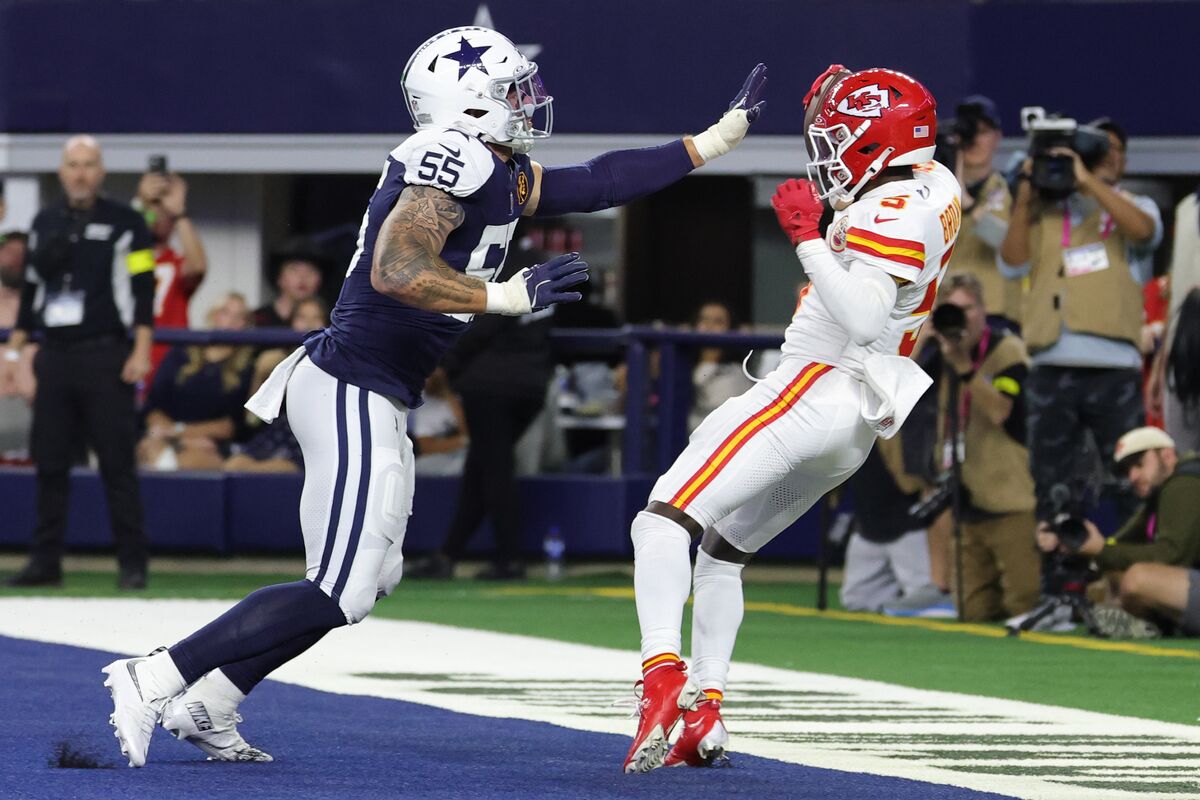
The Thanksgiving Cowboys–Chiefs regular-season game drew a record 57.2 million viewers, according to CBS, making it the highest-rated regular-season NFL broadcast on record. The strong audience underscores continued consumer demand for live sports broadcasts—supportive for broadcasters' advertising revenue and media valuations—while the article notes an anecdotal detail that both teams' owners live in Dallas, eliminating travel for ownership.
Market structure: record 57.2M regular-season viewers reinforces live NFL as a unique scarcity asset that directly benefits broadcasters (CMCSA, FOXA, PARA/PARAA, DIS) and ad-dependent platforms; expect linear TV ad CPMs to out-perform digital CPM growth by ~200–500bps through Q1 2026 as holiday inventory sells. Sports betting operators (DKNG, PENN) and Sinclair/regional sports networks see higher engagement and local ad upside, while pure-play streamers without live rights (NFLX, ROKU) face relative engagement compression.
Risk assessment: tail risks include aggressive rights-cost inflation (raises content spend >mid-single-digit points of EBITDA for broadcasters within 12–24 months) and regulatory pushback on exclusive regional packages; near-term (days–weeks) risk is headline-driven viewership variance, short-term (months) is ad market cyclicality, long-term (years) is rights fragmentation to big tech (AMZN, AAPL). Hidden dependency: retransmission fee renewals and MVPD churn dynamics will determine whether higher viewership converts to sustainable ARPU gains.
Trade implications: tactically overweight large-cap broadcasters with call-dominant exposure and buy-side sizing calibrated to rights-cost risk (2–3% positions in CMCSA/DIS over 3–12 months); use 3–6 month call spreads to capture seasonal CPM upside and 1–3 month DKNG call exposure into playoff windows. Rotate modestly out of pure streaming ad plays (NFLX, ROKU) into live-sports beneficiaries; consider pair trades to hedge macro ad weakness.
Contrarian angles: consensus may underweight the cost side—if rights fees re-accelerate, margin compression could make broadcasters overvalued; a prudent hedge is a small (0.5–1%) short in PARA/FOXA or buy protective puts on long media positions into Q1 2026 rights-renegotiation windows. Also, betting stocks may already price in NFL engagement; require >20% YoY handle growth signals before adding size.
AI-powered research, real-time alerts, and portfolio analytics for institutional investors.
Request DemoOverall Sentiment
neutral
Sentiment Score
0.12
