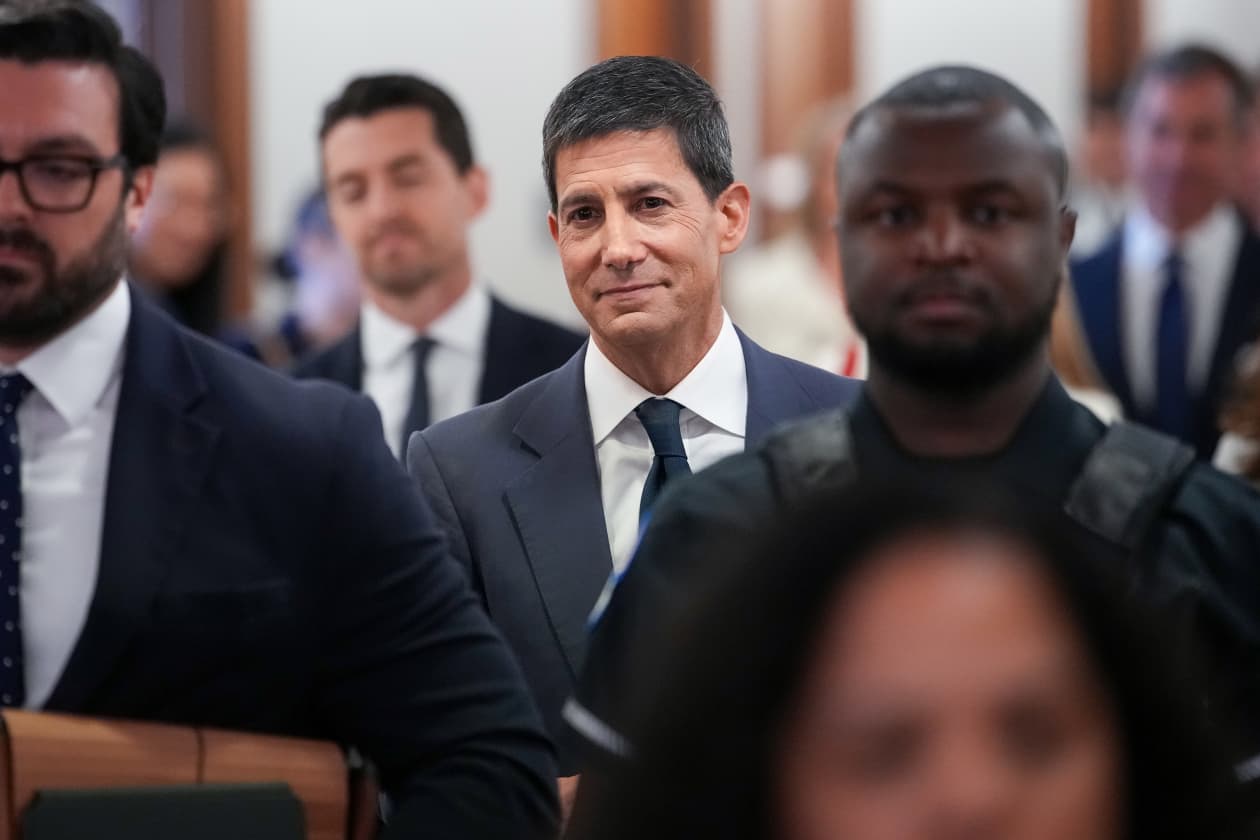
President Trump said he would let incoming Fed chair Kevin Warsh 'do what he wants to do' with interest rates, marking a notable shift after more than a year of pressure on the U.S. central bank. The comment is relevant for rate expectations because markets are currently viewing a hike as more likely, and any change in perceived Fed independence can affect Treasuries, equities, and the dollar. The article is mostly signaling and political in nature rather than a concrete policy action.
The key market implication is not the headline rhetoric itself but the probability distribution around real rates: a more politically pliable Fed chair raises the odds of a policy path that tolerates easier financial conditions longer than the market would otherwise price. That is a direct tailwind for duration-sensitive assets, but the first-order move may be smaller than the second-order effects in volatility, curve shape, and the dollar. In practice, this kind of shift tends to steepen the front end first, then compress equity risk premia as investors extrapolate a lower terminal rate or slower normalization. The biggest beneficiary set is not just long-duration equities; it is anything levered to declining discount rates and easier refinancing. Small-cap balance sheets, REITs, and high-quality growth with near-term cash flows should outperform, while banks can become more bifurcated: asset-sensitive lenders may underperform if the market starts pricing faster cuts, but brokers and capital-markets names can benefit from a re-acceleration in issuance and M&A. The second-order loser is the dollar, which would weaken if foreign rate differentials compress, creating a potential tailwind for commodities and multinationals with offshore revenue exposure. The risk is that the market is already partially positioned for a dovish policy regime, so the move can reverse if incoming data re-anchors the Fed to inflation credibility or if the nomination process signals less control than investors assume. Over the next 1-3 months, the cleanest catalyst is a repricing in front-end yields; over 6-12 months, the more important catalyst is whether easier policy loosens financial conditions enough to re-ignite inflation expectations, which would force a hawkish correction and punish crowded duration longs. The contrarian view is that a softer Fed narrative may actually become bearish if it pushes breakevens up faster than real yields fall, tightening equity multiples through term-premium expansion rather than helping them. From a flows perspective, this is a regime where systematic allocators can amplify the move: lower realized-rate volatility supports risk parity, CTA trend-following, and vol-selling strategies, but only if the curve moves in a clean direction. If policy uncertainty remains high, the better trade may be relative value rather than outright duration because rate volatility can stay elevated even as the broad direction becomes more dovish. That favors pairing long beneficiaries of lower rates against short beneficiaries of higher term premium rather than making a binary macro bet.
AI-powered research, real-time alerts, and portfolio analytics for institutional investors.
Request DemoOverall Sentiment
neutral
Sentiment Score
0.05
