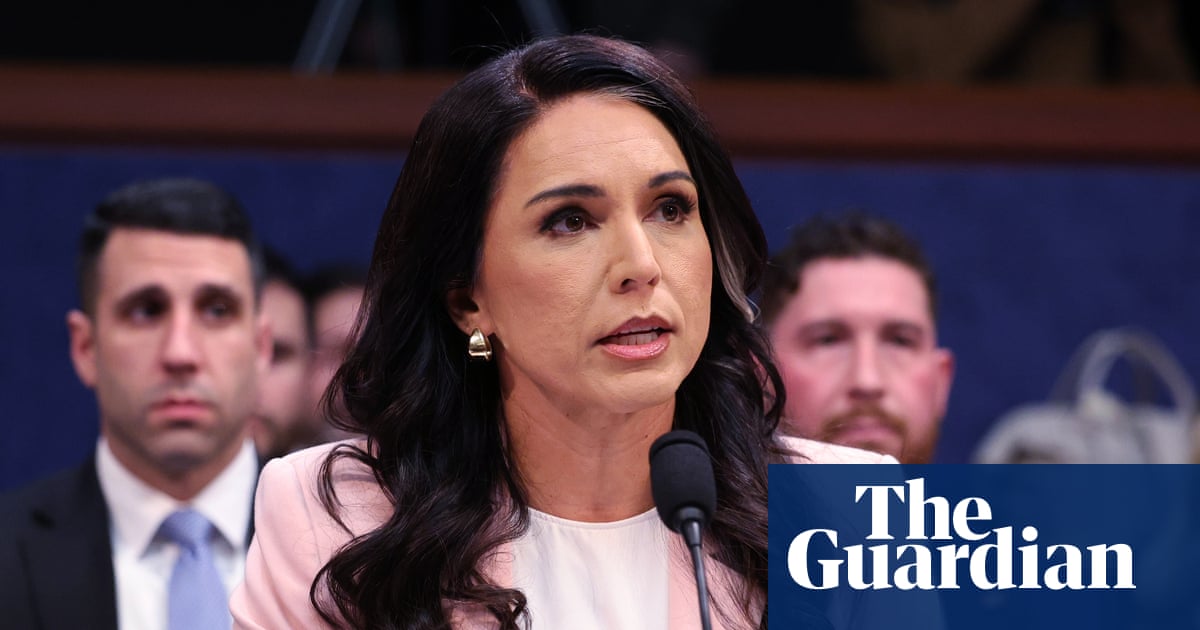
Possible removal of DNI Tulsi Gabbard: Trump privately asked advisers in recent weeks whether to replace her after she appeared to shield a former deputy and delivered contentious testimony on Iran. No clear successor exists and aides warn a high-profile vacancy could create political distractions; Trump publicly gave a mixed endorsement. Gabbard has a string of clashes with the White House (including revoking 37 security clearances and disputed testimony), raising governance risk around U.S. intelligence leadership.
Personnel uncertainty at the top of the intelligence apparatus creates an outsized, short-duration risk premium in sectors that rely on operational tempo and near-term strike authorizations — principally missile/munitions suppliers, ISR platforms, and classified-systems contractors. Expect a two- to eight-week window where program-level decisions (targeting approvals, strike support tasking, urgent procurement) are either accelerated to lock in options or delayed pending a confirmed DNI, creating lumpy revenue timing for select primes.
Second-order winners include firms with large organic exposure to air-launched munitions, long-range ISR and targeting pods (materially RTX, LMT, NOC exposure) and cybersecurity contractors benefiting from heightened threat monitoring budgets; second-order losers are civil aerospace suppliers and contractors reliant on smooth interagency coordination for classified program awards, which can see 3–6 month slip risk. Politically, a high-profile vacancy or reshuffle increases the odds of headline-driven volatility and a tactical flight-to-quality into defense equities and gold in the first 48–72 hours, but a named successor who signals a hawkish tilt can compress spreads just as quickly.
Tail risks skew asymmetrically: a hardening of policy that raises kinetic engagement probability would rapidly re-rate munitions and ISR leads (potentially +15–30% over 1–3 months), whereas prolonged internecine fights or a demotion by reassignment could introduce 10–20% revenue timing risk for exposed contractors. Reversal catalysts are straightforward — clear successor announcement, White House public unity, or Congressional action to constrain kinetic options — each capable of erasing the short-term premium within weeks.
AI-powered research, real-time alerts, and portfolio analytics for institutional investors.
Request DemoOverall Sentiment
mixed
Sentiment Score
0.00
