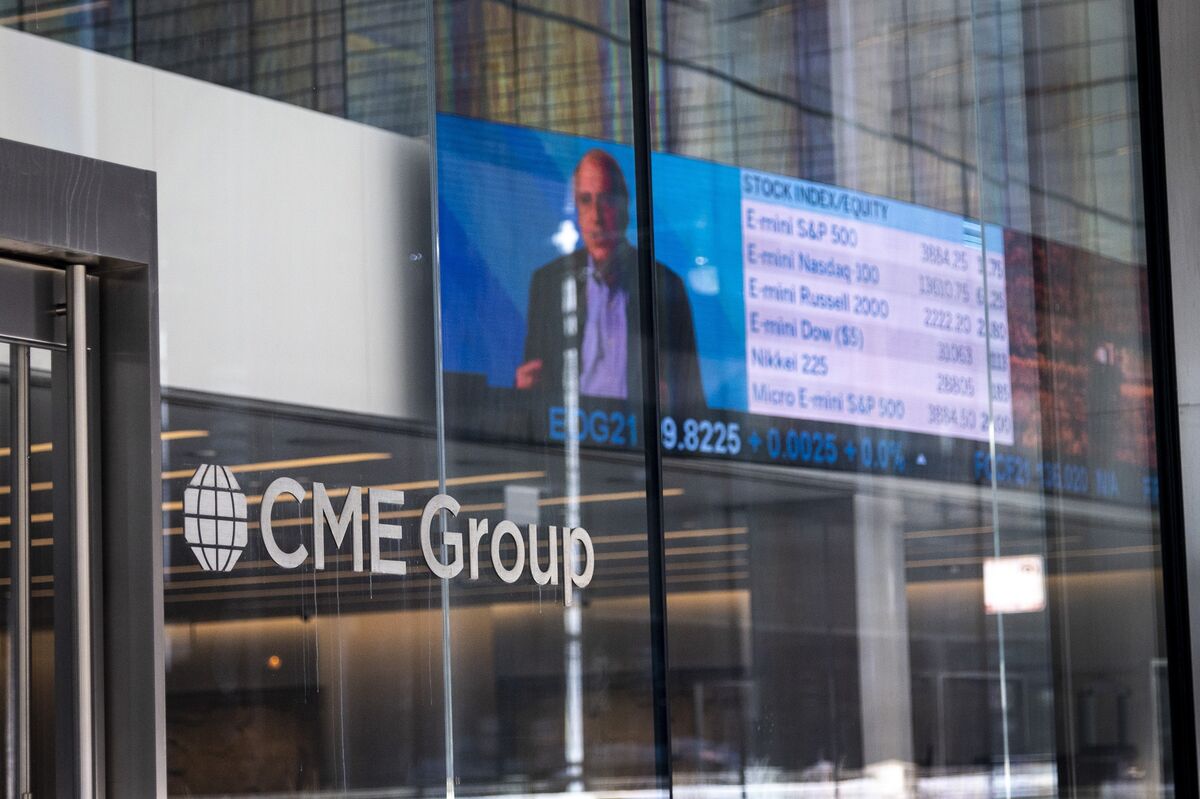
The Chicago Mercantile Exchange experienced an hours-long outage that crippled key parts of financial markets but is set to restore most trading operations, with its Globex Futures & Options platform — which accounts for roughly 90% of CME Group’s volume — scheduled to reopen at 7:30 a.m. CT. The disruption to futures, options and commodities trading risks short-term liquidity dislocations and elevated volatility as backlogs and order flow are absorbed once markets resume, potentially affecting pricing and positioning across derivatives and commodity futures markets.
Market structure: The outage disproportionately benefits rival venues (ICE, CBOE) and dark pools as clients seek redundancy; given Globex handles ~90% of CME volume, expect intraday flow diversion of 1–4% ADV initially and spread widening of 20–50% in affected contracts for 24–72 hours. Pricing power could shift marginally—if clients permanently diversify by >1% ADV over 3–12 months, CME revenue could fall 0.5–2% annually absent remediation. Cross‑asset: transient knock‑on volatility in equity index futures, commodity futures and FX may move realized volatility +30–100 bps intraday and push short-term funding spreads wider by ~1–3bp.
Risk assessment: Tail risks include large regulatory fines (>=$100M), class action suits, or a cascading liquidity/clearing margin event triggering forced sales within 24–72 hours; low-probability but high-impact. Time horizons split: immediate (days) = liquidity/price dislocation; short-term (weeks–months) = client re-routing and reputational damage; long-term (quarters–years) = capex to re-platform and potential 1–3% market share loss. Hidden dependencies: vendor network providers, colocation firms, and clearing counterparties; catalysts are CFTC/SEC inquiries, competitor capacity upgrades, or repeated outages.
Trade implications: Direct: tactically short CME (CME) 1–2% portfolio weight or buy 3‑month 25‑delta puts (strike ~5–8% OTM) initiated within 3 trading days; pair: long ICE (ICE) equal notional vs short CME to express market‑share shift. Options: for asymmetric risk, buy CME 3‑month put spread (e.g., 8%/15% OTM) to limit premium outlay; exit if CME daily volume normalizes to within ±2% of baseline for 30 consecutive trading days or if CME share <–5% on quarter basis. Rotate +1–2% into cybersecurity names (CRWD, PANW) as insurers against recurrence and fee tail risks.
Contrarian angles: Consensus may overstate permanent flight—historical exchange outages (e.g., 2012–2015) produced <1–2% long‑run share shifts; a knee‑jerk 8–12% sell‑off in CME could be an opportunistic buy if post‑mortem shows single‑vendor failure and remediation roadmap within 90 days. Mispricing risk: short CME without hedging ICE/CBOE exposure is asymmetric—CME buybacks and sticky clearing revenues create downside support. Unintended consequence: accelerated client diversification could raise industry-wide OPEX and benefit best‑in‑class incumbents over smaller venues.
AI-powered research, real-time alerts, and portfolio analytics for institutional investors.
Request DemoOverall Sentiment
mildly negative
Sentiment Score
-0.25
Ticker Sentiment
