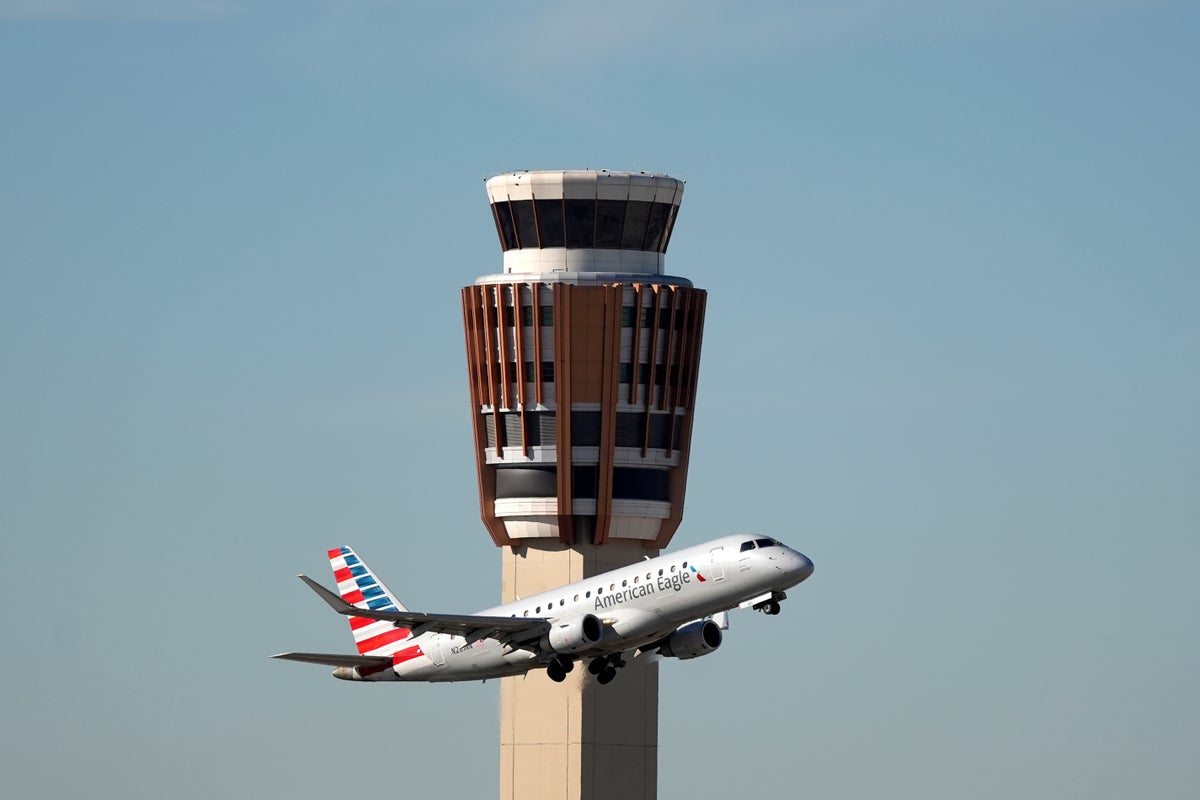
During the 43-day federal shutdown from Oct. 1 to Nov. 12, many air traffic controllers worked without pay, with widespread absences prompting cuts at 40 major airports and operational disruption. Former President Trump urged docking pay for controllers who missed shifts and offered bonuses of up to $10,000 for perfect attendance; the FAA said only 776 of more than 10,000 workers qualified for bonuses. Rep. Sam Graves, chair of the House Transportation and Infrastructure Committee, rejected punitive pay docking and introduced a bipartisan bill to guarantee controller pay during future shutdowns by tapping a little-used $2.6 billion flight insurance fund, aiming to insulate air-traffic operations from congressional funding lapses.
Market structure: The immediate winners from a durable funding fix for ATC pay are airlines (AAL, UAL, DAL) and travel platforms (BKNG, EXPE, JETS ETF) because predictable ATC staffing preserves scheduled capacity and reduces cancellation risk; conversely regional carriers and airport concessions bear near-term operational pain from unpredictability. If Graves’ bill (tap $2.6bn flight insurance fund) passes, pricing power shifts modestly toward incumbents—national carriers and global OTAs—because fewer sudden flight cuts favor larger networks and booking platforms that capture rebookings and ancillary revenue.
Risk assessment: Tail risks include a repeat prolonged shutdown or union-led sickouts/strikes that could cut 1–5% of U.S. seat capacity for weeks, causing 5–20% downside in small/mid-cap carriers and spiking implied vols; litigation over docking pay could create regulatory precedents raising labor costs 1–3% of airline opex. Time horizons: expect market reaction in days around committee actions or FAA statements, clearer directional moves in weeks if legislation advances, and structural shifts in 6–18 months as funding/resourcing patterns crystallize.
Trade implications: Prefer long exposure to large-cap, liquid airline names and ATC/defense contractors (RTX, LHX) on a bill-probability >50% and hedge with out-of-the-money puts; use 3–6 month call spreads on UAL/AAL (delta ~0.3) sized to 0.5–2% portfolio risk to capture normalization while capping downside. If bill stalls, rotate to volatility trades: buy 6-month 10% OTM puts on JETS or short regional carriers (e.g., SAVE-sized small caps) with strict 6% stop-loss.
Contrarian view: Consensus downplays FAA funding as a non-market event; that's underestimating operational leverage—past shutdown-related interruptions moved some airline stocks 4–8% in 2018–19. Unintended consequence: tapping the insurance fund could tighten future capital for infrastructure projects, boosting long-term equipment vendors (RTX, LHX) but forcing airlines to absorb incremental fees; mispricings exist in under-owned ATC tech suppliers and oversized short positions in small-cap regional airlines.
AI-powered research, real-time alerts, and portfolio analytics for institutional investors.
Request DemoOverall Sentiment
mildly negative
Sentiment Score
-0.25
