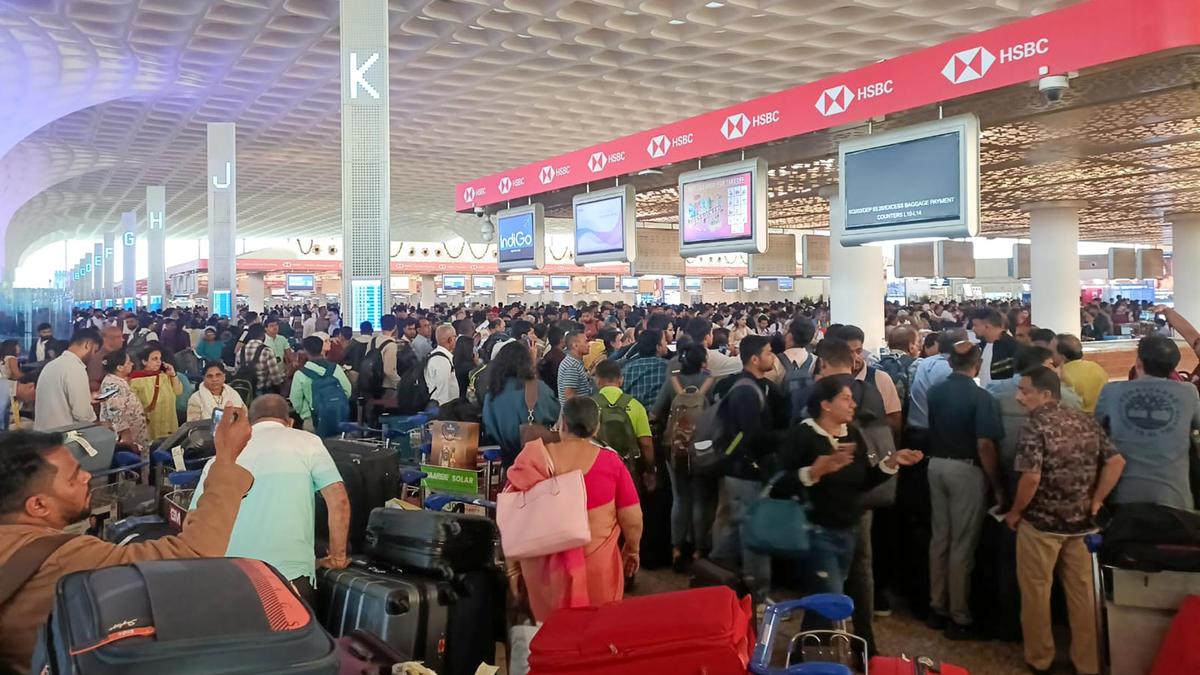
IndiGo grounded and cancelled at least 280 flights across five major Indian airports (Delhi 30, Bengaluru 73, Hyderabad 68, Chennai 31, Mumbai 85) after failing to meet new DGCA rest-and-duty norms implemented Nov. 1; the airline cited 'misjudgment and planning gaps' in crew planning and has asked for an exemption until Feb. 10. Regulators met with management, directed urgent deployment of staff and a detailed crew-recruitment roadmap, and the carrier said it will curtail flights from Dec. 8 while disruptions continue for 2–3 days, a move that has already disrupted other carriers (Pune: 9 of 10 bays occupied, 15 flights cancelled). The episode raises near-term revenue, capacity and reputational risks for IndiGo and increases regulatory scrutiny that could pressure the airline's stock and operational margins.
Market structure: The immediate winner is non-IndiGo capacity — competing carriers and ground/airport service providers (and their insurers) gain short-term pricing power as IndiGo curtails flights; direct loser is InterGlobe Aviation (InterGlobe Aviation, NSE: INDIGO) whose utilisation, yields and PR hit will compress near-term margins. Expect short-term upward pressure on fares on routes with capacity withdrawal (December–Feb), supporting unit revenue for surviving carriers by ~5–12% on thin routes; airports/operators (GMRINFRA, ADANIPORTS) see mixed outcomes — terminal congestion hurts service metrics but slot scarcity can raise per-slot economics.
Risk assessment: Tail risks include DGCA fines, forced curtailment of slots, or a mandate limiting growth beyond current staff levels — a downside scenario that could shave 10–25% off INDIGO’s near-term EBITDA if enforced (quarters). Timeline: immediate (0–7 days) operational chaos and share volatility; short (2–12 weeks) depends on DGCA review (request for exemption runs to Feb 10); long-term (3–12 months) depends on recruitment/roster fixes and fleet induction cadence.
Trade implications: Short INDIGO into expected uncertainty (use equity or Feb 2026 ATM puts) sized 2–3% portfolio with stop-loss 8% and target 20–30% in 1–3 months if exemption denied or further cancellations continue. Pair: long airport operators (GMRINFRA 1–1.5%, ADANIPORTS 1–1.5%) vs short INDIGO to capture capacity-consolidation premium; for volatility play buy INDIGO Feb 2026 ATM puts (delta ~0.35) or a put spread to limit premium outlay.
Contrarian angles: Consensus focuses on headline cancellations; markets may underprice two outcomes — a regulator-granted temporary exemption (through Feb 10) which would cause a quick mean-reversion rally in INDIGO (20–30% intraday relief) or a prolonged recruitment cost cycle that structurally raises industry unit costs. Historical parallels: 2019 regulatory roster changes showed 4–8 week disruptions then normalization; if IndiGo funds accelerated hiring and pays sign-on premiums, expect margin recovery by H2-2026, creating a volatility-based re-entry opportunity.
AI-powered research, real-time alerts, and portfolio analytics for institutional investors.
Request DemoOverall Sentiment
strongly negative
Sentiment Score
-0.70
