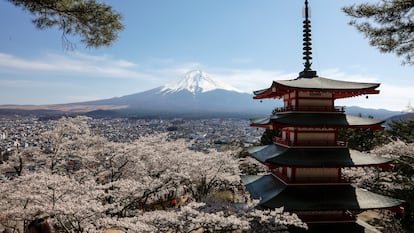
Japanese authorities have cancelled a major cherry blossom festival following complaints that visiting foreigners were littering and allegedly defecating in residential yards; the surge in inbound tourists has become a contentious political issue ahead of a national general election on Sunday. The decision underscores rising domestic backlash against mass tourism and may weigh on near-term tourism spending and local sentiment, though it is unlikely to produce material market moves at a national macroeconomic level.
Market structure: Cancellation of a marquee sakura event is a localized demand shock that disproportionately hits inbound-tourism payloads — airlines (e.g., 9201.T, 9202.T), airport duty-free, luxury retail and short-stay lodging — likely removing 3–8% of peak-season revenues for exposed names over the next 1–3 months. Domestic-facing businesses (regional rail, grocery/discount retail, municipal cleaning/security contractors) see relative share gains and pricing power for staycation demand; expect a short-term yield squeeze in hotel room rates and discounting in high-tourist neighborhoods.
Risk assessment: Tail risks include harsher, nationwide visitor restrictions or reciprocal international advisories after the election (low-probability, high-impact), which could widen revenue shortfalls to 15–25% over a quarter. Immediate risk window is days around the election (heightened vol/liquidity), short-term effects materialize over 4–12 weeks as bookings reprice, and structural reputational damage would play out over quarters. Hidden dependencies: FX flows from tourist cash conversion and duty-free VAT reclaim patterns; viral social-media coverage is the main catalyst to accelerate or reverse trends.
Trade implications: Near-term trade: hedge Japan equity exposure and underweight travel/leisure for 4–8 weeks; use options to cap cost. Medium term (2–6 months) selectively accumulate domestic-service winners (rail, supermarkets) while avoiding tourism-capacity owners. Cross-asset: expect small JPY downside pressure (1–3%) if inbound arrivals drop and political rhetoric escalates; JGBs modestly repriced only if election amplifies fiscal uncertainty.
Contrarian angles: Consensus may overplay one-event headlines — a single festival cancellation is reversible and could trigger government stimulus for domestic tourism. If tourism-exposed names drop >12% in 2 weeks, that could present tactical accumulation opportunities: historical parallels (SARS) show a 3–6 month trough then rebound. Unintended consequence: aggressive local restrictions could push Tokyo to deploy stimulus/subsidies benefiting domestic travel suppliers, creating a mean-reversion trade.
AI-powered research, real-time alerts, and portfolio analytics for institutional investors.
Request DemoOverall Sentiment
mildly negative
Sentiment Score
-0.30
