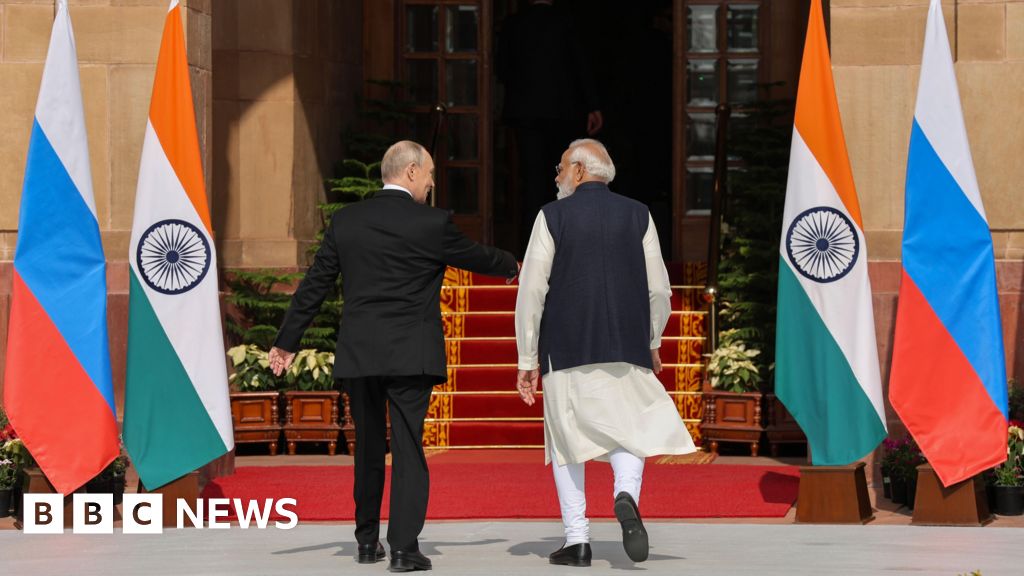
India and Russia reaffirmed a “special and privileged” strategic partnership in a high‑profile visit that produced multiple memoranda across shipbuilding, critical minerals, pharmaceuticals (including a factory in Russia's Kaluga region), civil nuclear cooperation, visa liberalisation and a five‑year economic framework targeting $100bn bilateral trade. Current bilateral trade stands at $68.72bn (from $8.1bn in 2020), heavily driven by discounted Russian oil; Moscow pledged uninterrupted fuel shipments but offered no pricing or volume details, and no major defence purchases or concrete energy/deal mechanisms were announced amid US pressure on India (including cited 50% tariffs). The outcome reduces immediate geopolitical uncertainty around continued energy flows but lacks market‑moving specifics, leaving policy and supply‑chain risks intact for energy, defence and commodity markets.
Market structure: The visit reinforces a bilateral tilt toward trade and energy ties without immediate defence decoupling; winners are Indian refiners/spot crude importers and global tanker owners capturing redirected Russian flows, losers are Indian exporters exposed to US tariffs (IT/outsourcing, some consumer exporters). Pricing power shifts: Russia retains crude demand elasticity with India as a low‑price buyer, compressing Brent-Russia spreads and supporting tanker rates; critical‑minerals cooperation signals potential medium-term relief for battery‑metal bottlenecks but not instant price drops.
Risk assessment: Key tail risks include US secondary sanctions or immediate 50% tariff enforcement on specific Indian goods (months), or a rapid formal oil‑trade settlement mechanism that bypasses banking frictions (weeks) — either can swing flows and asset prices by >10–20% in affected sectors. Hidden dependencies: payment rails (rupee‑rouble arrangements) and shipping insurance (P&I) determine real deliverability; these are low‑visibility operational constraints that can create sudden supply shocks.
Trade implications: Near term (0–3 months) favor long exposure to crude tanker equities and Indian domestic energy/refining (1–2 quarters to realize margins), short selectively export‑exposed Indian names if tariffs are enacted within 60 days. In 3–12 months, allocate to miners/battery‑supply plays if formal EAEU–India FTA advances, while avoiding Russian defence plays until delivery certainty returns.
Contrarian angles: Consensus focuses on geopolitics; market underestimates operational frictions (insurance, payments) that cap immediate Russian export volumes — meaning tanker and spot crude rallies may overshoot then mean‑revert. The absence of defence deals is priced as cooling Moscow‑Delhi ties, but quiet negotiations could produce backloaded defence revenue for OEMs in 12–24 months.
AI-powered research, real-time alerts, and portfolio analytics for institutional investors.
Request DemoOverall Sentiment
mixed
Sentiment Score
-0.10
