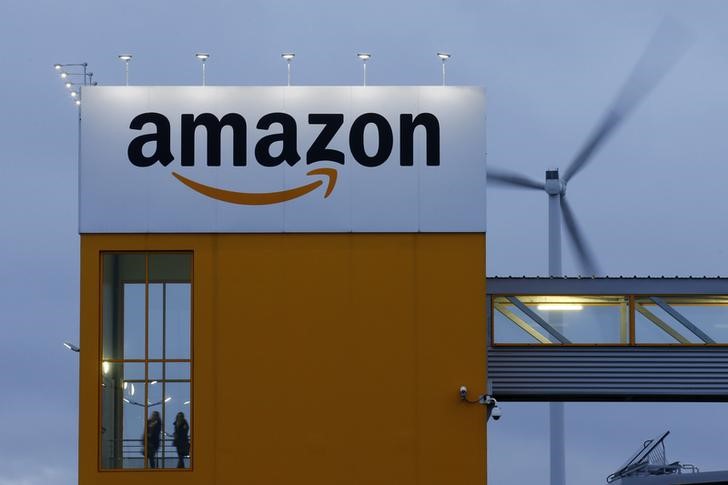
Amazon launched Supply Chain Services, opening its logistics network to external businesses with freight, fulfillment, and parcel shipping capabilities across multiple industries. Initial customers include Procter & Gamble, 3M, Lands' End, and American Eagle Outfitters, highlighting early commercial traction for the new offering. The article also cites multiple bullish analyst target hikes for AMZN to $325 and $330, reinforcing a positive near-term setup for the stock.
AMZN is turning its logistics stack into an external monetization engine, which matters more for margin mix than near-term revenue. The strategic read-through is that Amazon is trying to convert fixed network capacity into an asset-light software-plus-services layer, improving utilization while deepening switching costs for third parties. If adoption scales, the market may eventually reward the segment like a toll-road business rather than a low-margin retailer function, which supports multiple expansion over a 12-24 month horizon. The second-order impact is more competitive than the headline suggests. Traditional 3PLs, parcel consolidators, and regional freight intermediaries face pressure on price and service levels because Amazon can cross-subsidize customer acquisition with the broader ecosystem and offer bundled fulfillment, inventory pooling, and last-mile delivery. That creates an asymmetry: competitors must defend share without Amazon's consumer demand flywheel, while shippers get a one-stop stack that reduces vendor fragmentation and working capital drag. For PG and MMM, this is a logistics efficiency story, not a demand story, but it can still improve cash conversion if Amazon's network lowers transit times and inventory buffers. AEO benefits more visibly because faster parcel performance can reduce cart abandonment and markdown risk in apparel, where fulfillment speed is a conversion lever. The main risk is execution: if service levels are uneven, Amazon could attract large-volume customers but lose them after a few quarters, turning the announcement into a utilization headfake rather than a durable new profit pool. The contrarian view is that the market may be overestimating the immediate financial contribution and underestimating regulatory and channel-conflict risk. Enterprise customers will test Amazon first on reliability, claims resolution, and data transparency; if any of those degrade, adoption slows quickly. The better setup is to view this as a 2026-2027 earnings lever, not a next-quarter catalyst, with upside optionality if Amazon proves it can scale external logistics without cannibalizing its own operational priorities.
AI-powered research, real-time alerts, and portfolio analytics for institutional investors.
Request DemoOverall Sentiment
moderately positive
Sentiment Score
0.45
Ticker Sentiment
