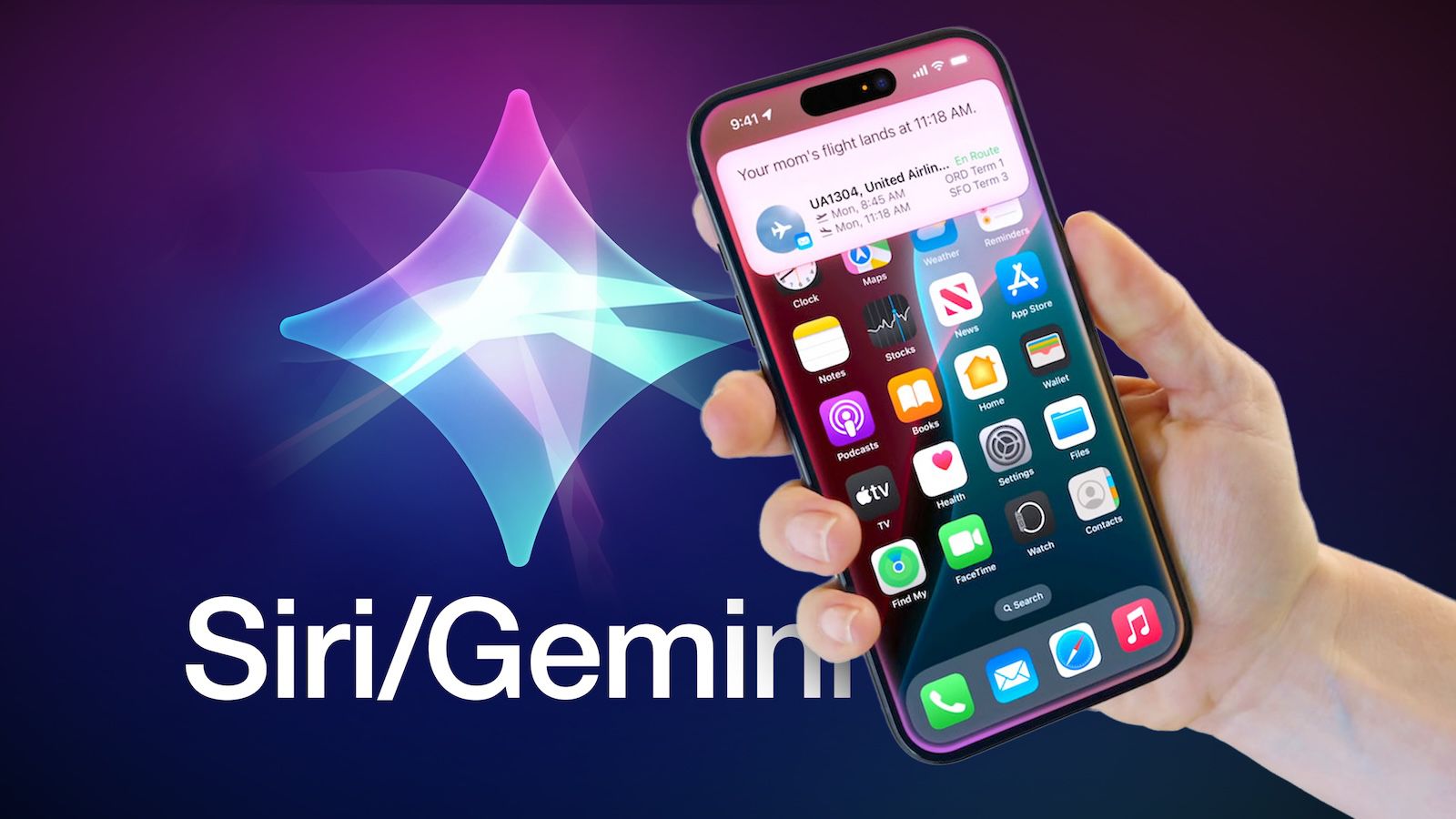
Apple is expected to seed iOS 26.3 Release Candidate imminently with a public release in early February, introducing minor features such as an iOS-to-Android transfer tool, notification forwarding, third-party accessory proximity pairing, and carrier-facing precise-location settings while preparing carriers for end-to-end RCS encryption. Separately, Apple plans to preview a more personalized Siri powered by Google Gemini integrated into an Apple Intelligence model (iOS 26.4 beta in February, public rollout March/April for iPhone 15 Pro and newer); calendar items of note include Apple Arcade additions (Feb 5), Swift Student Challenge submissions (Feb 6–28), Super Bowl halftime sponsorship (Feb 8), Home app architecture deprecation (Feb 10), and the virtual shareholders meeting on Feb 24.
Market structure: Apple (AAPL) and Google (GOOGL/GOOG) are the clear near-term winners — Apple preserves device pricing power while outsourcing advanced LLM capability to Google, and Google gains distribution for Gemini technology and cloud hosting demand. Accessory makers that adopt Apple's new pairing standards (or Google-backed protocols) benefit; legacy carriers and smaller messaging platforms risk feature erosion as RCS E2E and on-device bridging reduce their value-add. Expect a modest uptick in demand for cloud/GPU capacity (NVDA exposure) over the next 6–24 months; bond yields and FX impact should be muted but tech equity vol may compress if the market views this as an incremental, not transformational, revenue driver.
Risk assessment: Tail risks include regulator scrutiny (US/EU antitrust or privacy fines) from an Apple–Google AI tie-up and data-flow audits, with a plausible 5–20% headline shock to AAPL/GOOGL if enforcement escalates within 3–12 months. Operational risk — delayed or buggy Siri rollout — could push positive sentiment out past the March–April public release window; hidden dependencies include carrier cooperation for RCS E2E and app-level permissions that could blunt usefulness. Catalysts: iOS 26.3 RC (next week) and iOS 26.4 beta (Feb) are short-term event triggers; WWDC (June) and quarterly cloud revenue prints are medium-term catalysts.
Trade implications: Tactical long AAPL into the March–April iOS 26.4 public rollout (2–3% position or 3-month calls) to capture upgrade/PR sentiment, with a stop at -8% and profit trim at +12–18% within 3 months. Add a 1.5–2% position in GOOGL (6–12 month horizon) to play Gemini monetization and cloud demand; complement with 6-month NVDA call exposure (0.5–1% notional) to capture GPU tailwinds. Consider a relative pair: long GOOGL / short AMZN (equal notional 1–1.5%) over 6–12 months to express Google Cloud share gains; exit if spread reverses by 1,000 bps or after 12 months.
Contrarian angles: The market may be understating regulatory friction — Siri’s narrow initial device eligibility (iPhone 15 Pro and newer) limits TAM to ~20–30% of active install base early on, capping near-term ARPU uplift. Historical parallel: early Siri and other assistant rollouts delivered lots of headlines but little direct revenue for 12–24 months; monetization could similarly lag, creating an arbitrage window. Unintended consequence: consumer privacy backlash could accelerate demand for on-device-only models, benefiting companies emphasizing local AI and reducing cloud upside for Google.
AI-powered research, real-time alerts, and portfolio analytics for institutional investors.
Request DemoOverall Sentiment
neutral
Sentiment Score
0.10
Ticker Sentiment
