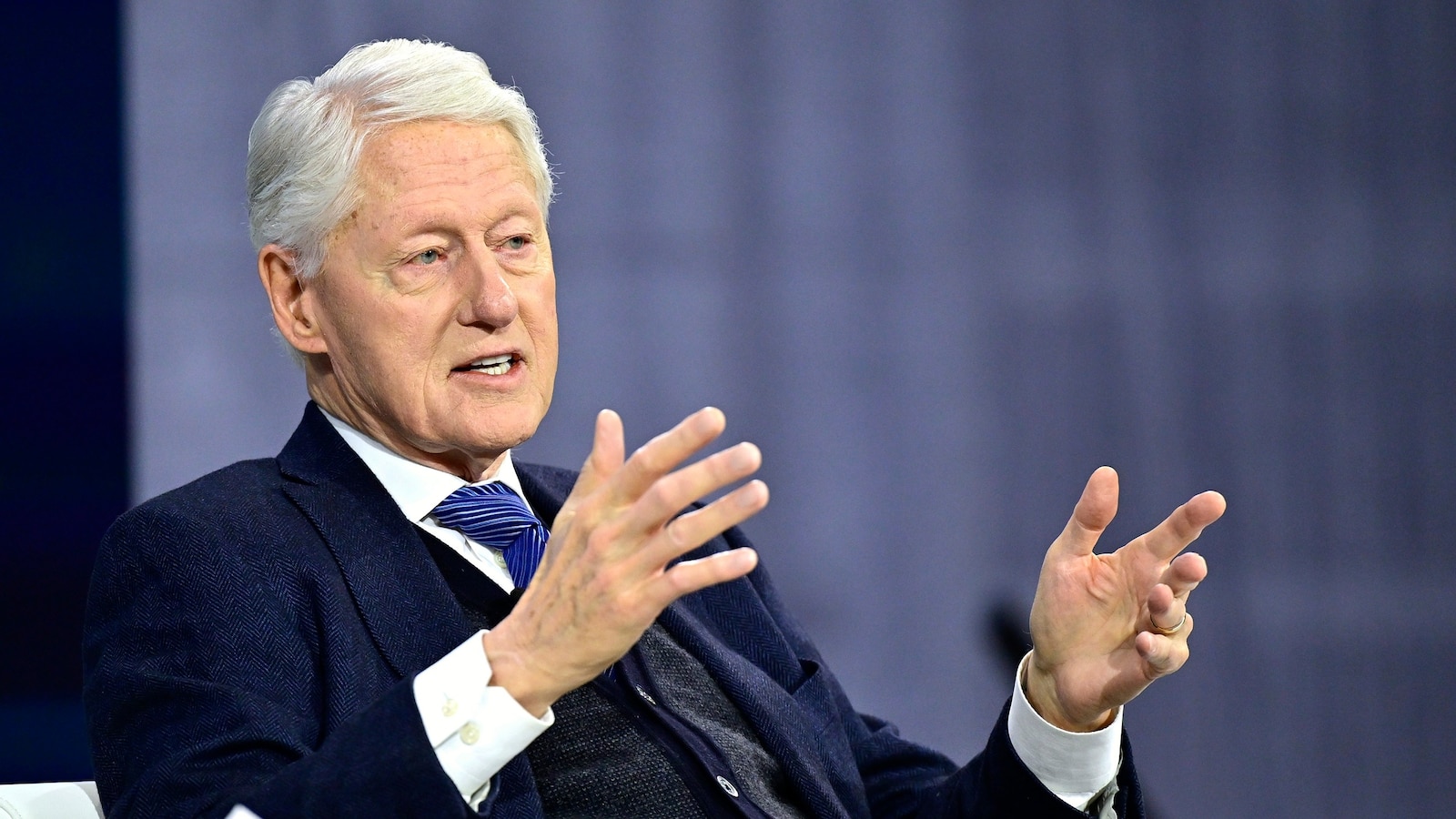
Former President Bill Clinton and Hillary Clinton have agreed to sit for closed-door depositions in the House Oversight Committee’s Jeffrey Epstein probe after GOP threats of contempt; Rep. James Comer says Hillary is scheduled for Feb. 26 and Bill for Feb. 27 and that the sessions will be taped and released. Bill Clinton publicly pressed for a live, public hearing, calling the planned closed-door depositions partisan, while both Clintons deny any wrongdoing and no survivor has accused them of misconduct.
Market structure: This is a political-media event, not a macro or sectoral shock — winners are live-news and political-ad inventory suppliers (FOXA, GOOGL, META) with viewership/ad-rate spikes concentrated in the next 7–30 days and recurring into the 2024 campaign season (3–9 months). Losers: broadly diversified consumer cyclicals and travel names should see negligible direct impact; reputational/ litigation exposures to unrelated corporates are unlikely to move material credit spreads (>10 bps) absent new criminal revelations.
Risk assessment: Tail risks include a live public hearing producing sensational footage that materially shifts polling/fundraising (low probability, high impact) or leaks that trigger regulatory inquiries into platforms hosting content (medium tail). Immediate (days): spikes in audience and equity/IV for news/media; short-term (weeks–months): incremental political ad budgets (estimate: directional boost to digital ad revenue of $0.5–1.5B across platforms); long-term (quarters): structural ad reallocation toward digital video if hearings recur.
Trade implications: Tactical opportunities include small, event-driven longs in FOXA (viewership/ad-rate beneficiary) and 3–9 month overweight in GOOGL/META to capture campaign ad flow; hedge with short-dated VIX call spreads (30–60d) sized 0.5–1% portfolio to protect against volatility spikes. Consider a relative trade: long FOXA vs short DIS into hearings (2:1 notional) to capture differential in live-news monetization vs entertainment exposure over next 2–6 weeks.
Contrarian angles: Consensus treats this as politically noise — undervalues repeatable ad-dollar reallocation into 2024; IV on media names is often underpriced pre-hearing, presenting cheap asymmetric upside. Risks: a public hearing that vindicates the Clintons could reverse flows quickly; set stop-losses at 6–8% and use defined-cost option structures to limit drawdowns.
AI-powered research, real-time alerts, and portfolio analytics for institutional investors.
Request DemoOverall Sentiment
neutral
Sentiment Score
0.00
Ticker Sentiment
