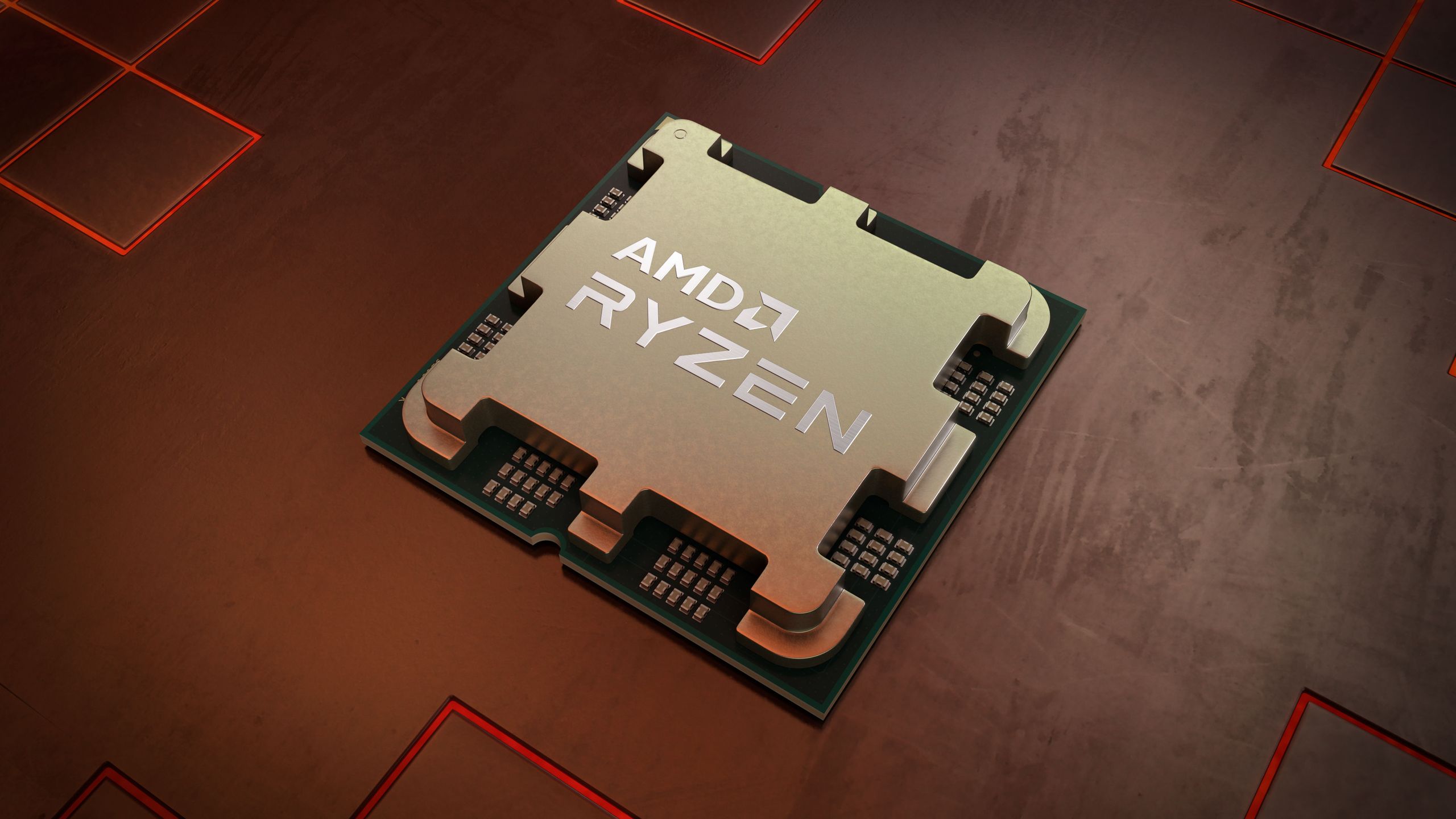
AMD has quietly listed an unreleased Ryzen 7 9850X3D in its Drivers & Downloads section, effectively confirming the SKU and suggesting a higher-performance gaming-focused variant. The part is expected to keep an 8-core/16-thread topology with large stacked L3 X3D cache and higher peak boost clocks versus the Ryzen 7 9800X3D (the latter reaches up to 5.20 GHz with a 96MB L3), leveraging TSMC advanced packaging (extra SRAM tile beneath the compute tile) for improved binning and boost behavior; this should raise single-threaded/gaming responsiveness while also increasing thermal density and cooling requirements.
Market structure: A higher-clocked Ryzen 7 9850X3D would widen AMD's lead in high-end gaming CPUs, lifting AMD's pricing power in the sub-$500 desktop segment and forcing Intel to defend with price cuts or refreshed SKUs. TSMC (TSM) benefits indirectly via higher ASPs for advanced packaging and additional X3D SRAM tiles; a 1-3% bump in wafer revenue mix for advanced nodes over the next 2-4 quarters is plausible if adoption scales. GPU vendors and console makers are neutral-to-positive as gamer spend shifts to higher-margin PCs, but multi-core workstation buyers remain indifferent.
Risk assessment: Tail risks include a botched launch (thermal/firmware issues), TSMC yield setbacks, or new export controls that block advanced packaging — any of which could knock 10-25% off short-term revenue expectations for AMD/TSM. Near-term (0-90 days) volatility will hinge on official announcement and independent benchmarks; medium term (3-12 months) depends on OEM adoption and channel inventory dynamics; long term (>12 months) depends on Intel/ARM competitive responses and pricing dynamics. Hidden dependencies include motherboard vendor BIOS maturity and cooling adoption rates; these can delay end-user uptake by months.
trade implications: Tactical long exposure to AMD (AMD) and TSM (TSM) is warranted ahead of a likely launch announcement within 0-90 days, sized modestly (1-3% NAV) to capture asymmetric upside from a surprise-performance lead. Pair trade: long AMD vs short INTC (INTC) to isolate gaming-CPU share shift over 3-9 months; rebalance if AMD outperforms by >20%. Use options to cap risk: buy 3-month calls to capture the announcement-driven skew and sell into >15% pop.
contrarian angles: Consensus focuses on single-thread gaming wins but underestimates potential ASP lift if higher-binned dies command $30-$60 extra per unit; upside to AMD margins could show up in two quarterly prints. Conversely, the market may overrate the consumer upgrade cycle — if sustained multi-core performance remains unchanged, PC OEMs may limit inventory, capping revenue growth. Historical parallel: Intel's Skylake refresh produced a short-lived pricing battle; expect similar 3-6 month pressure before equilibrium.
AI-powered research, real-time alerts, and portfolio analytics for institutional investors.
Request DemoOverall Sentiment
mildly positive
Sentiment Score
0.28
Ticker Sentiment
