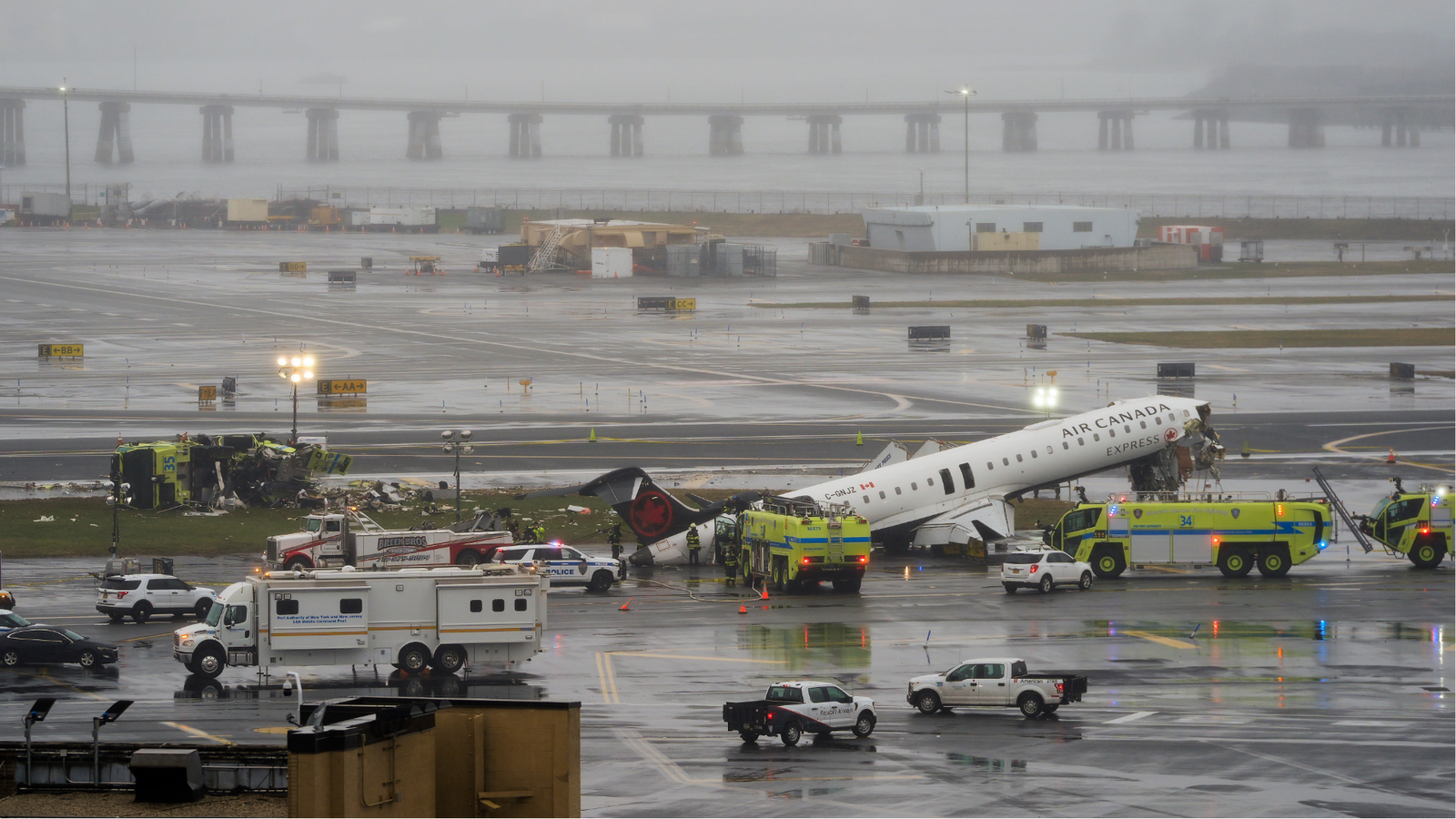
More than 70 passengers were aboard an Air Canada flight that collided with a fire truck at LaGuardia; the plane's nose was destroyed and the pilot and copilot were killed. A flight attendant, Solange Tremblay, was thrown from the aircraft but survived while still strapped into a four-point crew restraint and suffered multiple fractures to one leg. Safety experts highlighted the robustness of crew jump seats; the incident will trigger investigations and poses operational, reputational and potential regulatory consequences for the carrier. Immediate market impact is likely limited but the event increases sector risk and could affect Air Canada operational continuity and liability exposure.
An acute operational shock to a major carrier amplifies three persistent, value-draining channels: litigation reserve build, higher reinsurance/insurance costs, and incremental regulatory compliance spend. Expect insurers to reprice carrier hull & liability capacity — historically that repricing shows up as a 15–40% increase in annual insurance spend for 12–36 months after high-severity events, which for a leveraged airline converts straight to margin erosion. This is not a one-off P&L blip; it compounds with tightening credit terms and can pressure covenant metrics within two quarters if not absorbed by cash or underwriters.
Competitive dynamics favor lower-exposure peers and alternative travel modes on a 3–12 month horizon. Market share erosion is concentrated among short-haul discretionary consumers and corporate accounts sensitive to safety headlines; a 3–8% regional passenger-volume drag persisting for several months is plausible before marketing and pricing restore confidence. Cargo and loyalty revenue streams are less elastic, so airlines with diversified non-ticket revenue will materially outperform on recovery metrics.
Catalysts and reversal conditions are clear: regulatory findings that assign primary blame to third parties, rapid settlement frameworks with capped exposure, or insurers stepping in with contingent capital will materially truncate the downside (timeline: 1–6 months). Conversely, protracted investigations, class actions, or unexpected fleet groundings are tail risks that can extend damage into year-plus timeframes. Monitor legal filings, insurer reserve notes, and loan covenant waivers as primary forward indicators.
AI-powered research, real-time alerts, and portfolio analytics for institutional investors.
Request DemoOverall Sentiment
strongly negative
Sentiment Score
-0.80
Ticker Sentiment
