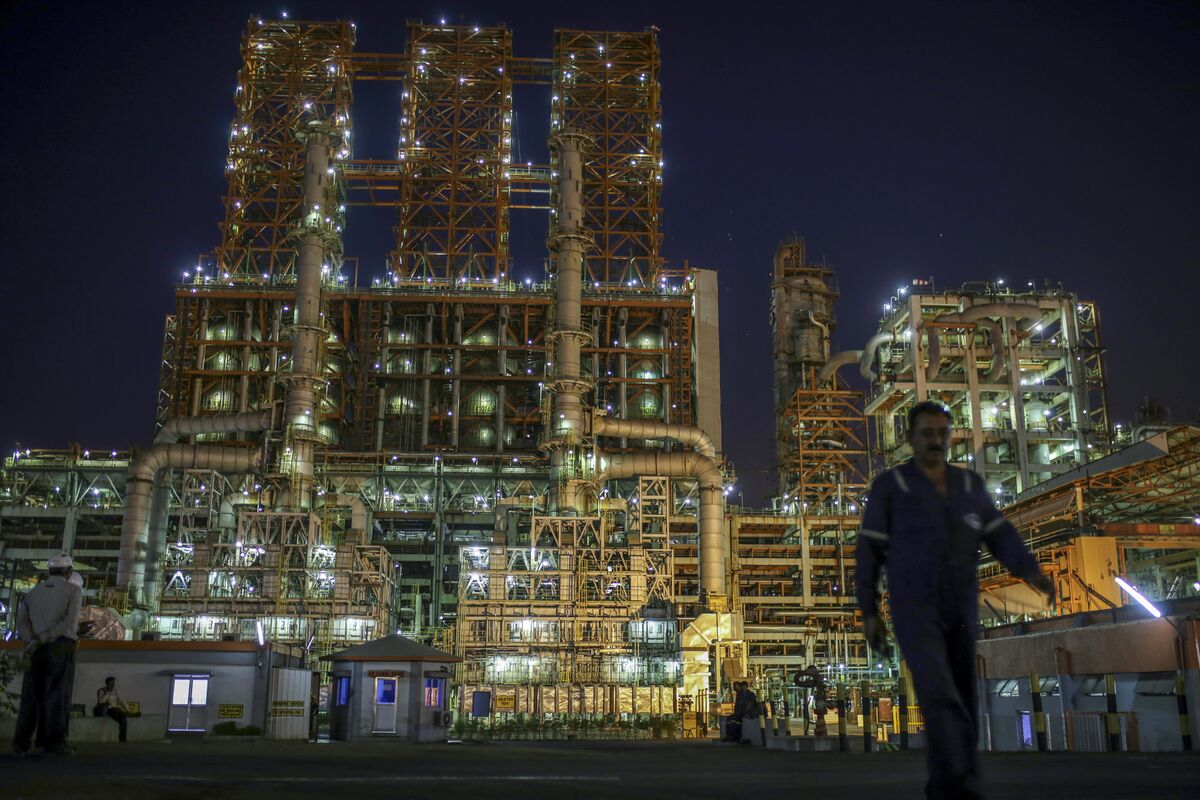
Indian refiner Nayara Energy, part-owned by Russia's Rosneft, is experiencing its lowest-ever crude imports this month, projected at under 94,000 barrels per day. This significant reduction from nearly 366,000 bpd last year is a direct consequence of EU sanctions imposed due to its Rosneft ownership, severely impacting the company's oil imports and product exports.
Indian refiner Nayara Energy is experiencing a severe operational constraint due to European Union sanctions, a direct consequence of its partial ownership by Russian state-owned Rosneft PJSC. The company's crude oil imports for the current month are projected to collapse to under 94,000 barrels per day, a stark reduction from the average of nearly 366,000 barrels per day recorded between July and September of the previous year. This disruption, stemming from Nayara's blacklisting by Brussels in July, highlights the tangible and extensive reach of geopolitical sanctions on global energy trade flows. The impact extends beyond crude procurement, as the article explicitly notes that the company's refined product exports are also buckling, signaling a comprehensive challenge to its entire business model and raising questions about its operational viability under the current sanctions regime.
AI-powered research, real-time alerts, and portfolio analytics for institutional investors.
Request DemoOverall Sentiment
strongly negative
Sentiment Score
-0.70
