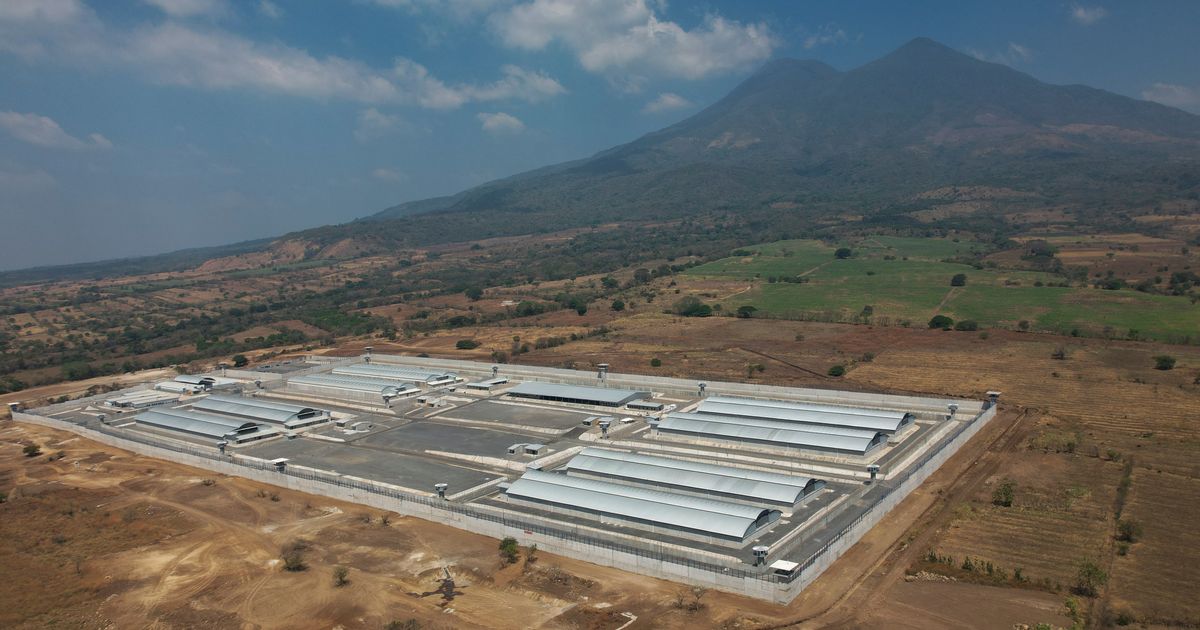
U.S. District Judge James Boasberg ordered the Trump administration to provide legal due process — either court hearings or return to the U.S. — for Venezuelan migrants flown to the CECOT prison in El Salvador, giving the government two weeks to present a plan even though many of the men were later returned to Venezuela in a prisoner swap. The case challenges the administration’s use of an 18th‑century wartime statute (Alien Enemies Act) to remove alleged gang members and opens a route for the migrants to contest gang‑membership allegations, underscoring judicial pushback against the executive branch’s immigration enforcement strategy.
Market structure: The ruling directly hurts firms and intermediaries that monetize rapid, large-scale detention and deportation (notably private-prison operators like GEO and CXW) by increasing legal friction, compliance cost and contract risk; conservatively estimate 5–15% of incremental detention revenue could be at risk if transfers are constrained for 3–12 months. Winners include vendors of surveillance/border-technology and legal/compliance services (L3Harris, RTX, and specialist software providers) as agencies pivot from mass transfers to case-by-case adjudication and monitoring.
Risk assessment: Near-term (days–2 weeks) tail risk centers on courtroom scheduling — Boasberg demanded a plan within 14 days, so legal outcomes in that window can reprice exposures sharply; medium-term (1–6 months) the appeals process and potential contempt fines create regulatory and reputational risk for contractors. Hidden dependencies include federal contracting cadence (CR renewals, DHS budgets) and election-cycle pressure that can either amplify or mute enforcement; key catalyst: appeals-court rulings and DOJ submissions.
Trade implications: Expect muted equity volatility overall but idiosyncratic moves in CXW/GEO (down) and LHX/RTX (up). Options activity can exploit skew: buy 3–6 month puts on GEO/CXW (10% OTM) and buy 6–12 month calls on LHX for a shift to tech-led border solutions; if appeals court issues injunction, widen shorts quickly.
Contrarian angles: Consensus underestimates legal friction persistence — markets treat this as a headline, not an earnings threat; historical parallels (2019 detention controversies) saw CXW/GEO fall ~10–25% over 3–6 months. Unintended consequence: tighter judicial oversight could accelerate federal procurement of monitoring tech, creating a asymmetric upside for select defense contractors while compressing pricing power for detention operators.
AI-powered research, real-time alerts, and portfolio analytics for institutional investors.
Request DemoOverall Sentiment
neutral
Sentiment Score
-0.10
