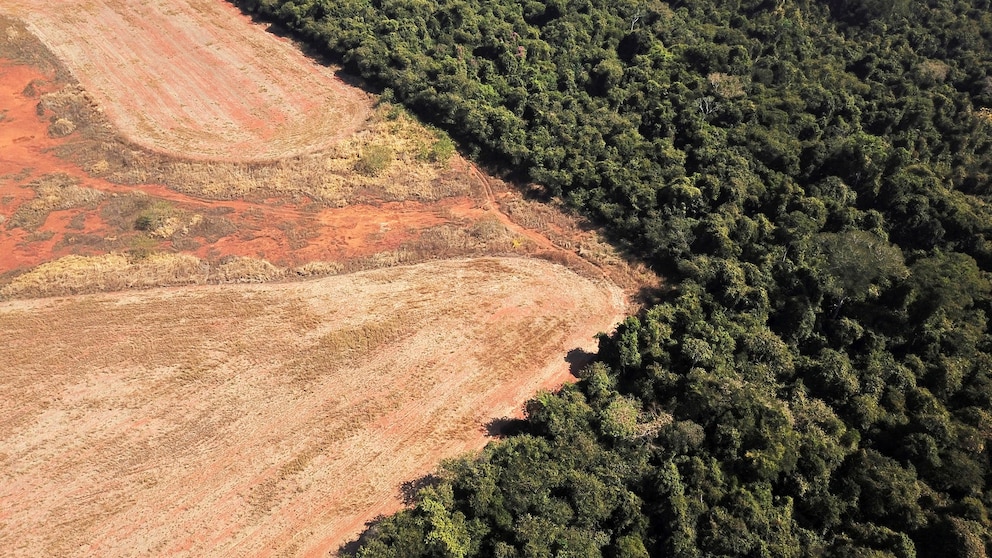
A study in Frontiers and reporting from Rio de Janeiro finds deforestation and habitat loss in Brazil’s Atlantic Forest—now reduced to 29% of its original extent—are shifting mosquito feeding patterns toward humans, with human blood detected in nine mosquito species in two formerly uninhabited areas. Researchers warn this increases transmission risk for Zika, yellow fever and dengue, reinforcing WHO data that vector-borne diseases account for ~17% of infectious diseases and cause over 700,000 deaths annually; the result has implications for emerging-market public health costs, insurers, and pharma/biotech demand tied to vector-borne disease control.
Market structure: Shrinking forests and increased human-mosquito contact create sustained demand for vector-control (pesticides, larvicides), diagnostics, and vaccine R&D. Expect commodity-like pesticide makers (CTVA, FMC) to see incremental volume growth of ~5–10% in affected tropical markets over 12–36 months; vaccine/diagnostics players (PFE, GSK, IQV) get periodic spikes tied to outbreak responses and public funding. Pricing power is limited for generic chemical solutions but stronger for proprietary vaccines/diagnostics where new approvals can command >10% price premiums.
Risk assessment: Tail risks include a WHO emergency declaration or a multi-country arbovirus outbreak within 3–12 months that could trigger travel bans, EM FX stress, and reallocations of public health budgets; conversely, rapid tech fixes (Wolbachia, gene drives) could reduce long-term demand. Hidden dependencies: urbanization, climate variability, and national deforestation policy (Brazilian land-use regulation) modulate incidence rates; monitoring Brazil policy and seasonal rainfall anomalies gives 1–3 month lead time. Catalysts: WHO alerts, major vaccine trial readouts, and government procurement tenders in next 90–360 days.
Trade implications: Tactical alpha from agrichemicals and vaccine/diagnostic suppliers; favor 9–12 month call spreads on CTVA/FMC and 12-month directional exposure to PFE/GSK and IQV for CRO demand. Hedge EM exposure with EMB puts or long VIX for immediate outbreak-driven volatility. Position sizing should be modest (1–3% each) and rebalanced on concrete catalysts (tender wins, WHO alerts).
Contrarian angles: Consensus may underweight CROs (IQV) that benefit from sustained trial volume even absent large outbreaks—these revenues are stickier. Overreaction risk: transient media scares could overly penalize travel/tourism names while agritech and vaccine-equipment suppliers are underowned. Historical parallel: Zika 2015–16 created multi-year uplift to diagnostics and CROs despite limited long-term travel impact; similar pattern likely here if deforestation trends continue.
AI-powered research, real-time alerts, and portfolio analytics for institutional investors.
Request DemoOverall Sentiment
moderately negative
Sentiment Score
-0.35
