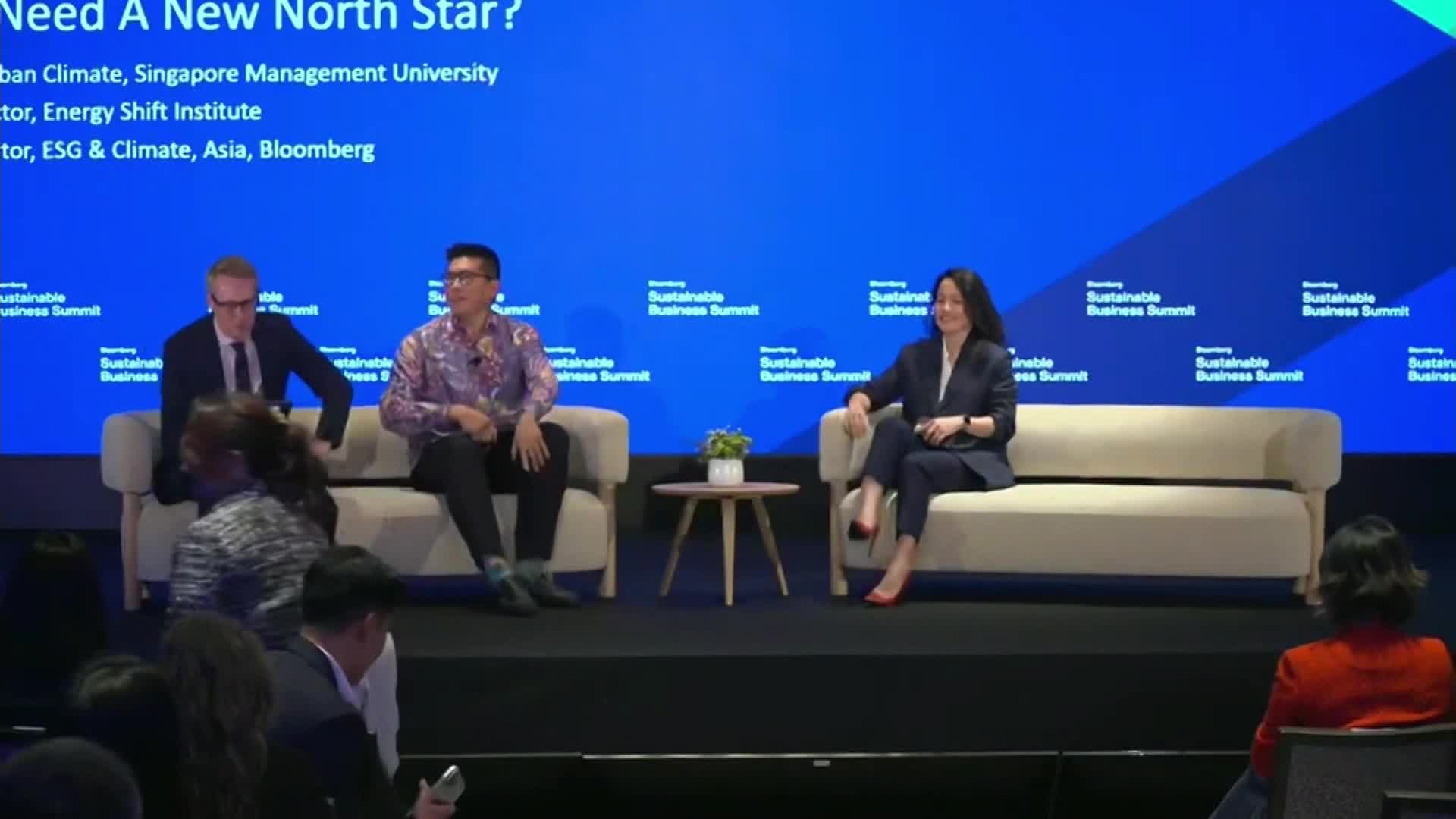
At the 2025 Bloomberg Sustainable Business Summit in Singapore, Winston Chow, Professor of Urban Climate at Singapore Management University, and Christina Ng, Managing Director of Energy Shift Institute, engaged in a discussion on the future of climate goal setting within business and finance. This highlights the ongoing evolution of sustainability expectations and frameworks critical for institutional investors and corporations navigating ESG integration and long-term strategic planning.
The discussion on the future of climate goal setting at the 2025 Bloomberg Sustainable Business Summit in Singapore, featuring experts from academia and the energy transition sector, highlights the increasing institutionalization of ESG criteria within business and finance. This event signifies a forward-looking dialogue aimed at refining and evolving the frameworks that govern corporate sustainability. The neutral sentiment and low market impact score indicate this is not an immediate market-moving event, but rather a signal of a deepening, long-term trend. For investors, the key takeaway is that standards for climate-related financial disclosures and corporate goals are not static; they are actively being shaped by influential thought leaders, which will likely lead to more stringent and sophisticated expectations for companies in the future.
AI-powered research, real-time alerts, and portfolio analytics for institutional investors.
Request DemoOverall Sentiment
neutral
Sentiment Score
0.00
