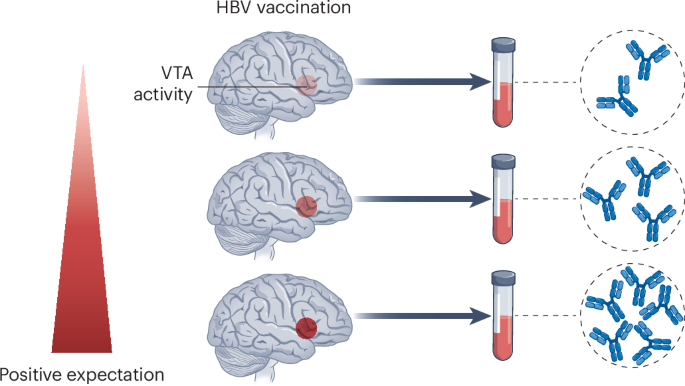
A randomized human trial published in Nature Medicine reports that placebo effects can shape humoral immunity, with reward-related brain activity correlating with vaccine-induced antibody production. The result provides direct evidence that neurobehavioral factors influence vaccine responses, with implications for clinical-trial design, immunotherapy development and potential non-pharmacological interventions to modulate vaccine efficacy.
Market structure: This finding creates optionality rather than disruption — incumbent vaccine and immunotherapy franchises (PFE, MRNA, BNTX, JNJ) are unlikely to lose core market share in 12–36 months but could see new adjacencies (digital therapeutics, neuromodulation) capture 1–5% incremental efficacy improvements that translate into 2–8% revenue upside for high-margin vaccines. CROs and clinical trial designers (IQV) stand to gain from protocol changes that add behavioral arms; device makers (MDT, BSX) benefit if neuromodulation is validated as an adjuvant. Commodity and FX impacts are negligible; modest credit tailwinds for insurers if behavioral programs lower long-term morbidity costs by >2–3% over years.
Risk assessment: Primary tail risks are non-reproducibility and regulatory/ethical backlash (placebo-manipulation guidance) that could stall commercial adoption for 6–24 months and cause 20–60% re-rating in thematic small caps. Short-term (0–3 months) market impact is minimal; medium-term (3–12 months) depends on replication studies and pilot RCTs; long-term (1–4 years) could reprice players who commercialize validated behavioral adjuncts. Hidden dependencies: payer reimbursement, privacy/regulatory clearance for digital/neuromod devices, and pharma willingness to integrate non-pharma endpoints into label claims.
Trade implications: Tactical trades favor optionality with limited downside: buy call spreads on established device/medtech names (MDT, BSX) and long selective CRO exposure (IQV), while selectively shorting high-volatility single-product vaccine small caps (NVAX) that rely on repeat boosters. Use calendar/vertical option structures with 3–12 month expiries to capture catalyst windows (replication papers, FDA guidance, partnership announcements).
Contrarian angles: The consensus will overstate near-term disruption; historically, behavioral adjuncts have improved outcomes incrementally (5–20%) rather than replacing drugs — think digital CBT effects in chronic disease. Mispricings will appear in speculative small caps whose valuations assume linear demand for boosters; conversely, medtechs and CROs that quietly integrate behavioral arms are underappreciated and under-owned by 5–10% relative to peers.
AI-powered research, real-time alerts, and portfolio analytics for institutional investors.
Request DemoOverall Sentiment
neutral
Sentiment Score
0.00
