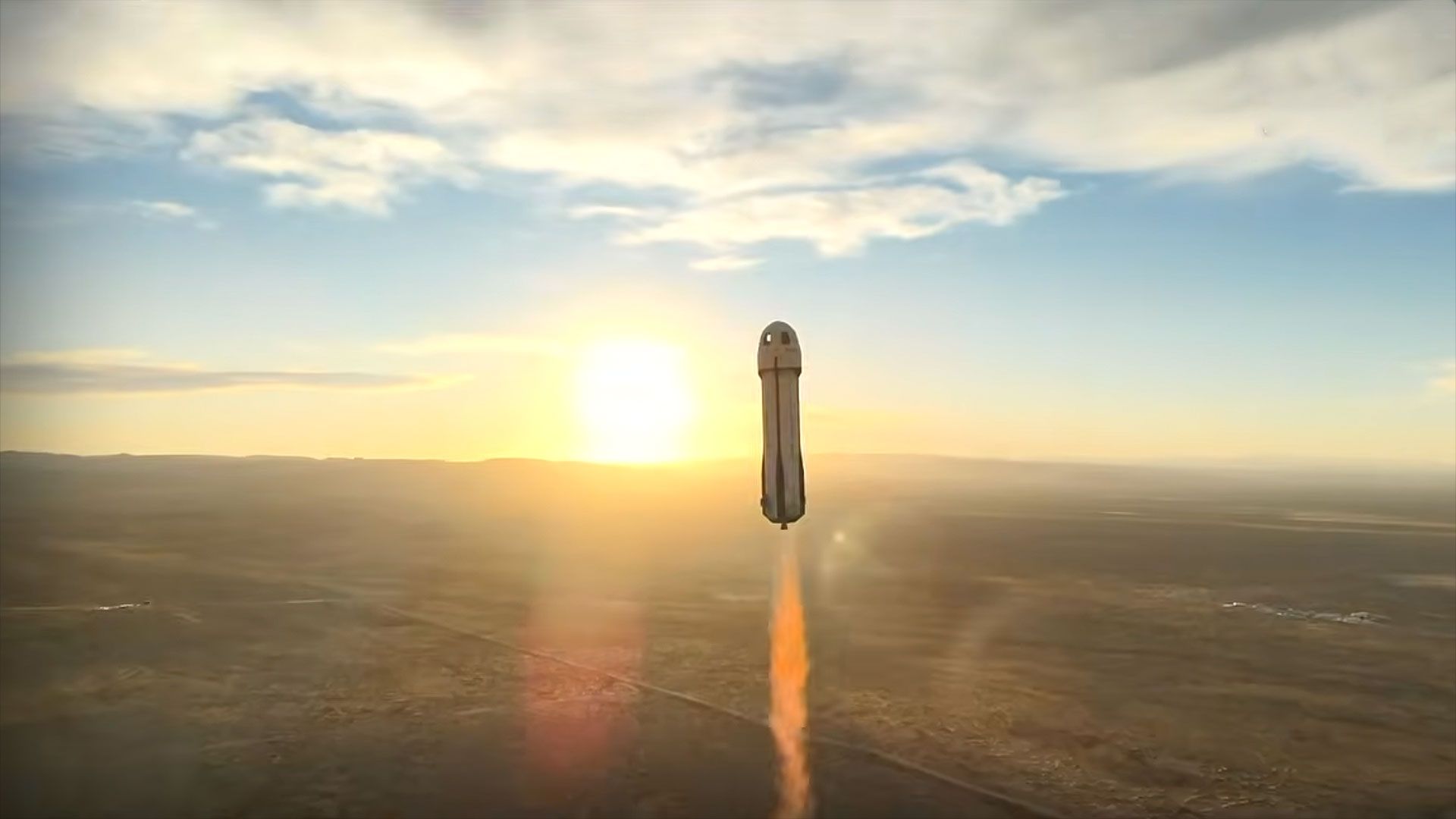
Blue Origin's New Shepard NS-37 launched from West Texas on Dec. 20 (liftoff ~9:15 a.m. EST), completing a 10–12 minute suborbital flight that crossed the Kármán line and returned safely. The mission carried six passengers including ESA aerospace engineer Michi Benthaus, the first wheelchair user to reach space; it was the 37th New Shepard liftoff and the 17th crewed flight, bringing the vehicle's passenger count to 92 flights (86 unique individuals). Blue Origin has not disclosed seat pricing; the flight underscores continued commercial suborbital operations and milestone PR value but presents minimal direct market-moving information.
Market structure: Blue Origin's successful New Shepard flight is primarily a marketing and operational credibility win for a private operator; direct commercial beneficiaries are aerospace primes and space-focused suppliers (e.g., RTX, LHX, MAXR) that can scale recurring payload and safety systems. Demand remains supply-constrained — 92 passenger slots across 17 crewed flights — implying strong pricing power for premium suborbital seats but negligible near-term revenue scale for public equities in travel leisure.
Risk assessment: Tail risk centers on a high-visibility accident that could trigger FAA pauses, litigation and insurance-rate jumps; such an event could produce 20-60% downside in speculative public space-tourism names (SPCE-style) over weeks. Immediate effect (days) is PR; short-term (weeks–months) is booking velocity and competitor scheduling; long-term (quarters–years) depends on regulatory clarity, repeat-customer economics and ability to convert research-payload demand into steady revenue.
Trade implications: Favor durable, cash-flowing aerospace/defense exposure over pure-play consumer space-tourism. Expect modest re-rating catalysts when (a) FAA/DoT issue clearer commercial rules or (b) a sustained multi-month operational cadence emerges — use 6–18 month timeframes and defined-risk structures to capture upside while capping catastrophe exposure.
Contrarian angles: Consensus overweights the consumer spectacle narrative and underestimates recurring revenue from microgravity research, defense sensor contracts and spaceports. The market is likely underpricing operational reliability benefits to contractors that support frequent suborbital flights; conversely, it may be overpricing near-term TAM expansion for mass tourism absent clear per-seat pricing and distribution scale.
AI-powered research, real-time alerts, and portfolio analytics for institutional investors.
Request DemoOverall Sentiment
neutral
Sentiment Score
0.00
