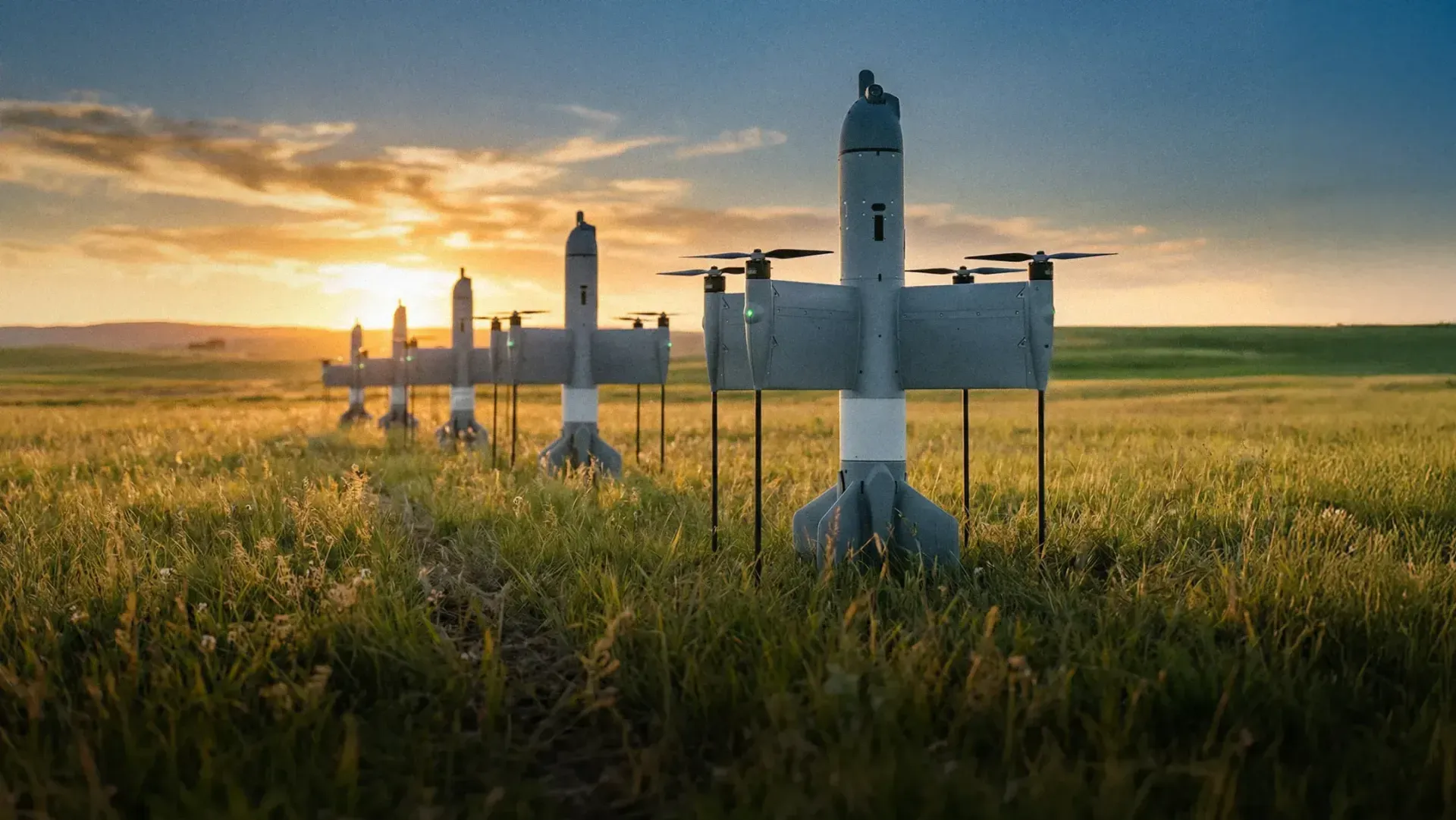
The Defense Ministry is purchasing 8,000 Octopus interceptor drones for the Ukrainian military, a sizable procurement aimed at strengthening air defenses against Shahed-type strike drones. Ukraine says the battle-tested system can operate day or night, at low altitudes, and under electronic warfare, with 29 licensed companies and four state contract manufacturers supporting production. The deal underscores rapid scaling of Ukraine’s domestic defense-industrial base and its partnership with the U.K.
This is less a one-off procurement headline than evidence that Ukraine is moving from improvised drone defense to an industrialized counter-UAS stack. The second-order winner is the domestic electronics, optics, propulsion, and software supply chain: once a system is standardized and scaled, unit costs typically fall fast, which should pull more spending toward local manufacturers and away from imported one-off solutions. For defense allocators, that means the real economic value accrues to the firms enabling rapid iteration and low-cost serial production, not just the headline weapon platform. The tactical implication is a gradual reduction in the marginal effectiveness of low-cost strike drones over the next 6-18 months if interceptors scale as planned. That forces adversaries to either increase drone quality, swarm size, or EW sophistication, all of which raise their cost per successful strike and compress the asymmetry that made the campaign attractive. The likely near-term response is a brief escalation in saturation attacks before operators adapt to the new kill chain. The key risk is execution: scale announcements are easier than sustaining field-ready output under wartime logistics, component shortages, and EW degradation. If production bottlenecks emerge in motors, batteries, guidance chips, or test capacity, the market should expect a lag of several quarters before procurement translates into battlefield penetration. Conversely, if this model proves repeatable, it becomes a template for other NATO-aligned states to localize low-cost air defense, widening the addressable market for drone-defense software, sensors, and electronic warfare layers. Consensus may be underestimating how much this shifts the economics of air defense from high-value missiles to attritable interceptors. That matters because it protects higher-end missile inventories for larger threats and improves sustainability under prolonged fire. The bigger trade is not a single procurement cycle, but a structural repricing of companies with exposure to counter-drone systems, battlefield networking, and EW resilience.
AI-powered research, real-time alerts, and portfolio analytics for institutional investors.
Request DemoOverall Sentiment
mildly positive
Sentiment Score
0.25
