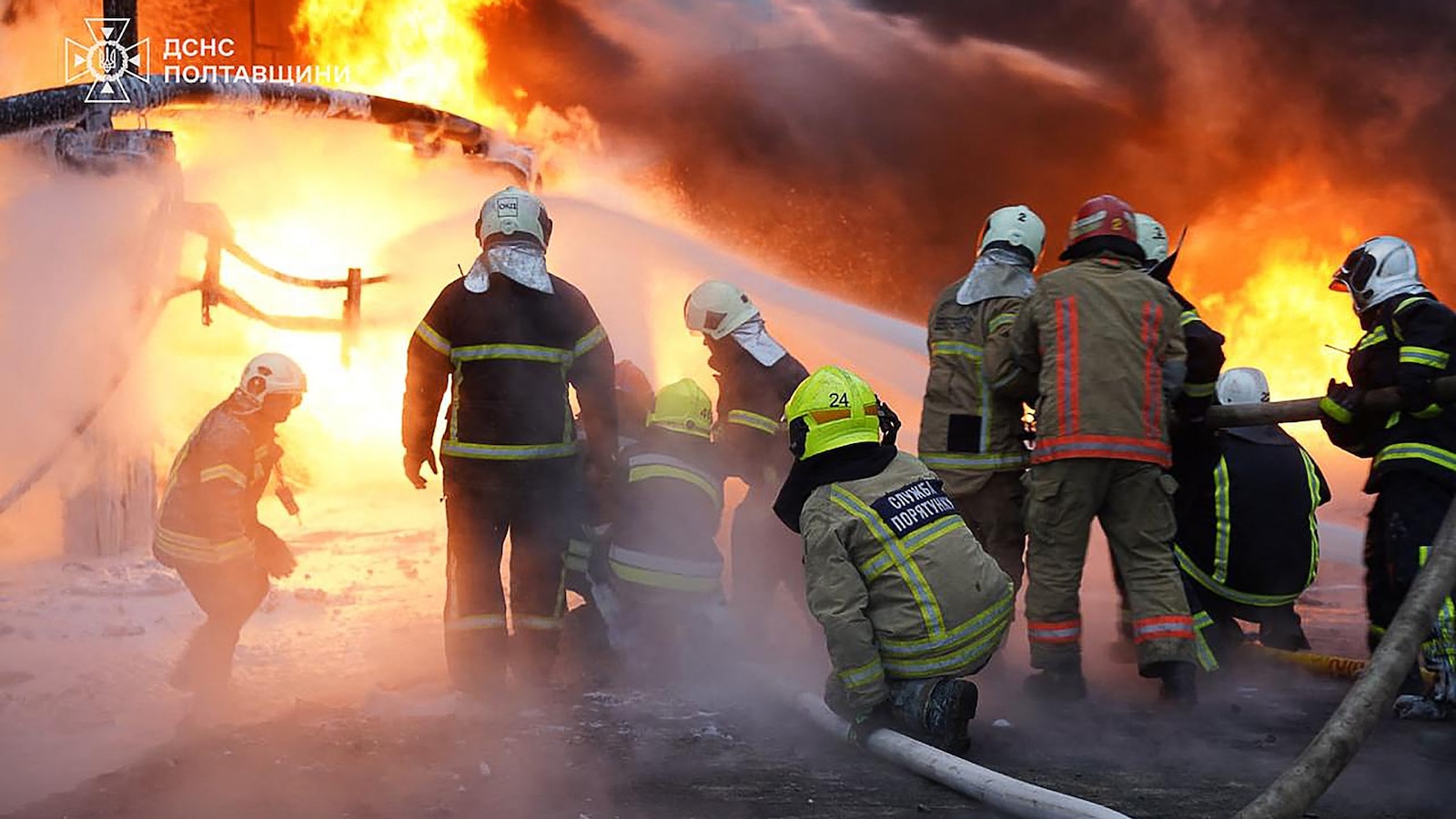
Russian forces launched an overnight attack across Ukraine using 241 drones and five missiles; Ukrainian air defenses reportedly destroyed about 175 drones and four missiles while 65 drones struck targets in 14 locations, killing two civilians and hitting energy infrastructure notably in Kremenchuk. The strikes have disrupted electricity, heat and water stability in affected regions and prompted President Zelenskyy to reiterate urgent needs for additional air‑defense systems and missiles, noting Russia launched over 1,600 attack drones and roughly 1,200 guided aerial bombs this week. Investors should monitor potential short‑term impacts on Ukrainian energy output, regional power stability and increased demand for Western air‑defense and defense-sector suppliers.
Market structure: Immediate winners are Western defense primes (Lockheed LMT, Raytheon/RTX, Northrop NOC, L3Harris LHX) and energy suppliers (Brent, European TTF, power generators) because demand for air-defence, munitions and emergency grid repairs rises while Ukrainian utilities and local industry collapse. Pricing power shifts to contractors with existing production lines and to commodity producers facing constrained supply; lead times for interceptors/launchers are 6–18 months, implying persistent order books and higher forward revenue visibility.
Risk assessment: Tail risks include rapid escalation (NATO involvement or wider strikes on EU infrastructure) that could spike gas/oil >30% and trigger sanctions that freeze certain supply channels; conversely diplomatic de‑escalation could collapse short-term risk premia. Near term (days) expect power-price and volatility spikes; short‑term (weeks–months) procurement cycles and congressional aid timing are key; long term (quarters–years) reconstruction drives metals and grid/hardening demand. Hidden dependencies: semiconductor/radar supply bottlenecks, US/EU approval cycles, and winter heating demand.
Trade implications: Buy defence exposure via option-leveraged structures to capture policy-driven orders; add energy exposure to front-month gas/oil or sector ETFs as a hedge; rotate out of airline/leisure cyclicals into utilities/power services. Volatility is tradable — expect elevated IV in defence and energy for 1–3 months; use call spreads to cap premium. Entry window: act within 2 weeks ahead of expected aid votes; exit or re‑size on 20–40% realized move or post winter (Q2 2026 unwind).
AI-powered research, real-time alerts, and portfolio analytics for institutional investors.
Request DemoOverall Sentiment
strongly negative
Sentiment Score
-0.60
Contrarian angles: Consensus buys large primes; underappreciated are mid‑cap EW/cyber and grid‑hardening names (CRWD, FTNT, ABB) and miners (FCX, RIO) for reconstruction demand over 6–24 months. The short-term defence rally can be overstretched—past post‑conflict cycles (2014–2016) gave 12–18 month mean reversion as budgets reallocated; consider pairing long niche suppliers with short mega‑caps if IV diverges sharply.
