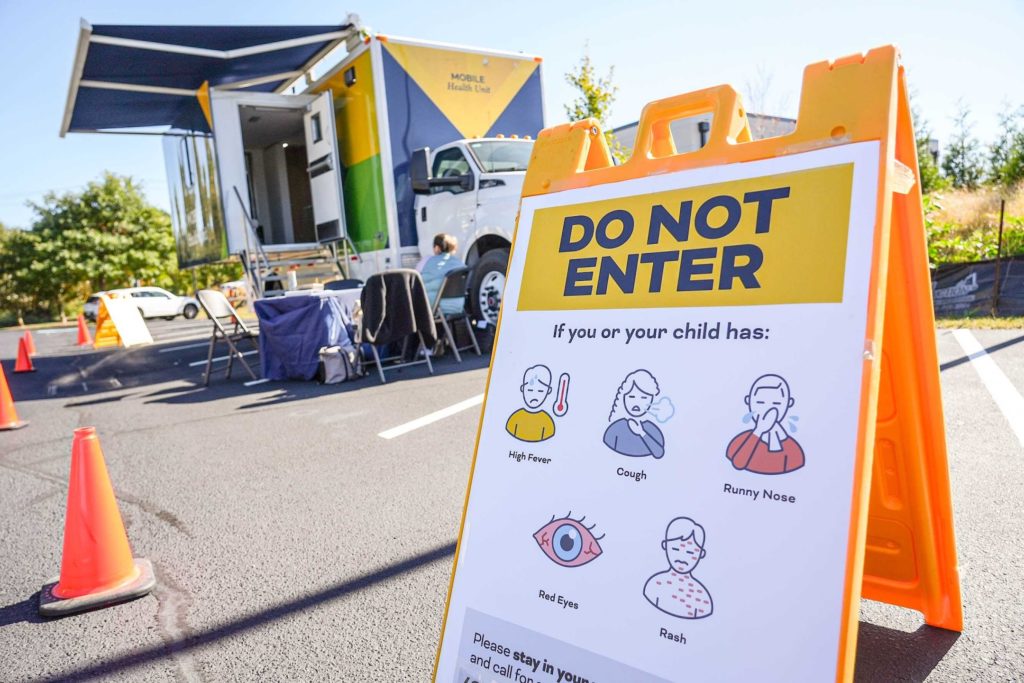
South Carolina is facing one of the largest U.S. measles outbreaks in decades with 876 confirmed cases, surpassing the 2025 West Texas outbreak (762) and the 2019 New York City outbreak (649). Case growth appears to be slowing and vaccinations have increased—full vaccine protection takes about two weeks—but public-health experts warn of ongoing risk to infants, pregnant people and the immunocompromised and expect the U.S. may lose measles elimination status around April, signaling continued public-health pressure and potential localized healthcare demand.
Market structure: The immediate winners are vaccine manufacturers (Merck - MRK), retail immunizers (CVS, WBA) and diagnostics/lab suppliers (QuidelOrtho QDEL, Abbott ABT, Thermo Fisher TMO); hospitals (HCA, UHS) see modest revenue from admissions but higher costs from containment. Pricing power for MMR is limited (established product), so upside is volume-driven — expect a 5–15% bump in doses administered regionally over 1–3 months if outbreaks spread beyond SC. Travel/leisure and local tourism are small losers regionally; broader consumer impact should be muted unless outbreaks become multi-state.
Risk assessment: Tail risks include a vaccine-supply bottleneck (manufacturing lead times of 3–6 months) or a high-profile adverse event/legal action that dents manufacturer shares (low-probability, high-impact). Immediate indicators (days–weeks): weekly new-case trajectory in SC and vaccine uptake (% increase week-over-week); short-term (1–3 months): CDC’s April decision on elimination status which could sustain federal/state procurement; long-term (quarters) a loss of elimination status would increase baseline public-health budgets and recurring demand. Hidden dependencies: state school-mandate changes, social-media-driven vaccine hesitancy, and government stockpile drawdowns.
Trade implications: Direct actionable plays include establishing a 1–2% long position in MRK over 2–4 weeks (target +6–12% in 3–6 months, stop-loss -8%) to capture dose-volume upside and possible government purchases. Add 0.5–1% long in CVS (CVS) or Walgreens (WBA) to capture administration revenue over next 1–3 months; pair trade: long MRK, short JETS ETF (1% short) as a hedge if cases materially spread beyond SC. Options: buy a 3-month MRK call spread (buy 5% OTM / sell 15% OTM) sized to risk 0.5% portfolio to cap downside while retaining upside if policy purchases occur.
Contrarian angles: Consensus underestimates diagnostic/lab exposure — diagnostics suppliers (TMO, ABT, QDEL) may see sustained reagent/test demand even if vaccinations accelerate; consider small 0.5–1% allocations. The market may overreact on travel names (shorts) if outbreaks remain localized; conversely, losing elimination status in April is a structural bull case for public-health suppliers and hospital preparedness capex over 12–24 months. Watch for unintended consequences: politicized mandates could create regulatory volatility for retail vaccinators and reputational risk for manufacturers, creating entry points on weakness.
AI-powered research, real-time alerts, and portfolio analytics for institutional investors.
Request DemoOverall Sentiment
mildly negative
Sentiment Score
-0.25
