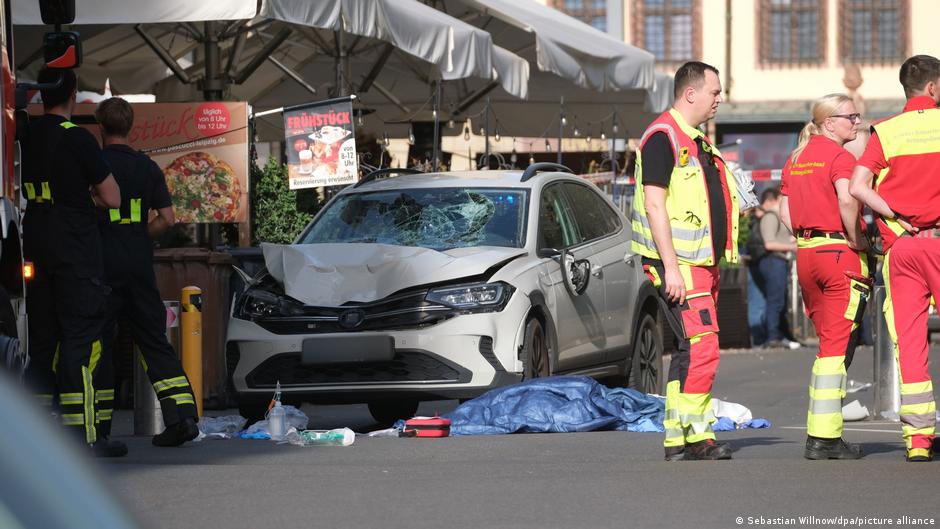
At least one person was killed and several others injured after a car drove into a crowd on Grimmaische Street in Leipzig, with conflicting reports initially putting the death toll at two before police revised it down to one. The driver was detained and authorities said there was no further danger to the public. The incident is a localized public-safety event with limited direct market impact.
This is primarily a near-term volatility event for German domestic politics and the municipal security premium, not a macro shock. The direct market impact is small, but the second-order effect is a higher probability of tighter security protocols around public events, shopping districts, and transit hubs across major German cities over the next 2-8 weeks. That raises operating friction for retailers, venues, and urban logistics firms in the affected area, while nudging insurance and municipal service costs marginally higher. The more important lens is policy response. If authorities frame this as a broader public-safety or terrorism issue rather than an isolated criminal act, expect a fast cycle of political signaling: expanded police deployment, surveillance, and possible restrictions on vehicle access in dense pedestrian zones. That is supportive for private security, perimeter control, and certain transport-infrastructure contractors over the next quarter, but negative for local footfall-sensitive names if consumers avoid city-center shopping streets even briefly. For public equities, the investable angle is mostly in sentiment-sensitive European consumer and mobility proxies. The risk is overreaction: these events usually fade into a 1-3 week news cycle unless there is a clearer political or ideological motive, at which point the policy tail can extend for months. The contrarian view is that the market may underprice the speed of administrative response in Germany, which can be faster than investors assume once public pressure builds; that argues for favoring beneficiaries of security capex rather than betting on a broad risk-off move. The highest-conviction trade is a tactical long in European security/infrastructure names versus short-duration consumer exposure, because the earnings upside is immediate if local governments accelerate spending while demand drag on shopping districts is transient. Any broad selloff in German cyclicals would likely be an overreaction unless there is evidence of copycat incidents or organized intent, which would change the time horizon from days to quarters.
AI-powered research, real-time alerts, and portfolio analytics for institutional investors.
Request DemoOverall Sentiment
strongly negative
Sentiment Score
-0.80
