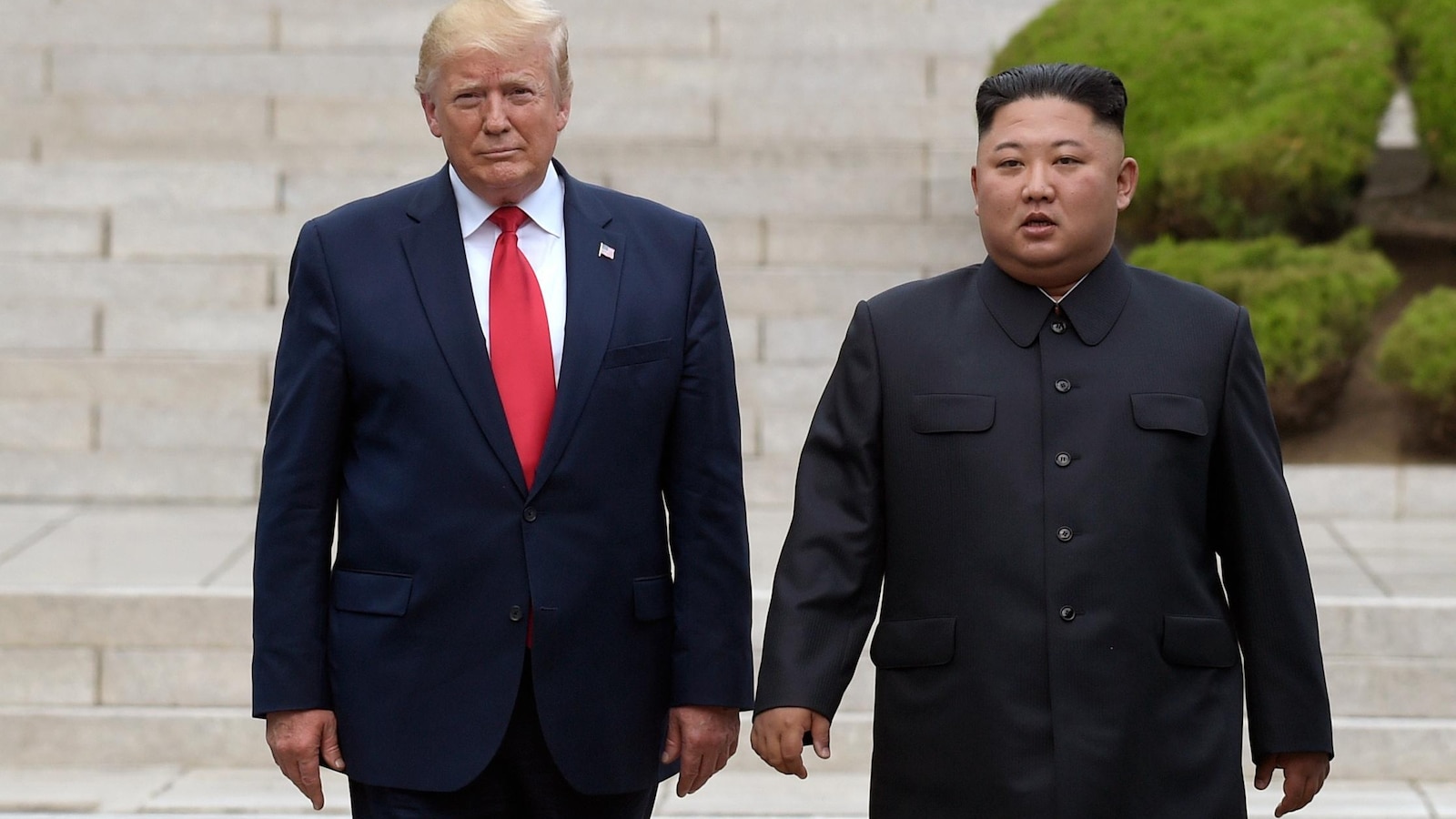
Speculation is intensifying regarding a potential impromptu meeting between Donald Trump and North Korean leader Kim Jong Un during Trump's upcoming visit to South Korea, echoing their 2019 encounter. While some analysts suggest increased prospects due to recent North Korean overtures and logistical indicators, others remain skeptical, citing Pyongyang's significantly expanded nuclear capabilities, strengthened diplomatic ties with Russia and China, and diminished urgency for denuclearization talks. The fundamental impasse persists: North Korea's demand for nuclear power status versus the U.S. insistence on complete denuclearization, with any partial agreement raising concerns about regional security and potential proliferation risks.
Speculation is mounting regarding a potential impromptu meeting between U.S. President Donald Trump and North Korean leader Kim Jong Un during Trump's upcoming visit to South Korea, echoing their 2019 encounter. While some experts, like Ban Kil Joo, suggest increased prospects due to Kim's recent overtures and logistical indicators such as the suspension of civilian tours to Panmunjom, others remain skeptical. The overall sentiment surrounding this potential event is mixed and speculative, reflecting the inherent uncertainty.
A significant impediment to productive talks is North Korea's substantially expanded nuclear program and strengthened diplomatic ties with Russia and China since 2019, which have diminished Pyongyang's urgency for denuclearization. Kim Jong Un's increased leverage, coupled with weakened sanctions enforcement, suggests he now seeks U.S. acknowledgment as a nuclear power, a stance directly opposing the U.S. position of complete denuclearization. Experts like Kim Tae-hyung find it difficult to envision Kim engaging in talks without substantial concessions.
The fundamental impasse between North Korea's demands and U.S. policy creates a complex geopolitical landscape. Any partial denuclearization deal, while potentially easing immediate tensions, carries risks such as triggering calls for nuclear armament in South Korea and Japan, as noted by Chung Jin-young. The market impact is currently assessed as low to moderate, reflecting the speculative nature of the event and the lack of immediate, concrete outcomes.
AI-powered research, real-time alerts, and portfolio analytics for institutional investors.
Request DemoOverall Sentiment
mixed
Sentiment Score
-0.05
