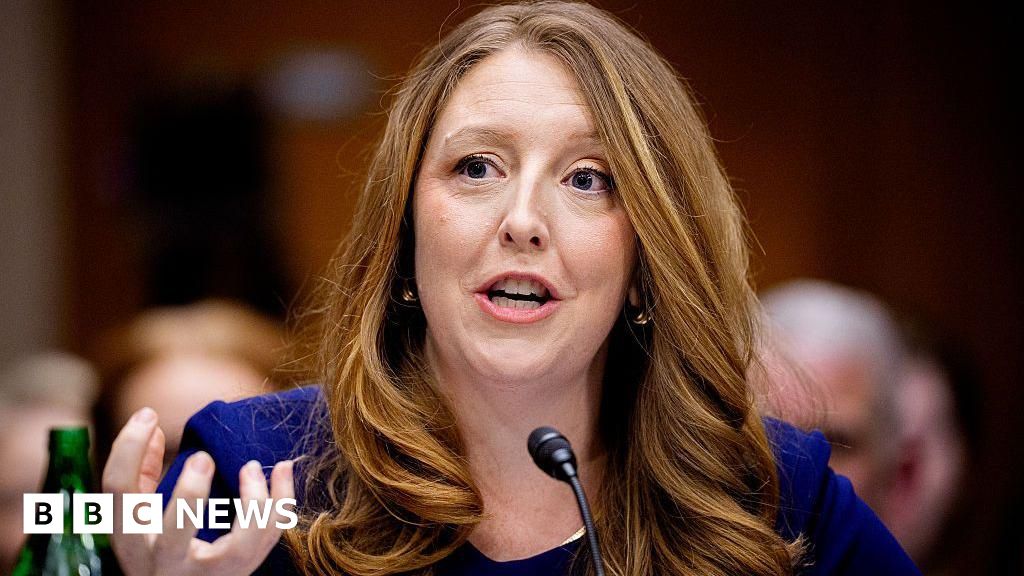
Casey Means, President Trump's nominee for U.S. surgeon general, faced prolonged Senate questioning over vaccine stances, past influencer sponsorships and conflicts of interest, and the fact that her medical licence is inactive; she says she was cleared by the Office of Government Ethics and will divest business interests if confirmed. Means, associated with Health Secretary Robert F. Kennedy Jr.'s 'Maha' movement, repeatedly emphasized patient autonomy and declined to commit to universal childhood vaccination while affirming vaccines save lives, and stated contraceptives and mifepristone should remain accessible. The committee is expected to vote soon; confirmation could sustain the current administration's shift in federal public-health guidance and create regulatory uncertainty for health-policy-sensitive sectors.
Market structure: A surgeon-general aligned with vaccine-sceptical policy raises demand risk for pediatric/immunisation products and raises relative winners in telehealth, at-home diagnostics, and DTC supplement/OTC channels. Expect concentrated downside for small-cap vaccine developers (e.g., NVAX) and wholesalers dependent on pediatric schedule volume; large diversified pharmas (PFE, MRK, SNY, GSK) have hedges via oncology/rare-disease revenue and will feel only modest top-line pressure (likely single-digit % impact over 12 months if policy persists).
Risk assessment: Tail risks include a major infectious outbreak (measles/HEP-B spike) that would flip policy and cause a sharp demand surge for vaccines and hospital services (3-6 month revenue spike), or federal litigation/legislative reversals that cement supply disruptions for >12 months. Immediate window (days) centers on the confirmation vote; short-term (0–6 months) hinges on CDC guidance cycles and state-level mandate decisions; long-term (1–3 years) depends on election outcomes and entrenched agency policy.
Trade implications: Express small, size-constrained directional positions: short high-volatility, revenue-concentrated vaccine developers (NVAX) via 3-month put spreads; long defensive large-cap pharma (PFE, MRK) via 6–12 month buy-and-hold for yield with 2–4% position sizes; long telehealth (TDOC) and at-home diagnostic plays (LH/ABT exposures or sector ETFs) as 1–2% tactical longs for 3–9 months. Hedging: buy 3–6 month out-of-the-money calls on major vaccine makers (MRK/PFE) as asymmetric crash protection in case of outbreak-driven demand spike.
Contrarian angles: The market may over-penalise large diversified vaccine makers while underestimating the volatility of small-cap vaccine developers; historical precedent (post-vaccine scares in 2008–2010) shows dips are often <30% and rebound sharply after outbreaks or regulatory clarity. Unintended consequence: reduced childhood immunisation can force emergency procurement contracts that materially benefit incumbent manufacturers and contract manufacturers (CMOs) within 3–9 months, creating asymmetric upside for selected long positions.
AI-powered research, real-time alerts, and portfolio analytics for institutional investors.
Request DemoOverall Sentiment
neutral
Sentiment Score
-0.10
