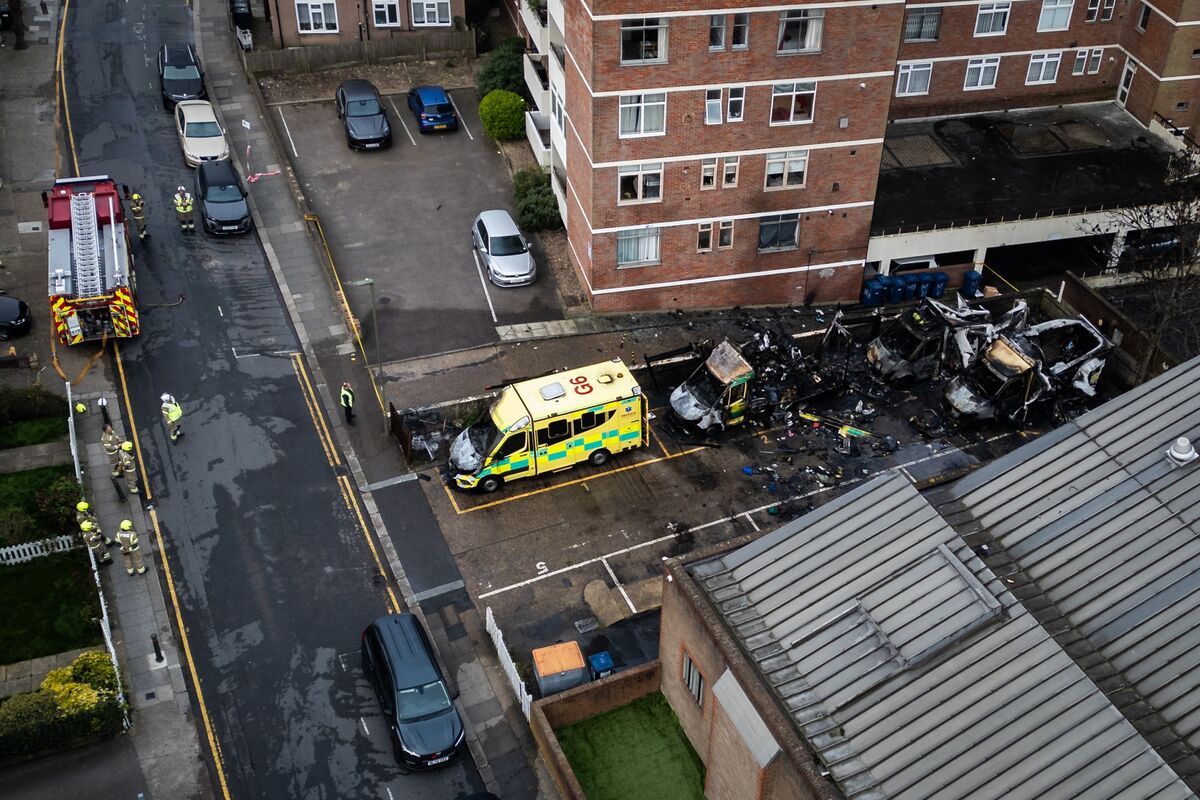
UK counter-terror police are investigating whether Iran is linked to an arson attack on an ambulance service run by a Jewish nonprofit; authorities are treating the incident as an anti‑Semitic hate crime but are exploring a possible state-backed connection, Laurence Taylor said. Counter-terror units are leading the probe due to the potential foreign-state link; immediate market implications are minimal but the development modestly elevates geopolitical risk.
A low-probability attribution to a foreign state can outsized‑shift budgets and behaviors even if formal proof never appears. Expect rapid reallocation of near-term OPEX by municipal and nonprofit operators toward visible hardening (CCTV, hardened vehicles, contracted security) within 2–12 weeks, and follow‑on procurement cycles (integrators, vehicle retrofits) to materialize over 3–12 months, creating a shallow but broad demand tailwind for mid‑cap security vendors and integrators.
Insurance and risk‑transfer players will reprice political‑violence and terrorism cover for niche exposures tied to faith‑based and emergency services; this typically shows up as higher premiums and narrower capacity within 1–3 quarters and can push charities toward captive solutions or layered reinsurance, benefiting specialty brokers and reinsurers that can structure bespoke programs.
The binary catalyst path matters: a clear state attribution or diplomatic escalation is positive for defense/cyber spend and could lift contractor rerates over 3–12 months, while forensic ambiguity or attribution to lone actors will see the move fade within 1–4 weeks. Watch parade‑ground indicators — public procurement notices, insurance filing frequency, and government grant reallocation — as higher‑signal catalysts that precede durable revenue upgrades for suppliers.
AI-powered research, real-time alerts, and portfolio analytics for institutional investors.
Request DemoOverall Sentiment
mildly negative
Sentiment Score
-0.30
